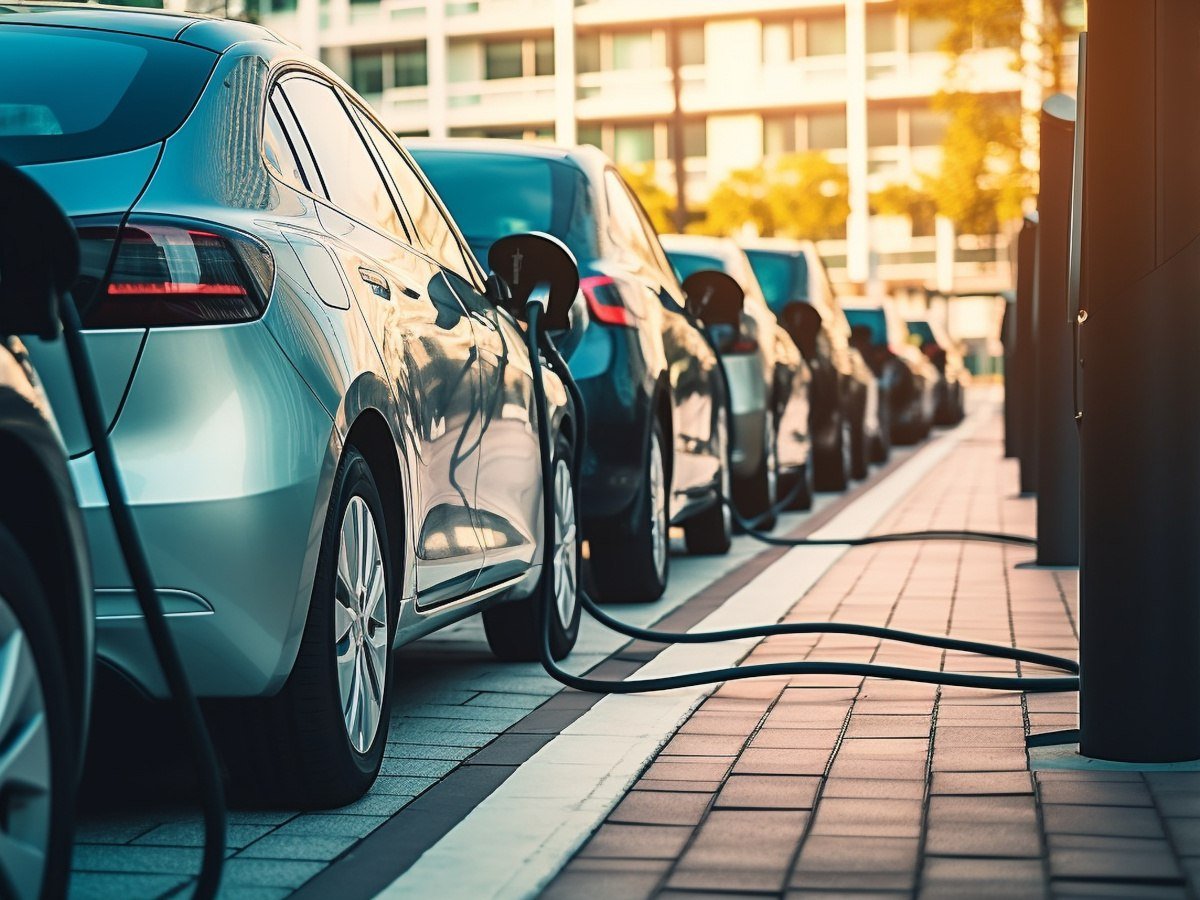
EU countries ahead of targets on public EV charging capacity

As of March 2026, all countries in the bloc except for Malta exceeded overall charging capacity minimums based on the number of battery EVs on each member country’s roads.
Nearly all EU countries are hitting their capacity targets around electric vehicle (EV) charging infrastructure provision, according to environmental advocacy group the European Federation for Transport and Environment (T&E).
New research provided by the group recorded that there were 1.1m public chargers for EVs in the EU by the end of 2025, five times more than in 2020.
As of March 2026, all countries in the bloc except for Malta had exceeded overall charging capacity minimums based on the number of battery EVs on each member country’s roads.
The targets are derived from the EU’s Alternative Fuels Infrastructure Regulation (AFIR), which came into effect in April 2024.
AFIR’s stated objectives are: “to ensure minimum infrastructure to support the required uptake of alternative fuel vehicles across all transport modes and in all EU member states to meet the EU’s climate objectives; to ensure full interoperability of the infrastructure; and to ensure comprehensive user information and adequate payment options at alternative fuels infrastructure”.
In terms of regions within the bloc, Germany (west), Sweden (north), Italy (south) and Poland (central and eastern) lead the way in local charging power capacity.
AFIR requires member states to have at least 1.3kW of public charging capacity for every battery EV in its national fleet. T&E found that in terms of aggregated national targets, the EU’s overall capacity exceeds the fleet-based target by 180pc.
“Today, EV drivers do not have far to go for a public charger. The charging targets are working as intended and have enabled huge growth in the EV market,” said Lucien Mathieu of T&E said.
“However, there are still challenges to be overcome in charging’s ease of use and a lack of price transparency. These will be crucial to make EVs more attractive for all drivers, especially those who live in apartment buildings and rely on public chargers.”
Countries are not yet fully compliant on AFIR’s metrics around the distance between fast chargers along the bloc’s main road networks, according to T&E.
AFIR mandates DC fast chargers of 150kW or more to be available every 60km along routes designated as ‘core’ (national motorways) and ‘comprehensive’ (regional motorways and primary roads).
As of last month, T&E found, 79pc of the core network was compliant with the distance target, originally imposed in 2025, while 20 member states are ahead of comprehensive network distance targets ahead of a 2027 deadline.
Ireland is partially compliant with its targets in this area, according to T&E’s data.
Don’t miss out on the knowledge you need to succeed. Sign up for the Daily Brief, Silicon Republic’s digest of need-to-know sci-tech news.