A Medici Duke’s 1587 Death Fueled Centuries of Poisoning Rumors, Now Ancient DNA Points to Malaria

Francesco de’ Medici, Grand Duke of Tuscany, lay feverish at his family’s villa in October 1587 as his wife, Bianca Cappello, weakened beside him.
Outside, stagnant water pooled across the surrounding rice fields and low wetlands. The landscape concealed one possible killer — malaria. But when the couple died on consecutive days, Tuscany began whispering about another.
The scene echoed a tragedy Francesco had already lived through. Twenty-five years earlier, his 19-year-old brother Giovanni had fallen ill after traveling through the marshes of the Tuscan coast with their mother, Eleonora of Toledo, and younger brother Garzia. All three developed recurring fevers and died within about a month.
This time, however, suspicion fell inside the family. Francesco’s brother and political rival, Cardinal Ferdinando, inherited the grand duchy soon after his death, starting rumors that he had poisoned the couple with arsenic.
The poisoning theory lasted centuries, but genetic traces recovered from the ribs of Francesco and Giovanni now point to malaria as the potential cause of both deaths. The findings were recently published in iScience.
“The study of ancient DNA offers us an opportunity not only to diagnose malaria in the remains of individuals from the past, but it also offers us a window for understanding the evolution of malaria species, Plasmodium falciparum in this case, which can help scientists better understand how the pathogen adapts over time,” first author Alexander Ochoa said in a press release.
Ancient DNA in Medici Bones Reveals Malaria Infection
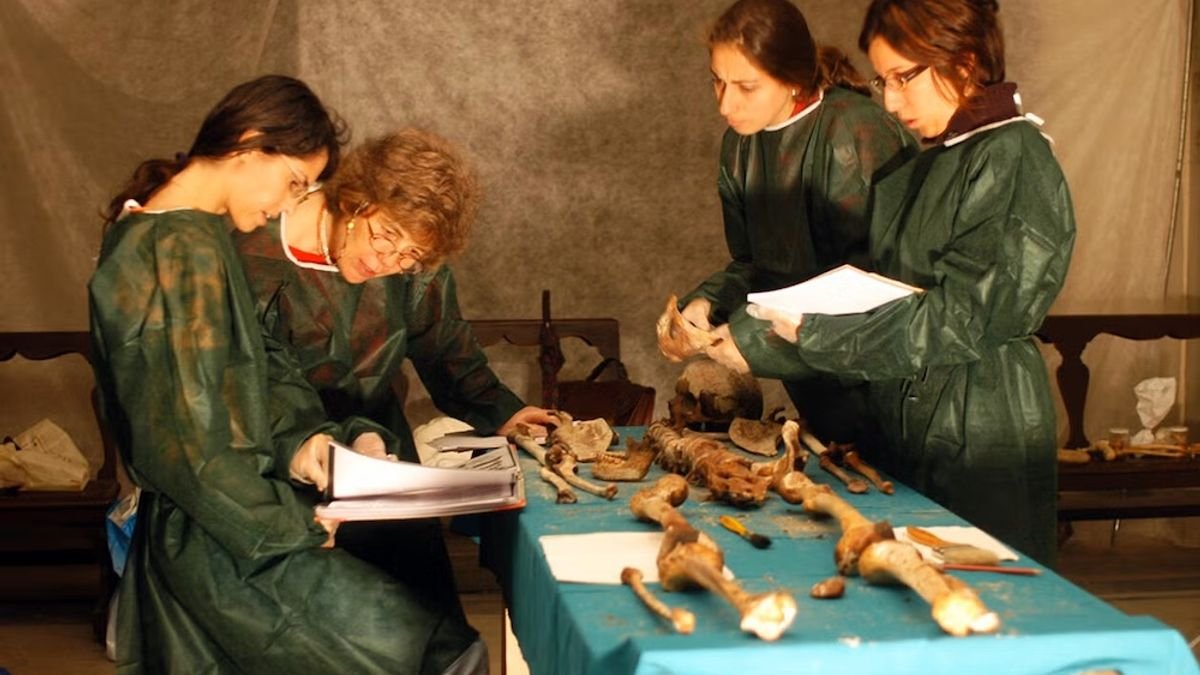
Researchers extracted DNA from four rib fragments preserved in the Medici Chapels in Florence, one from Giovanni and three from Francesco.
Earlier testing had detected signs of P. falciparum in both men, but researchers had not previously recovered and genetically analyzed parasite DNA from their bones.
Giovanni’s rib produced enough P. falciparum DNA to identify a previously uncharacterized strain with two unusual mutations, although one may have resulted from damage after death.
Francesco’s samples contained traces of P. falciparum and P. malariae, a second malaria-causing species. The findings support reports from court physicians describing the intermittent fevers that preceded his death and earlier evidence pointing toward malaria rather than arsenic.
Read More: Ancient DNA Reveals Family Was Not Always About Blood and May Redefine Kinship
How Malaria Moved Through Renaissance Europe
When researchers compared Giovanni’s strain with other ancient malaria samples, they found it was closely related to strains recovered from Austria, southern Italy, France, Spain, Taiwan, and the Caribbean.
The pattern was consistent with a population expansion of P. falciparum in Europe, although the limited number of ancient samples makes it difficult to determine exactly where Giovanni’s strain originated.
Malaria was then common across Tuscany’s coastal plains, river valleys and marshes, where mosquitoes thrived. Residents knew the disease as febbre terzana, or tertian fever, because its symptoms returned at regular intervals.
What the Medici Brothers’ Deaths Still Teach Us
Giovanni was only a teen when malaria swept through his family, killing him, his mother, and his younger brother within weeks. Francesco was in his mid-40s when he and Bianca died at the Medici family’s villa in Poggio.
Giovanni’s death was remembered as a family tragedy, while Francesco’s became tied to rumors of arsenic and betrayal. The parasite DNA now connects both stories to malaria.
The disease was eventually eradicated from Europe, but it remains a global threat. In 2024, there were about 282 million cases worldwide and 610,000 deaths, according to the World Health Organization.
The team’s work “generated data that can inform current and future research on malaria, which remains a deadly disease that afflicts millions of people worldwide,” added coauthor Adalgisa Caccone in the press release.
Read More: Ancient Human DNA on Cave Walls Could Reveal Who Touched These Sites — and Their Art
Article Sources
Our writers at Discovermagazine.com use peer-reviewed studies and high-quality sources for our articles, and our editors review for scientific accuracy and editorial standards. Review the sources used below for this article: