How Telangana startup T-Hub helped Skyroot’s Vikram-1 fulfil India’s space dream
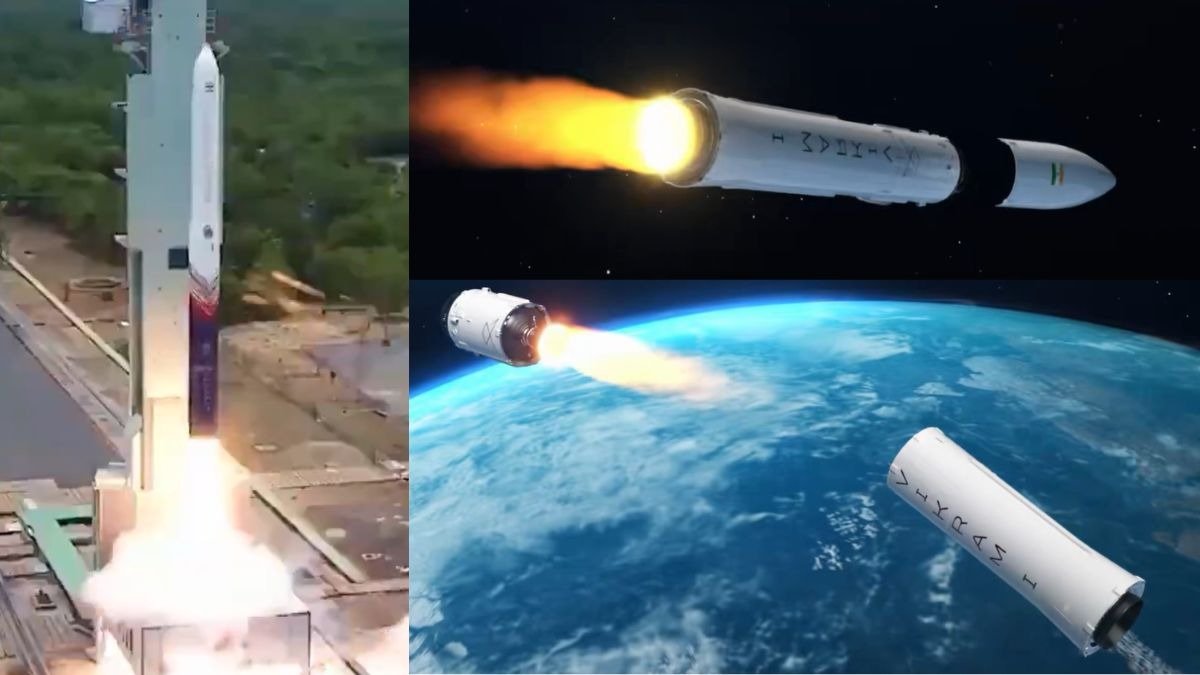
When Skyroot Aerospace’s Vikram-1 lifted off from Sriharikota on July 18 and placed its payload into orbit, it marked more than a milestone for India’s private space sector. The mission also drew attention to the innovation ecosystem that helped nurture the Hyderabad-based startup from its early days.
With the successful Mission Aagaman, Skyroot became the first Indian private company to place a payload into orbit using an indigenously developed launch vehicle, making India the third nation with private orbital launch capability.
The feat is being seen as a defining moment for the country’s growing commercial space industry.
For Telangana, the achievement has renewed focus on the state’s decade-long effort to build an ecosystem for startups and deep-tech companies.
HOW DID T-HUB HELP BUILD SKYROOT AEROSPACE?
Founded in 2018 by former Isro scientists Pawan Kumar Chandana and Naga Bharath Daka, Skyroot Aerospace was incubated at T-Hub, Hyderabad’s flagship startup incubator.
During its formative years, the company received mentorship, investor connections and business support while developing its launch vehicle programme.
As Skyroot moved from design to hardware, it also used facilities at T-Works, the state’s prototyping centre, letting engineers rapidly build and test critical components.
The startup grew alongside a wider innovation network that includes WE-Hub, TASK, RICH and the Telangana State Innovation Cell (TSIC), all set up to support entrepreneurship, research, skilling and industry collaboration.
WHAT ARE SKYROOT’S KEY MILESTONES BEFORE VIKRAM-1?
Skyroot first entered the national spotlight in November 2022 with the launch of Vikram-S, India’s first privately built rocket, shortly after the Centre opened the space sector to private players.
In May 2026, the company crossed another milestone, becoming India’s first space-tech unicorn with a valuation of over 1.1 billion dollars.
The successful orbital flight of Vikram-1 now marks its biggest achievement yet, showing that India’s private sector can design, build and launch orbital-class rockets on its own.
WHAT DID POLITICAL LEADERS SAY ABOUT THE LAUNCH?
Leaders across party lines welcomed the launch as a significant achievement for both India and Telangana.
Former Telangana IT and Industries Minister K.T. Rama Rao, widely known as KTR, congratulated the Skyroot team, crediting the state’s innovation ecosystem and its investment in startups.
During his tenure, the state government launched and expanded institutions such as T-Hub and T-Works to support entrepreneurship.
WHAT DOES VIKRAM-1’S SUCCESS MEAN FOR INDIA’S SPACE SECTOR?
Industry experts believe Vikram-1’s success could speed up investment in India’s private space ecosystem and encourage more startups working on launch vehicles, satellite technology, propulsion systems and aerospace manufacturing.
The achievement is also expected to strengthen Hyderabad’s position as one of India’s emerging hubs for deep-tech and aerospace innovation.
As India’s private space sector gathers pace, Skyroot’s journey from a startup incubated in Hyderabad to the company behind the country’s first privately developed orbital rocket shows how collaborative innovation ecosystems can turn research and entrepreneurial ambition into globally competitive technology.
– Ends