Tech3 | The startup QIP gold rush; How IT wealth is funding manufacturing; and more
One quick thing: Cognizant’s mega deal win, and redemption.
In today’s newsletter:
- The startup QIP gold rush
- How an IT icon is funding manufacturing
- India’s deeptech dilemma: Bullish VCs, few big cheques
P.S.: Tune into Tech3 Podcast, your daily dose of tech and startup insights. Monday to Friday! Check it out on Spotify or Apple Podcasts. And don’t forget to sign up to The AI Edge, our weekly newsletter on all things artificial intelligence (AI).
Was this newsletter forwarded to you? You can sign up for Tech3 here
 Top 3 Stories
The startup QIP gold rush

India’s new-age listed companies are returning to the market. This time, to raise more capital through QIPs.
Driving the news
Since 2021, listed new-age companies have raised or announced more than Rs 25,200 crore through qualified institutional placements (QIPs), signalling that follow-on fundraising is becoming a preferred route after going public.
By the numbers
The trend started in 2021 with IndiaMART and Route Mobile raising a combined Rs 1,938 crore through QIPs.
Momentum picked up further in 2025 as Kaynes Technology raised Rs 1,600 crore and Swiggy announced a Rs 10,000 crore QIP, the largest proposed institutional placement by a new-age listed company.
This year, Ola Electric raised Rs 780 crore while ideaForge mobilised Rs 500 crore.
Why is this happening?
Analysts say QIPs have emerged as the quickest and most efficient way for listed technology companies to raise growth capital.
“QIP seems the most efficient and effective method… and that’s the best way to get institutional investors on board,” said independent market analyst Ambareesh Baliga.
Unlike traditional businesses, many new-age companies continue to invest heavily in technology, product development, research, and expansion even after listing.
“New-age companies are still refining their business models while investing continuously in technology and expansion,” said Raghuram Kasiviswanathan of Uniqus Consultech.
The bottomline
As more startups enter the public markets, analysts expect QIPs to become an increasingly common follow-on fundraising route for listed technology companies looking to fund their next phase of growth.
How an IT icon is funding manufacturing
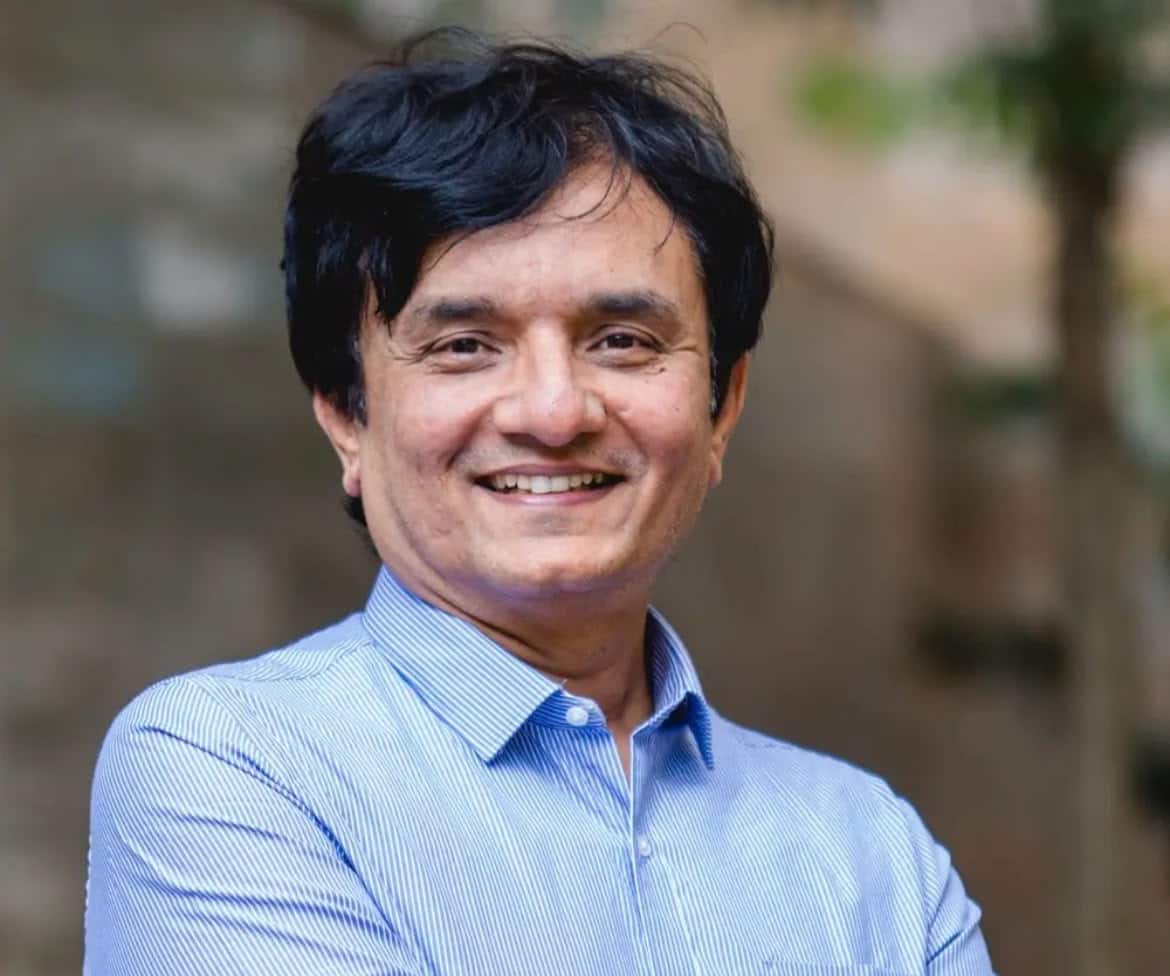
India’s software billionaires are increasingly backing the country’s factories.
What’s happening?
What’s the plan?
Catamaran is spending time across power equipment, forgings, switchgear, motors, wiring and cooling systems, which it sees as critical components of India’s rapidly expanding data centre supply chain.
- Sedemac, Aequs, Elon Musk’s SpaceX, TD Power Systems, Sansera Engineering, Vardhman Special Steels are some of its portfolio companies.
Apple is the poster child of global JVs in India, Ranganath said . “Our pitch to potential JV partners is simple. Apple has shown what is possible from India to the world. If Apple can manufacture devices in India, why can’t you?”
Foot on street
To lure global players, Catamaran has set up a specialised JV team.
- These people will help identify manufacturing companies across Karnataka, Tamil Nadu, Andhra Pradesh and other industrial hubs
- They have also spent considerable time in China, South Korea, Japan, Vietnam, Israel and Malaysia scouting for partners and understanding manufacturing capabilities in those markets
Ranganath dismissed concerns around exit timelines for deeptech investors.
“We have our own target returns, and the timelines are not a challenge. In fact, the cycle time for IPOs has been faster for manufacturing companies than many perceive,” he said.
India’s deeptech dilemma: Bullish VCs, few big cheques

Skyroot Aerospace’s successful orbital launch showed India’s deeptech sector can build world-class technology. Now it needs to prove it can consistently attract growth capital.
What’s happening?
The fundraising journeys of Skyroot and its spacetech peer Pixxel reflect a broader reality of India’s deeptech ecosystem: investor conviction is strong, but there are too few growth-stage companies mature enough to attract large pools of external capital.
- Deeptech startups raised around $610 million in H1 2026, down 25% year-on-year from about $810 million, and about 72% YoY from the $2.18 billion raised in H2 2025.
Why is this happening?
Investors say the slowdown reflects the ecosystem’s stage of development rather than weakening appetite for frontier technologies. The takeaway: Early-stage deals are happening, but late-stage capital needs to follow.
- Deeptech companies typically spend around 10 years developing and validating technologies before they are ready for commercialisation. This leads to longer funding cycles.
What to watch
The funding picture could improve over the coming months as several large rounds near completion.
- Electric vehicle makers Ather Energy and River are in advanced stages of raising around $260 million and $85 million, respectively, as we first reported.
- Spacetech startups Pixxel and Agnikul Cosmos are in the market to raise $80-100 million and $50-75 million, respectively.
Specialist venture firms are also launching dedicated deeptech funds while generalist investors are increasing allocations to the sector.
- Initiatives like the government’s Rs 1 lakh crore RDI Fund is also helping boost confidence in the sector.
The big picture
India’s deeptech ecosystem is entering a new phase. Investors believe stronger policy support, specialised capital, and a new generation of globally ambitious founders will produce more companies capable of raising sizeable growth-stage rounds in the years ahead.
MC Special: FDEs become India’s hottest hires

As enterprises race to move generative AI from pilots to production, a new class of specialists is commanding some of the highest starting salaries in India’s technology industry.
- Entry-level Forward Deployed Engineers (FDEs) now earn Rs 18-25 lakh a year, up to seven times the pay of a typical software developer.
The role, which blends AI expertise with customer-facing implementation, has become one of the fastest-growing talent segments as demand for enterprise AI deployment surges.
- India’s top IT firms are now building dedicated FDE teams, even as recruiters warn that the country’s talent pool remains extremely limited.