99% pure helium-3 extraction demonstrated by new cryogenic tech
Space startup Interlune revealed a new technology that extracts 99% pure helium-3 from standard Grade A helium.
The innovation aims to address immediate shortages on Earth while validating the technology for future lunar harvesting.
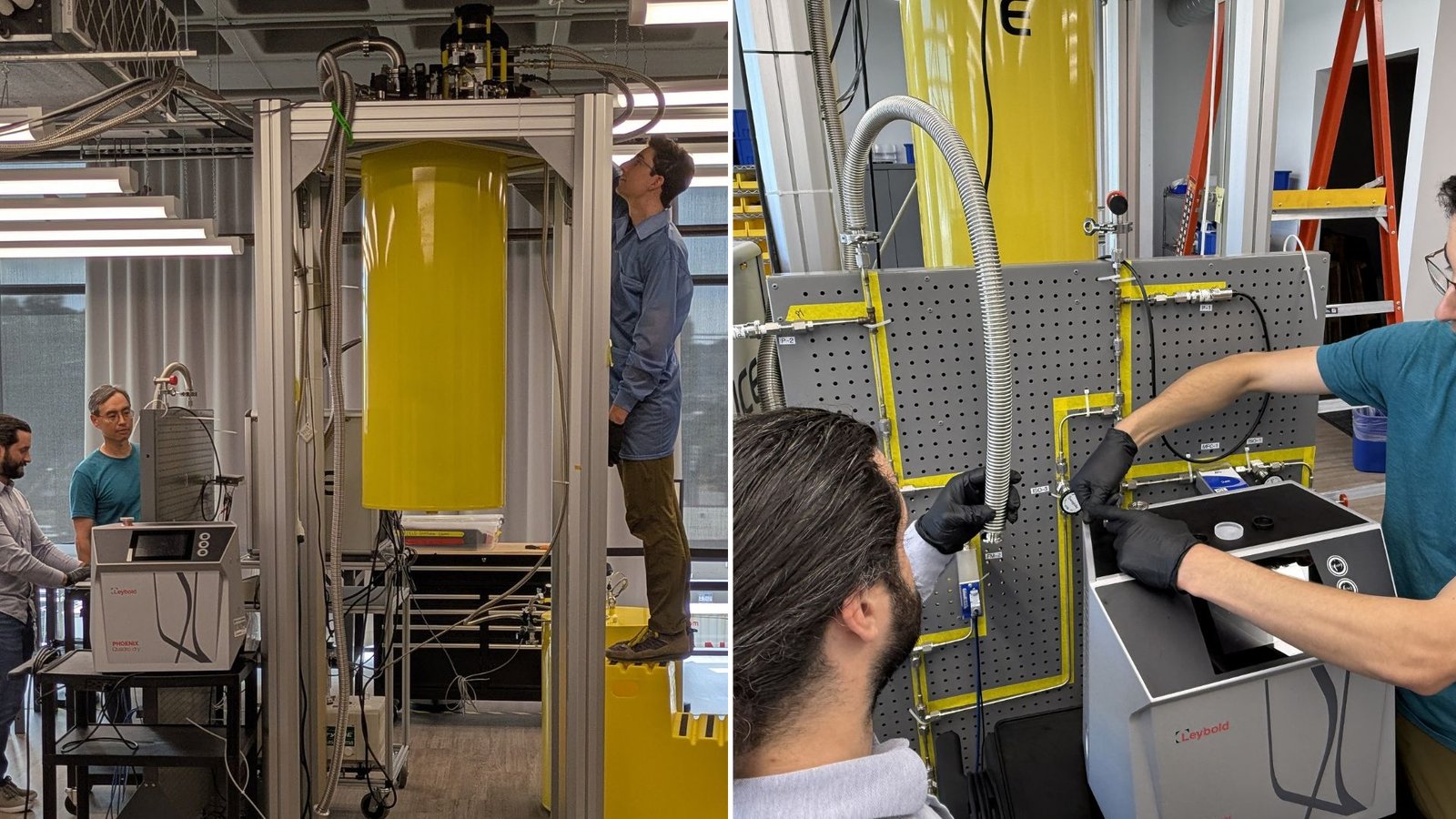
Seattle-based space startup has been testing its “Cold Capture” technology, which is developed with support from the U.S. Air Force.
“Every liter of helium produced in the world contains trace amounts of helium-3. Cold Capture plugs into existing helium liquefaction plant infrastructure to recover that helium-3 and turn it into a valuable product,” said Rob Meyerson, co-founder and CEO of Interlune.
Prove it on Earth, build it on the Moon
Helium is an elusive isotope. On Earth, it is extraordinarily rare. On the Moon, solar winds have deposited millions of tons of it across the lunar soil over billions of years.
Now, Interlune wants to capture both markets — starting right here on Earth.
Helium-3 production depends on aging tritium stockpiles, which is a source that is both strictly limited and prohibitively expensive to expand. On the other hand, newly discovered natural gas fields offer little help, as helium-3 exists only in trace amounts anywhere on Earth. Rather than hunting for new gas fields, the real challenge is efficiently separating helium-3 from standard helium.
Cold Capture addresses this by integrating directly into major processing plants, capturing far more helium-3 from aggregated streams than any individual gas field could yield.
Extracting helium-3 from terrestrial helium may sound straightforward, but it isn’t.
Helium-3 and common helium-4 are chemically identical, but separating them requires exploiting subtle physical differences at cryogenic temperatures. Interlune’s system cools the gas down to near absolute zero, using cryogenic distillation to fractionate the two isotopes.
“Cold Capture exploits subtle physical differences between the two isotopes at cryogenic temperatures to recover helium-3 in a process designed to scale,” said Gary Lai, chief technology officer at Interlune.
The payoff is huge. In 2025, the U.S. produced roughly 81 billion liters of helium. If Cold Capture were installed across domestic processing plants, Interlune estimates it could yield 2.5 kilograms of helium-3 per year, tripling the entire nation’s supply.
Use in quantum computing
Government and commercial partners are already placing heavy bets. The U.S. Air Force awarded Interlune an AFWERX SBIR Direct-to-Phase II contract to scale up production.
Earthly production is only stage one.
The ultimate prize lies several miles overhead. Interlune’s grand vision is to transport this same cryogenic separation hardware to the Moon. There, heavy excavators will scoop up thousands of tons of regolith, bake out the trapped volatile gases, and distill the helium-3 on-site.
Interlune minimizes the immense risk of launching unproven space hardware by first demonstrating the technology inside terrestrial liquefaction plants.
On Earth, Helium-3 is essential for cooling superconducting quantum computing systems down to the near-absolute-zero temperatures required for their operation. Cold Capture could meet the urgent demand for this rare isotope across commercial quantum computing and U.S. Air Force R&D programs by ramping up production.
Furthermore, Interlune has locked in nearly $500 million in binding future purchase agreements from quantum cooling heavyweights Bluefors and Maybell Quantum.