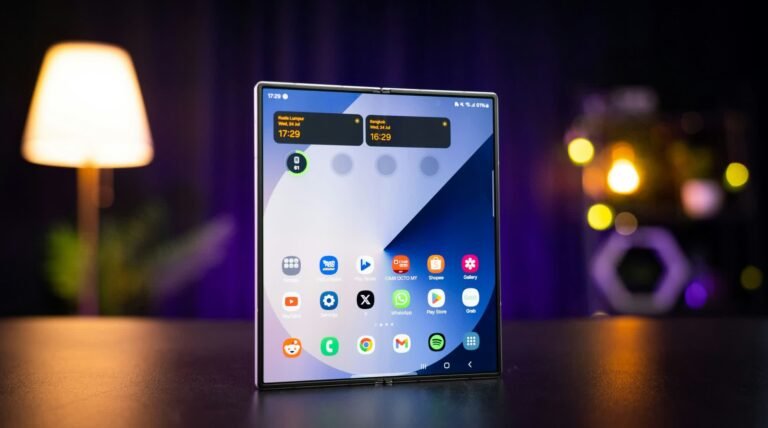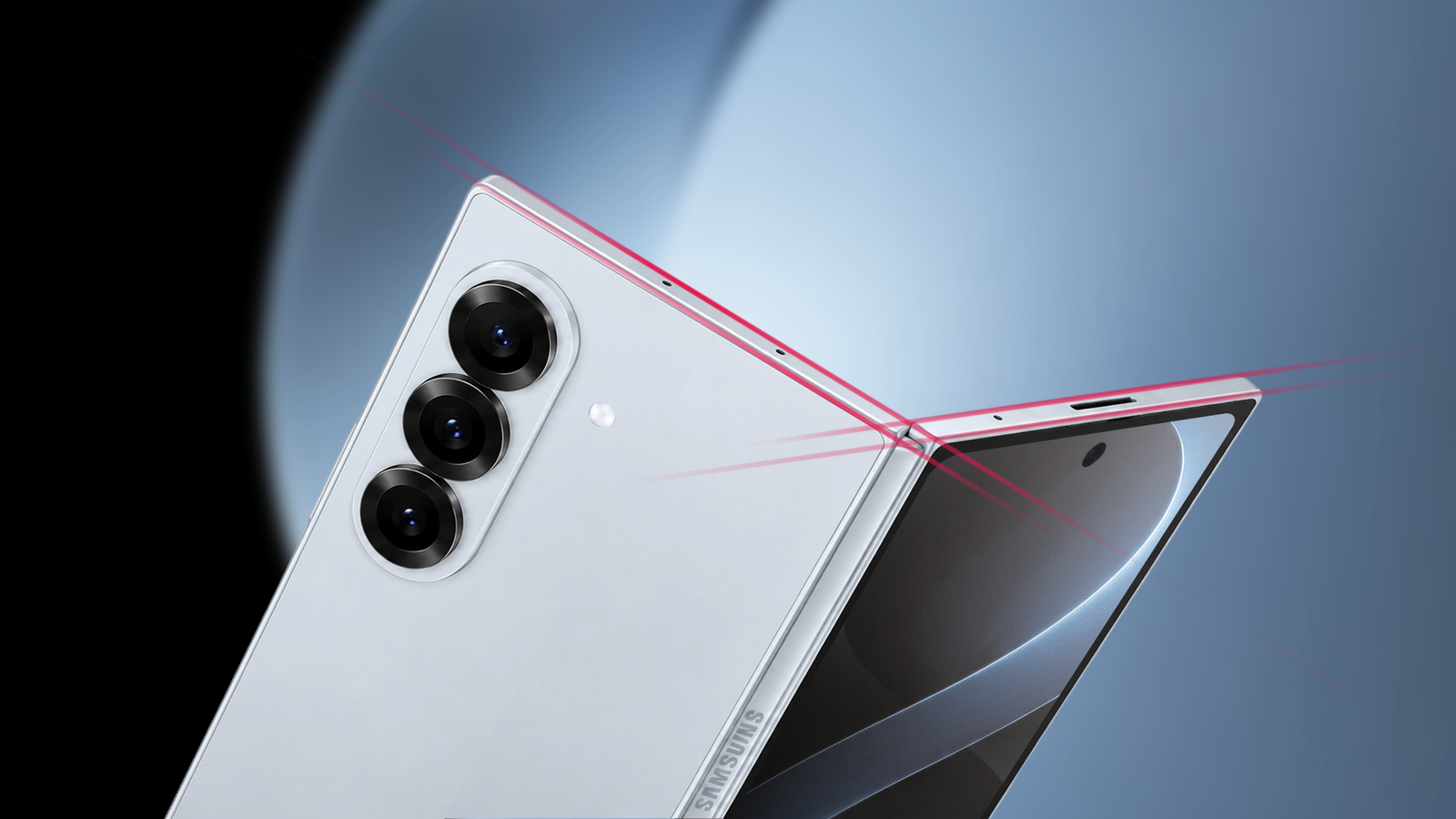
Samsung’s Galaxy Z Fold 8 needs to stop chasing thinness and fix what matters
With every new Galaxy Z Fold iteration, Samsung made its flagship foldable thinner, lighter, and more durable. Those improvements deserve credit, but they have now reached a point of diminishing returns.
The Samsung Galaxy Z Fold 8 being another millimeter thinner or a few grams lighter won’t make much difference to the overall user experience.
Instead, the company should focus on the upgrades that improve everyday usability.
Here are the changes I hope Samsung gets right with its next foldable flagship.
A bigger battery
Stop sacrificing battery life for a thinner design
The Samsung Galaxy Z Fold 3 launched in 2021 with a 4,400mAh battery and 25W fast charging support. Four years later, Samsung Galaxy Z Fold 7 debuted with the same 4,400mAh cell and wired charging speeds.
Yes, the Fold 7 is considerably thinner and lighter than the Fold 3. But there’s little point in a thinner phone if it can’t last a full day of use.

For all the optimizations the Korean company keeps claiming to make to its Z Fold lineup every year, the battery life has remained largely unchanged.
Samsung deserves credit for making the Galaxy Z Fold 7 remarkably thin and light. However, it comes with a major trade-off.
With the Z Fold 8 — or Z Fold 8 Ultra, if that’s what the company ends up calling it — the company must focus on improving the battery life.
Chinese foldables are as thin as the Galaxy Z Fold 7 and pack 5,500 mAh or larger batteries into that same slim design. There’s no reason Samsung can’t do the same.
One of the main benefits of a foldable phone is the productivity boost that a larger screen provides. Poor battery life negates that.
And it’s high time Samsung solved this problem for good with the Z Fold 8 this year.
Faster charging
Time to move beyond 25W charging
The Galaxy Z Fold lineup struggles not only with battery life but also with charging speeds. Even in 2026, it still tops out at a paltry 25W.
That’s good enough to charge the modest 4,400mAh battery to 50% in 30 minutes. However, for a flagship foldable designed as a productivity tool, that’s not enough.
Faster wired charging makes living with poor battery life easier. You can quickly top up your phone before heading out or between meetings.
With the Galaxy Z Fold, which primarily targets power users, you have to deal with both poor battery life and slow charging.
It’s a frustrating combination that effectively rules out the Galaxy Z Fold as my daily driver.
Samsung does not need to add crazy-fast 80W or 100W wired charging speeds to the Galaxy Z Fold 8. I don’t expect it to do so either.
Still, it should at least bump the charging speeds to 45W. That will help reduce the overall charging time despite a possible increase in battery size.
A better camera system
A 200MP main camera alone is not enough

With the Galaxy Z Fold 7, Samsung gave its foldable lineup a much-needed camera upgrade by adopting a 200MP main camera.
While it still doesn’t match its Chinese rivals, the upgrade at least improved sharpness and image quality.
Unfortunately, Samsung did not pay much attention to the secondary cameras. They still feel like an afterthought, using the same old 12MP ultrawide and 10MP 3x telephoto sensors.
For a phone with a $2,000 price tag, there’s no reason Samsung should not include better cameras on its foldables.
If the company wants people to choose the Galaxy Z Fold over the Samsung Galaxy S26 Ultra, it can’t expect them to sacrifice the camera experience for a bigger screen.
The 10MP 3x telephoto camera especially stands out like a sore thumb. It’s not good enough to find a place on a $2,000 flagship phone.
Samsung does not need to reinvent the Z Fold 8’s camera system. Instead, it only needs to bring the secondary cameras to the same level as the main camera.
Better telephoto and ultrawide cameras will go a long way in making the Galaxy Z Fold 8 feel like a complete package.
Better value
Make the $2,000 price easier to justify

The Galaxy Z Fold 7 is among the most expensive phones you can buy in the US. With the ongoing DRAM and NAND shortage and a possible Ultra branding, the Z Fold 8 may be even more expensive.
Samsung does not need to make the Z Fold 8 Wide or the Ultra cheaper. Foldables are expensive to make, and Samsung continues to lead the market in software support and global availability.
However, the company needs to do better to justify the premium pricing and deliver a more complete flagship experience.
The company can do this by offering a one-time free screen replacement in the first year of device ownership, bundling a year of Samsung Care+, or bumping up the base storage to 512 GB.
It doesn’t necessarily have to do all of them, but even one of these changes would make buying a Galaxy Z Fold feel like a better value
Time to make the right upgrades
Samsung doesn’t need to make another engineering statement with the Galaxy Z Fold 8. It already proved last year that it can build an incredibly thin, light, and durable foldable.
Now, it needs to refine that formula by eliminating the trade‑offs that have held the Z Fold series back for years.
A bigger battery, faster charging, a more capable camera system, and better overall value would do far more to improve the Galaxy Z Fold 8 than making the device another millimeter thinner.
![[Other] Cherry XTRFY GP5 XL Extra Large Mousepad $12.99 (Use code CHERRYFIVE at checkout for an extra $5 off)](https://jobssz.com/wp-content/uploads/2026/07/eUREG-4cHuunGEti-nFC2MPeAM2V6h1YYnbKfIiN2p4.jpeg)