The Robots Are Getting Real: Lessons from Hannover Messe’s Industrial AI Reality
3. A Supply Chain is Assembling Itself Around a Product That Barely Exists Yet
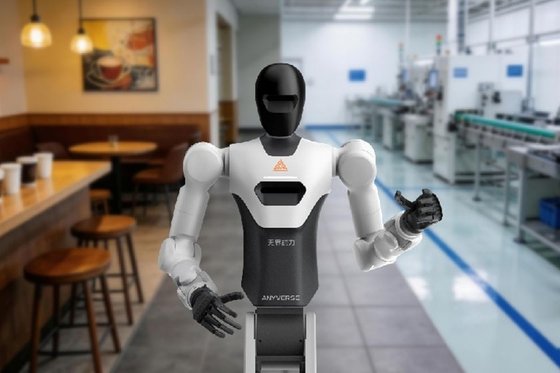
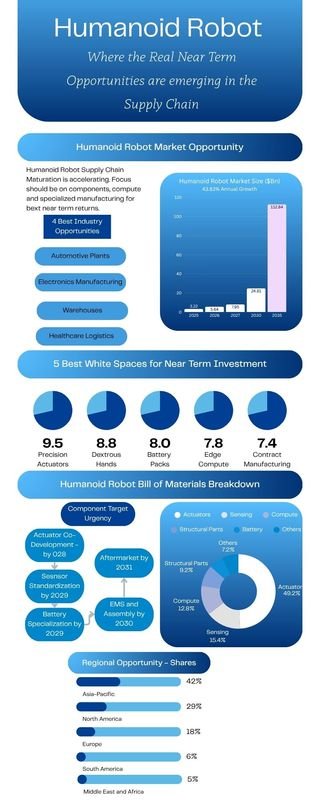
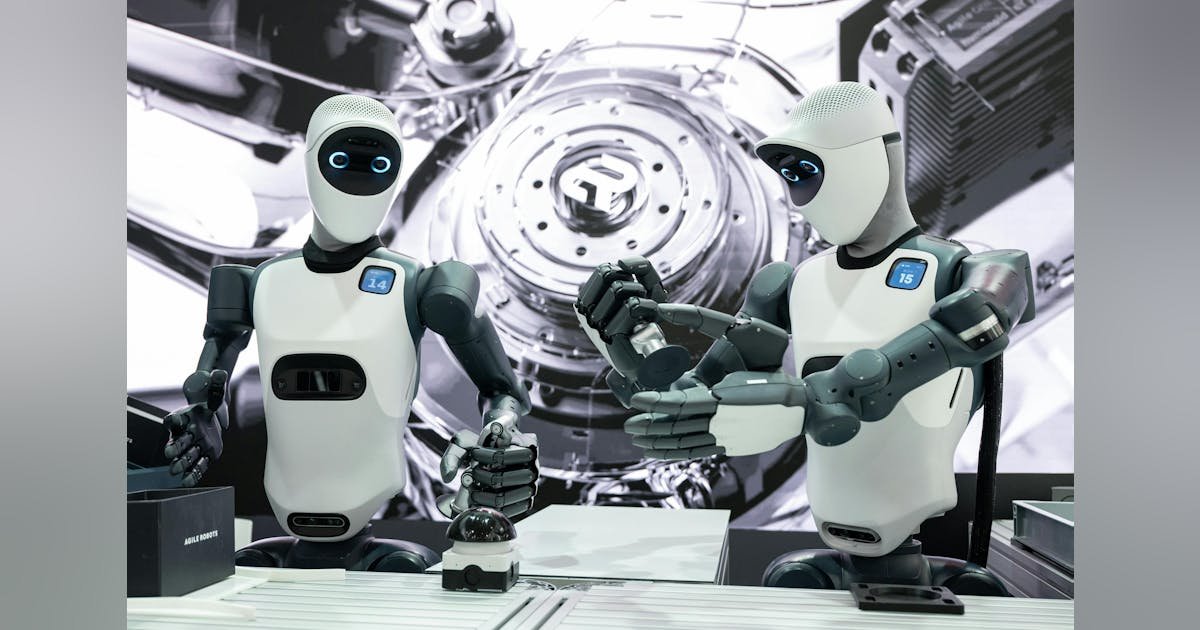
Whatever their form factor, humanoid robots depend on a broad upstream supply chain, from precision gear systems, compact actuators and machine-vision sensors to battery technology capable of powering a mobile machine through a full shift. Many of the companies that could supply these components are not robotics specialists at all. They are established manufacturers of motion control, sensing and energy storage and could pivot relatively quickly if humanoid demand materializes at scale.
Battery manufacturing is a case in point. Many manufacturers are already developing industrial vehicles such as forklifts that could be adapted for humanoid robot platforms. “We could see demand grow significantly in that area,” said Kulezak.
Another important component is gearing. “When we think about precision gearing, it sits at the center of humanoid robot development,” he said. “These systems require extremely high-precision gears, so companies that manufacture those components—particularly in regions such as Italy and Germany—are seeing increasing interest.”
For now, China stands out as the leader in humanoid robot assembly, even as the enabling components come from a supplier base that is scattered across Europe, North America and Asia. Kulezak expects that geography to adjust as the market ramps up, with the current supply chain acting as a starting point rather than a long-term blueprint.
4. The Control Cabinet Goes Virtual
Less visually dramatic, but no less significant, is the trend toward software-defined automation. The premise is simple: moving the intelligence that runs equipment from dedicated hardware into software, allowing functions traditionally performed by programmable logic controllers (PLCs) to run as virtual PLCs on general-purpose computing platforms.
The implications for hardware suppliers could be significant, said Kulezak, who likens the transition to the move from film to digital photography. This transition “could reshape competitive dynamics across the automation sector,” he said, adding that the transition will reward companies that are nimble enough to adapt and punish those that are not.
Kulezak noted that this year marked a turning point, with more companies moving from pilot projects to production deployments. One caveat, he added, is that the success stories highlighted at trade shows typically come from customers willing to speak publicly. The broader pace of adoption may be harder to gauge because many vendors point to customers who remain guarded about their system architectures, either because they are operating in stealth mode or protecting a competitive advantage as the market evolves.
Zoom out, however, and the industry is still in its early stages. “Manufacturing automation remains relatively early in its evolution,” Kulezak said. “Around the world, there is still significant manual labor and manual intervention.” The same is true of digitization, which, despite the buzz surrounding AI and Industry 4.0, has barely scratched the surface of its potential to improve processes and efficiency.