Nvidia’s Jensen Huang defends Chinese AI: “Open-source models that are excellent should be used”
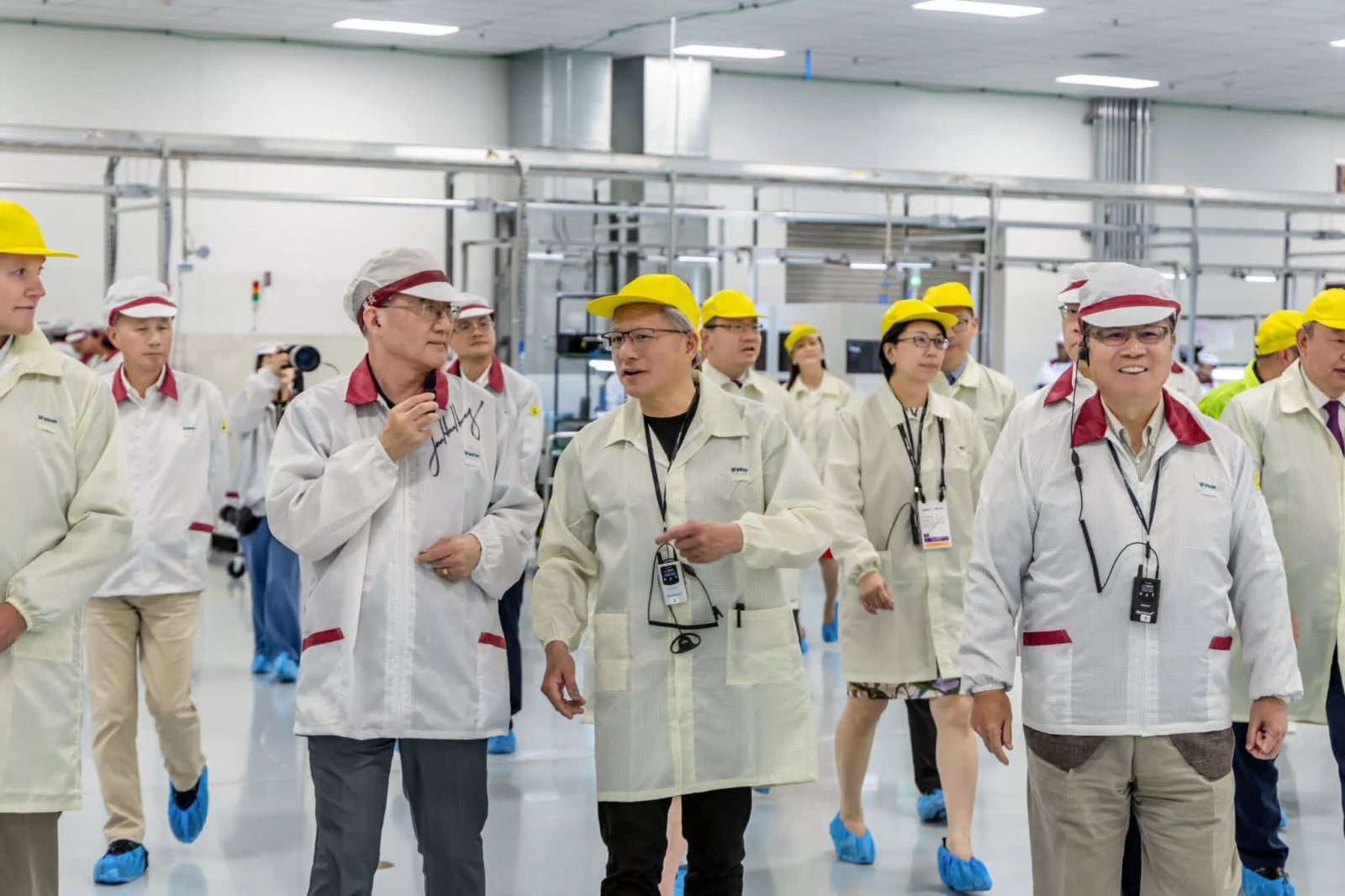
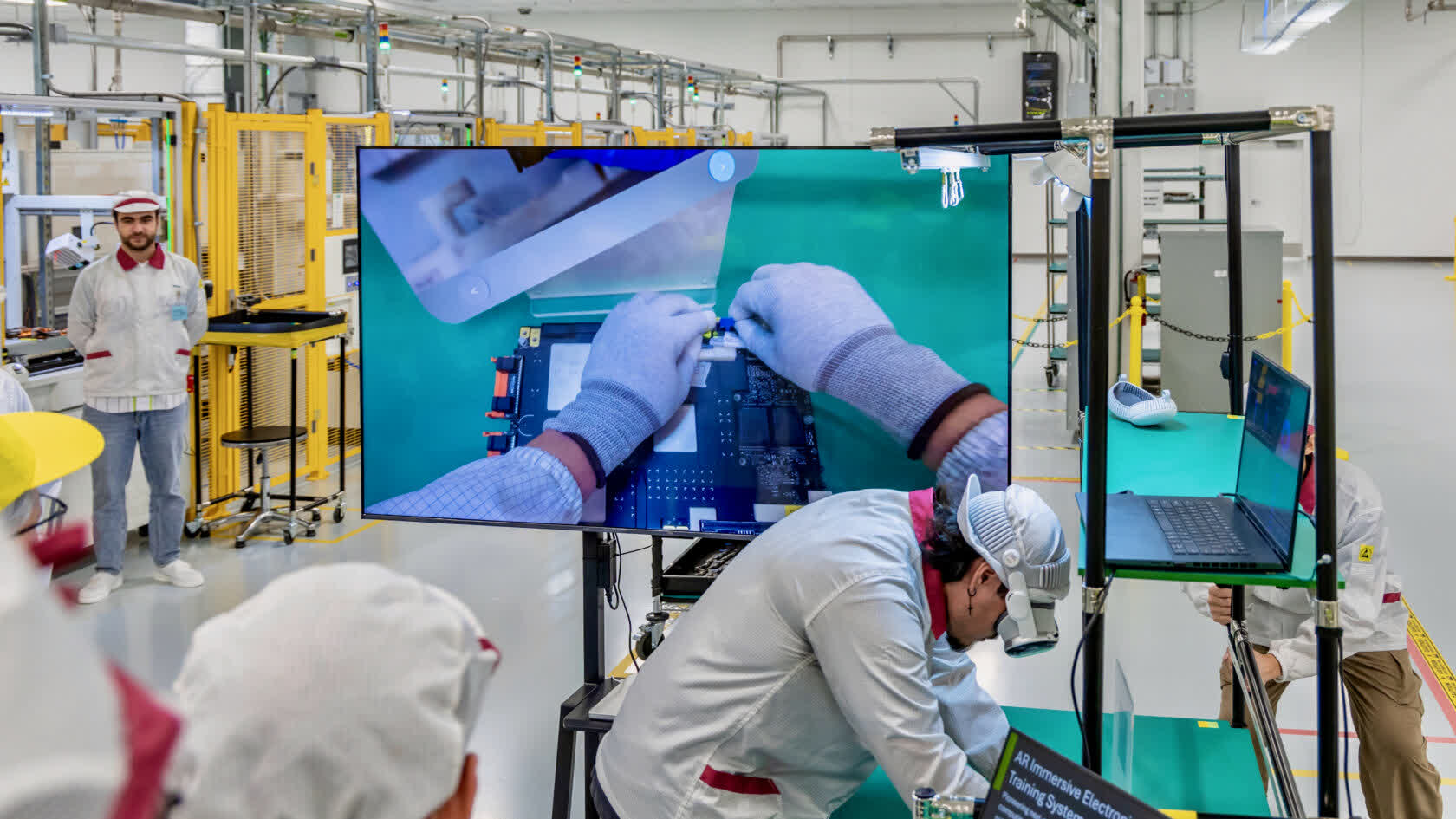
Big quote: Jensen Huang just spent a week watching his company’s valuation get hit by the threat of a Chinese open-weight model. His response was to go on the record defending it. Speaking to Axios in Fort Worth, Texas, at the opening of a new phase of the Wistron plant that builds Nvidia’s AI infrastructure, the Nvidia CEO said American companies should “absolutely” be free to run Chinese models. “These Chinese models are excellent,” he said. “Open-source models that are excellent should be used.” Asked whether China could displace American labs, he was blunt: “Zero possibility.”
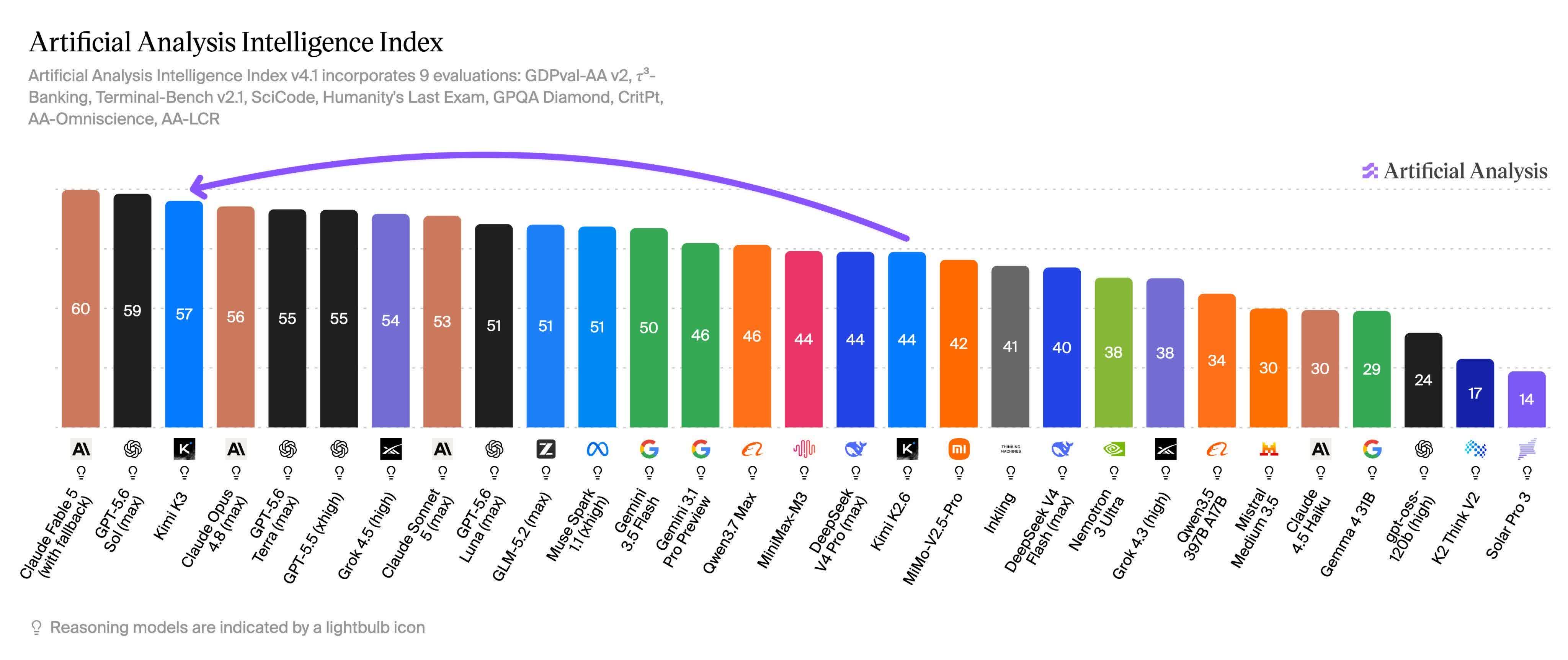
The timing is what makes it interesting. Moonshot AI released Kimi K3 on July 16. Independent evaluators put it third on Artificial Analysis’ Intelligence Index, only behind Anthropic’s Claude Fable 5 and OpenAI’s GPT-5.6 Sol, and first on LMArena’s blind Frontend Code Arena board.
The market took it about as well as it took DeepSeek. The Philadelphia Semiconductor Index fell 12.5% in a week, its worst stretch in 15 months. Taiwan’s benchmark dropped more than 6%, Japan closed down 4%, and Chinese AI stocks actually got hit harder than American ones, with Zhipu down as much as 30% in Hong Kong and MiniMax off 16%.
“The market misunderstood the impact of DeepSeek the first time,” Huang told Axios, adding that Wall Street has “misunderstood the impact of Kimi again this time.”
His pitch is one Nvidia has made before, delivered without much subtlety this time: “Free AI should be great for hardware. Free AI should be great for chips. Free AI should be great for data centers.” The logic is that as cheap, capable models get used more, not less, more usage means more chips running somewhere. He also argued open models don’t cannibalize OpenAI and Anthropic, but they give people a free first taste, and plenty of those people end up paying for something faster and more reliable.
Bloomberg’s analysis of K3 noted that where DeepSeek’s story was about cheaper training, Moonshot’s is about a much larger model that leans harder on memory infrastructure.
The security argument, flipped
Huang waved off the idea that a downloaded Chinese model is some kind of backdoor to Beijing, pointing out you can inspect the weights, tweak them, and run the whole thing sealed off from the internet if you want. His argument is that openness actually makes things safer, because more people are looking for problems. Lock everything into one closed system, he said, and “if everything just becomes one single model, one single point of attack, one single source of failure, I think the world is much, much more vulnerable.”
– Kimi.ai (@Kimi_Moonshot) July 16, 2026
Then he turned that same logic on an American company. Huang said Anthropic should open up Claude Mythos, its cybersecurity model that’s currently restricted to a vetted group of partners, calling it something that “should be available as a service” and arguing “holding Anthropic back is not in the benefit of the United States.” His framing: “Just because Mythos is not available, open models are available anyhow.”
It is worth noting that Nvidia is one of the partners with access to Mythos already, through Anthropic’s Project Glasswing program. Glasswing has grown from around 50 partners to roughly 200 across about 15 countries, and Anthropic has said models this capable will likely be widely available within 6 to 12 months regardless of what it decides.
Meanwhile, in Washington…
– Treasury Secretary Scott Bessent (@SecScottBessent) July 22, 2026
Huang’s comments landed hours after Treasury Secretary Scott Bessent told Fox Business the administration is looking into whether Chinese AI models were built on stolen US intellectual property.
“If we see … that overseas models are stealing from our great companies, we have the ability to sanction them because of this theft,” Bessent said, pointing to what he called “watermarks” of US models showing up inside Chinese ones, with action possible within days or weeks. He also floated whether US companies should have to disclose to customers when they’re running Chinese models.
– Director Michael Kratsios (@mkratsios47) July 22, 2026
Behind the scenes, Axios says this fight has been simmering for a while. US Commerce has been considering blacklisting Chinese AI labs since last year, and the White House had a draft executive order that would’ve made US companies liable for running Chinese models. All of it stalled, but Kimi’s release seems to have brought it back to life.
Jensen Huang split the difference on the “they stole our work” question: “Distillation, learning from AI, learning from other sources of knowledge, is fundamental to intelligence.”
Read the incentives
Granted, all this commentary is not coming from a neutral party. Nvidia’s China revenue is basically zero right now, down from a business Huang once said could be worth $50 billion a year. Huang has spent two years arguing against export controls, so of course he’s going to say demand for AI is elastic and that restrictions can backfire. That said, he has also endorsed keeping Blackwell and Rubin out of China’s hands.
The good news is that his core claim could soon be verified. Every number on Kimi K3 so far comes from Moonshot itself or from early API testing. The full weights go public on July 27, and at that point the benchmarks either hold up under independent testing or they don’t.
Anthropic has accused Moonshot of training on 3.4 million Claude conversations earlier this year, though analyst Nathan Lambert’s take is that even if some of that happened, it’s not enough to explain how good K3 actually is. Separately, Epoch AI estimates the gap between the best open and closed models is now down to around three months.
If that gap keeps shrinking, the real question stops being whether US companies should be allowed to use Chinese models, and starts being whether banning them would even do anything once the weights are already sitting on servers everywhere.