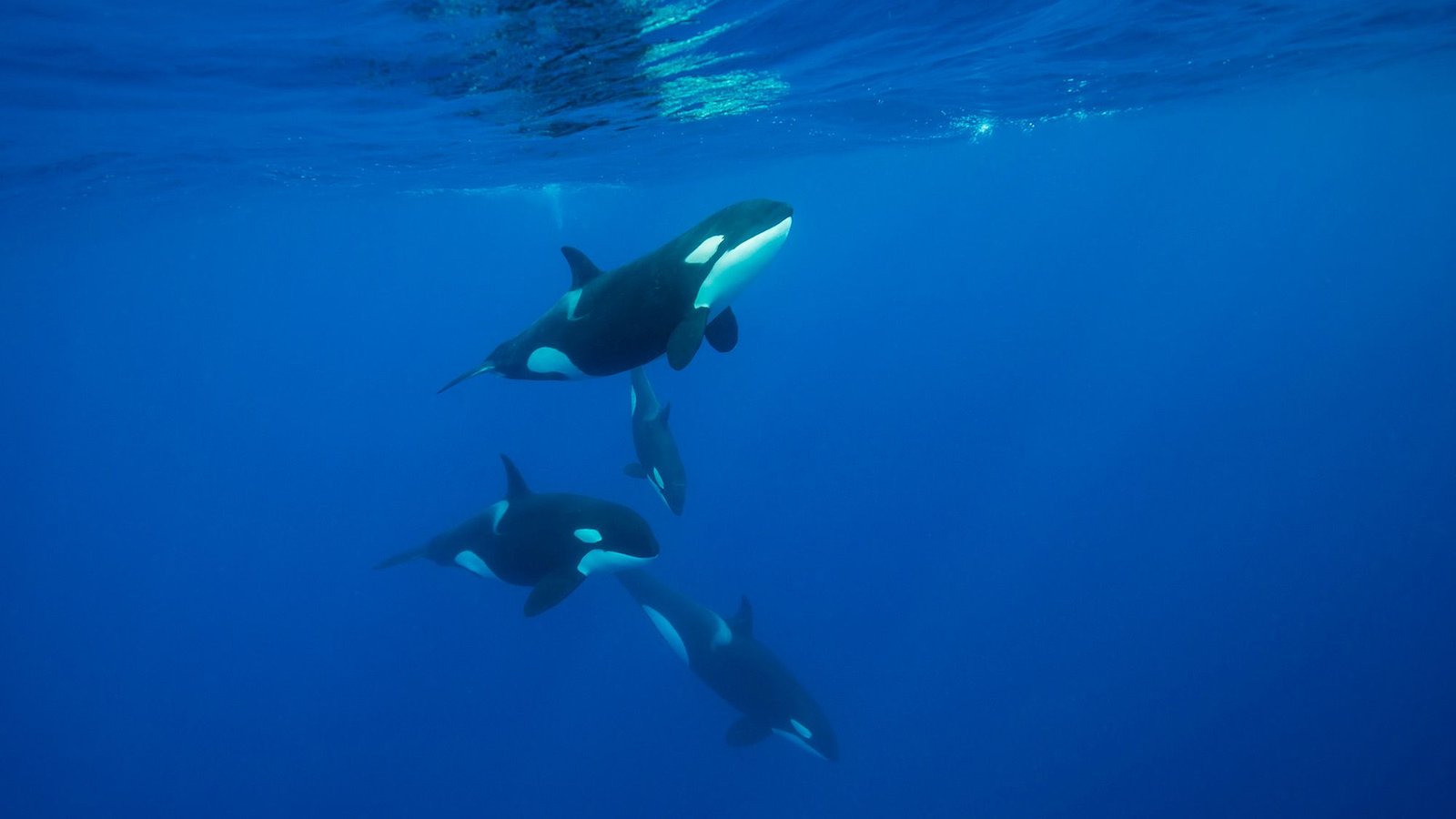
One of the ocean’s most intelligent and aggressive predators has once again surprised scientists with a curious new behavior. In the Gulf of California, researchers witnessed orcas working together to smash dead sunfish into bits — a suspected food processing technique that makes it easier for younger whales to feed on the enormous bony fish that weigh up to 4,400 pounds (2,000 kilograms).
In two separate encounters, one orca gripped a sharp-tail sunfish (Masturus lanceolatus) while another orca charged toward the fish. The first whale released the carcass just before impact, allowing its companion to slam into the fish at high speed and scatter fragments of fish flesh throughout the water.
“It was unlike anything I’d witnessed before,” Kathryn Ayres, a scientist at the conservation nonprofit Beneath the Waves told Live Science in an email. “As a scientist, moments like this are incredibly exciting because you realize you’re observing something that may never have been documented in detail before — as you can tell in the video!”
Ayres and her colleagues dubbed the behavior “ram-to-fragment.” Their observations, published July 23 in the journal Frontiers in Ethology, suggest the killer whales were not trying to kill the sunfish, which were already dead and appeared to have been disembowelled. Instead, the orcas may have been breaking down the bulky carcasses so members of the group, particularly younger animals, could feed more easily.
Hunting in action
The first encounter Ayres observed took place in July 2024 near an offshore seamount off Baja California Sur, Mexico. An adult female orca held a sharp-tail sunfish by its tail-like clavus, or rudder, while an adult male orca accelerated toward it, belly-up. The female released the fish an instant before the male struck.
The collision produced a loud noise and caused the sunfish’s tissue to disintegrate. In the video, Ayres’ shock is evident as she can be heard exclaiming, “Oh my god!”
A juvenile orca then swam into the cloud of suspended flesh and ate the smaller pieces, while the adults fed on what remained of the main carcass.
Get the world’s most fascinating discoveries delivered straight to your inbox.
A second encounter, which the researchers credited diver Héctor Franz for filming in September 2025, followed much of the same sequence. One adult orca stabilized the sunfish, another rammed it and a calf later pulled tissue from the broken carcass.
Ayres had previously watched orcas hunt ocean sunfish (Mola mola), but this was different.
“I had also seen orcas ram their prey previously, but I had never witnessed an impact powerful enough to completely fragment the tissue like this,” Ayres said. “That was what made this observation so remarkable.”
The maneuver resembled coordinated attacks Ayres and her team had previously documented, in which orcas confronted whale sharks (Rhincodon typus) — the largest living fish — in the Gulf of California. In those hunts, some orcas took turns ramming it.
Previous footage from diver Kelsey Williamson shows orcas flipping a whale shark upside down to have an easier time preying on it.
(Image credit: Kelsey Williamson)
Why make fish confetti?
Ramming is not a new killer whale hunting technique, said Matt Hansen, a postdoctoral researcher at the Leibniz Institute of Freshwater Ecology and Inland Fisheries who was not involved in the study. However, the hold-and-release sequences and shattering of carcasses may be new, Hansen told Live Science in an email.
The researchers proposed several possible explanations for the behavior. The predominant assumption is that the adults were processing food for younger whales. Orcas frequently tear apart prey and share portions with calves and juveniles, and in both newly described encounters, young killer whales were present.
But two observations are not enough to show that the adults were deliberately feeding or teaching the youngsters, Heather Hill, a professor and chair of psychology at St. Mary’s University in Texas who was not involved in the research, told Live Science in an email.
“Whether or not it represents parental investment, observational learning, or distribution of resources remains circumstantial in my opinion,” she said.
The researchers also suggested that the behavior could have been playful. Orcas are highly intelligent and social, and they sometimes manipulate, toss or strike prey without immediately eating it. However, Hill said that the two encounters appeared more practical than playful.
“If it was for fun, I would have expected multiple attempts made with variations in speed, point of contact, force of impact, and initiators because the point of playing is to try different things and not destroy the toy too soon,” she said. “Since it appears that these events were ‘one and done’ so to speak, probably less playful and more functional — to eat the fish and maybe to model a foraging technique and possibly to share resources with the younger animal.”
The study authors also raise a more speculative possibility that dispersing the sunfish’s microbe-rich skin and gelatinous tissue could somehow affect the surrounding water or expose the orcas to potentially beneficial microbes. But what that benefit might be is unclear.
“I don’t see how dispersing the skin into the water column would have a different effect from eating it,” Hansen said. “Unless the authors are suggesting [the orcas] are using it like a lotion on their own skin? Who knows, the world is weird and wonderful.”
Ayres KA, Gallagher AJ, Avena CV, Duarte CM and Higuera Rivas JE (2026) Fragmentation of sharp-tail sunfish (Masturus lanceolatus) caused by high-impact ramming behavior in orcas (Orcinus orca). Front. Ethol. 5:1835536. doi: 10.3389/fetho.2026.1835536
The phrase “I could die of happiness” is not meant to be taken literally. But as it turns out, you actually can – though it is exceedingly rare. A new case study, published in Oxford Medical Case Reports, tells the unusual story of a 65-year-old woman who was so desperately happy after attending her daughter’s wedding,…
A tropical storm swirling in the US Gulf is expected to bring heavy rainfall and a “life-threatening storm surge” to the south-east of the country, according to the National Hurricane Center (NHC). Tropical Storm Bertha was located about 105 miles (165km) south of Panama City, Florida, carrying windspeeds of 40mph (65 km/h) on Monday. “Bertha…
Twice each day, tides ebb and flow through a maze of sandy channels, mudflats, and mangrove forests that flank the 88 islands and islets of Guinea-Bissau’s Bijagós Archipelago (Arquipélago dos Bijagós in Portuguese). Seen from above, the process leads to stark changes to the landscape: around low tide, intertidal mudflats and sandflats emerge from the…
Sign Up For Goods 🛍️ Product news, reviews, and must-have deals. By signing up, you confirm you are 16+, will receive newsletters and promotional content and agree to our Terms of Use and acknowledge the data practices in our Privacy Policy. You may unsubscribe at any time. Oxford, England’s Solid State Logic built its name…
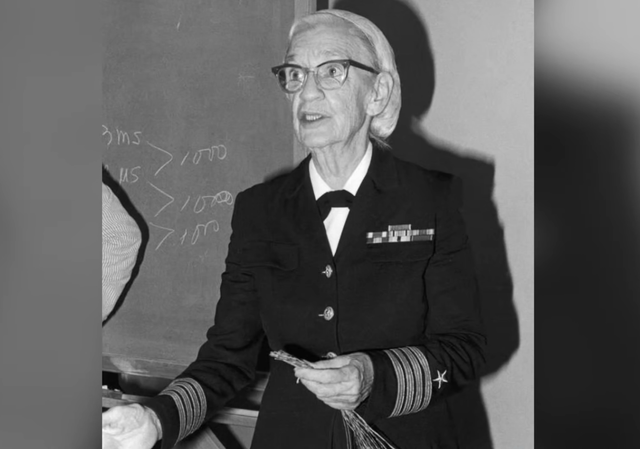
Most people think of data transfer as instantaneous, but there is a hard physical limit of course – the speed of light. Grace Hopper used an 11.8-inch wire to communicate this "nanosecond" constraint loud and clear. If you're interested in the details, I’ve put together a breakdown of the math explaining why computers inevitably had…