AcroCyte Therapeutics Awarded ARPA ‑H Funding to Advance Scalable Human Organoid Technologies
TAIPEI and SAN CARLOS, Calif., July 23, 2026 /PRNewswire/ — AcroCyte Therapeutics Inc. announced today that it has been selected to receive funding from the Advanced Research Projects Agency for Health (ARPA‑H) to advance scalable human organoid technologies for regenerative medicine applications.

Established by the U.S. government in 2022, ARPA‑H was modeled after the Defense Advanced Research Projects Agency (DARPA) to support high‑risk, high‑reward research programs with the potential to transform human health. Rather than funding incremental advances, ARPA‑H focuses on enabling disruptive technologies capable of addressing major unmet medical and societal challenges.
Among ARPA‑H’s priority focus areas is regenerative medicine, including flagship programs aimed at addressing the global shortage of transplantable organs through the development of bioengineered, clinically functional replacement tissues and organs. AcroCyte’s selection reflects recognition of its original cell expansion technology as a critical enabling platform for these ambitious efforts.
Core Technology: R3CE® Platform Enables Standardized, Scalable Organoid Production
Human organoids represent one of the most promising frontiers in biomedical science; however, their translation into clinical and translational applications has been limited by long‑standing challenges, including scalability, reproducibility, and manufacturing standardization.
AcroCyte has addressed these challenges through its proprietary R3CE® (Rapid Reproducible Rare Cell 3D Expansion) platform, which enables highly reproducible and standardized three‑dimensional expansion of rare human cells. The R3CE® platform is currently FDA‑registered as a Class I medical device, making it the first standardized organoid expansion system to obtain this regulatory designation.
Using minimally invasive procedures, autologous kidney cells can be obtained from patients and expanded within weeks into physiologically relevant renal organoid modules. This capability supports new pathways for regenerative research and translational development beyond conventional organ transplantation.
International Clinical Strategy: Parallel Development in the U.S. and Taiwan
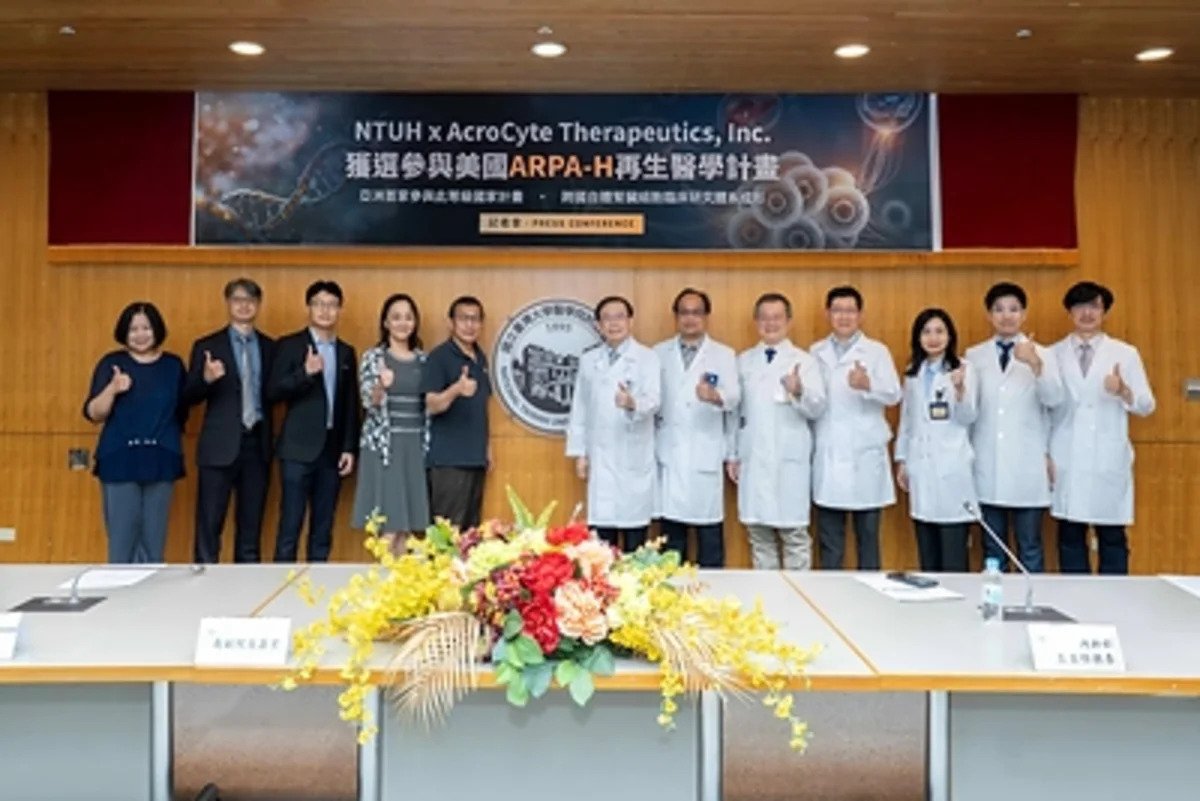
The ARPA‑H–supported project will be executed through a binational clinical and translational strategy, integrating clinical expertise in both the United States and Taiwan. AcroCyte will collaborate with the University of Chicago Medicine in the U.S. and National Taiwan University Hospital (NTUH), together with the National Center for Biomodels (NCB), to pursue parallel development efforts across both regions.