10 Gaming Villains That Were Actually Right
No matter the media, a great story always needs a memorable villain to act as a compelling counterweight to our protagonist – otherwise, we wouldn’t have anyone to fight against or direct our anger toward, right?
However, every now and then, we run into an antagonist whose true brilliance lies in the complexity of their ideology. That’s because when you look closely at their backstory, stripping away the extreme methods and the horrific atrocities they committed, you realize there is a disturbingly logical foundation driving their actions – a plausible motive that makes you pause, reconsider your own morality, and think: “Wait… are they actually… right?”
These are easily the villains I love analyzing the most because, sure, none of them are innocent saints and they are definitely not 100% right. I mean, if they were, they simply wouldn’t be playing the role of the big bad in our favorite video games in the first place! But the real beauty is that when you analyze them objectively, without the raw emotion of being in the protagonist’s shoes, you actually find some genuine logic behind their madness, no matter how twisted it might be. So, let’s leave our personal biases at the door and take a look at 10 gaming villains who were actually onto something.
Spoilers for the games ahead.
10
Dracula
Castlevania: Symphony of the Night

One of my favorite things about the Castlevania franchise is the bittersweet beauty of Dracula’s tragic narrative, which forces us into an uncomfortable position where we actually find ourselves agreeing with the Dark Lord. Well, in part, at least.
Basically, he fell in love with a human, a lovely woman named Lisa, who was brutally burned at the stake by the church for the simple crime of trying to help people with science and medicine. That made Dracula give up on humanity entirely, albeit in a completely unbridled, apocalyptic way. In his mind, whatever good existed in the world was murdered by human evil and ignorance, leaving the entire species tainted and deserving of total wrath.
Now, let’s be real: Dracula’s solution is a literal genocide that extends to everyone, including innocent people, because he is wallowing in his grief and writing history’s longest suicide note. But when you look at the raw catalyst of his pain, anyone culpable in his wife’s execution sort of had it coming.
9
N
Pokémon Black & White

As the enigmatic leader of Team Plasma, N introduced an unprecedented layer of moral ambiguity to a franchise usually defined by bright optimism and a “gotta catch ’em all” motto. His core ideology was actually pretty simple – yet uncomfortable for us players who own roomfuls of Pokémon plushies to face: forcing wild, sentient creatures into tiny capsules to battle each other for human entertainment and glory is cruel!
Because of this, Black & White brings an antagonist to the table with a remarkably genuine personal premise, even if the plot takes new, darker turns thanks to Ghetsis’s underlying plan to conquer Unova. Either way, N made us re-evaluate the core ethics of this universe, forcing us to ask if we were truly partners with our team or just benevolent captors. His dream of a world where Pokémon could live freely without human exploitation was remarkably compassionate and structurally spot-on.
8
Pagan Min
Far Cry 4

Pagan Min is an eccentric, pink-suit-wearing tyrant, but beneath the flamboyant cruelty was a broken man just trying to bring a shred of political stability to Kyrat, a country he truly loved and wanted to protect, despite it being utterly destroyed by bloody civil wars and religious extremism.
Sure, Pagan got completely lost in the madness of power (otherwise, he wouldn’t be the big bad of a Far Cry game), but his opponents, the Golden Path “freedom fighters,” were quite literally narco-terrorists bent on turning the entire place into either an oppressive religious dictatorship or an unrestricted drug state.
Also, if you just sit still during the opening minutes to unlock the famous secret ending, Pagan actually treats you like family, politely escorts you to scatter your mother’s ashes, and hands you the kingdom peacefully, proving he had no personal beef with the protagonist. He was a monster, but Kyrat was safer under his watch than under the rebels’.
7
Ardyn
Final Fantasy XV

I often feel that Final Fantasy XV is the most depressing entry in the franchise because practically every main character suffers or meets a horrific fate at some point – and the exact same thing can be said for the game’s main antagonist, Ardyn Izunia.
His story is probably one of the most tragic betrayals in RPG history, making him feel far more like a victim of cosmic cruelty than a purely evil villain. Originally a selfless healer chosen by the Astral gods, Ardyn cured thousands of people infected with the Starscourge by absorbing the dark corruption into his own body.
However, his reward was his jealous brother murdering Ardyn’s fiancée, stealing the throne, branding him a demonic monster, and erasing him from history for 2,000 years. To make matters worse, the gods themselves revealed that his tragic downfall was pre-ordained – he was literally created by Bahamut just to be betrayed, corrupted, and eventually slaughtered by the True King. To sum it all up, Ardyn was driven completely mad by centuries of absorbed suffering and cosmic gaslighting, meaning his rage against the Lucian royal line was entirely justified. Past Ardyn literally did nothing wrong!
6
The Colossi
Shadow of the Colossus

If you pay any attention to Shadow of the Colossus’ story, you’ll eventually realize that calling the ancient giants “villains” feels fundamentally wrong, even though the game forces you to hunt them down as terrifying boss encounters.
The truth is, they are tragic, neutral guardians created specifically to act as living seals holding back fragments of the dark entity Dormin, and that’s it. They weren’t roaming the Forbidden Lands wreaking havoc on innocent people. They were just minding their own business, peacefully existing in solitude.
When Wander invaded their sanctuaries to slaughter them out of a desperate (and admittedly selfish) desire to revive a girl, the Colossi were simply acting in self-defense and trying to keep a world-ending evil sealed away. They were the true guardians of order, and we were the real monsters.
5
Edgar Ross
Red Dead Redemption

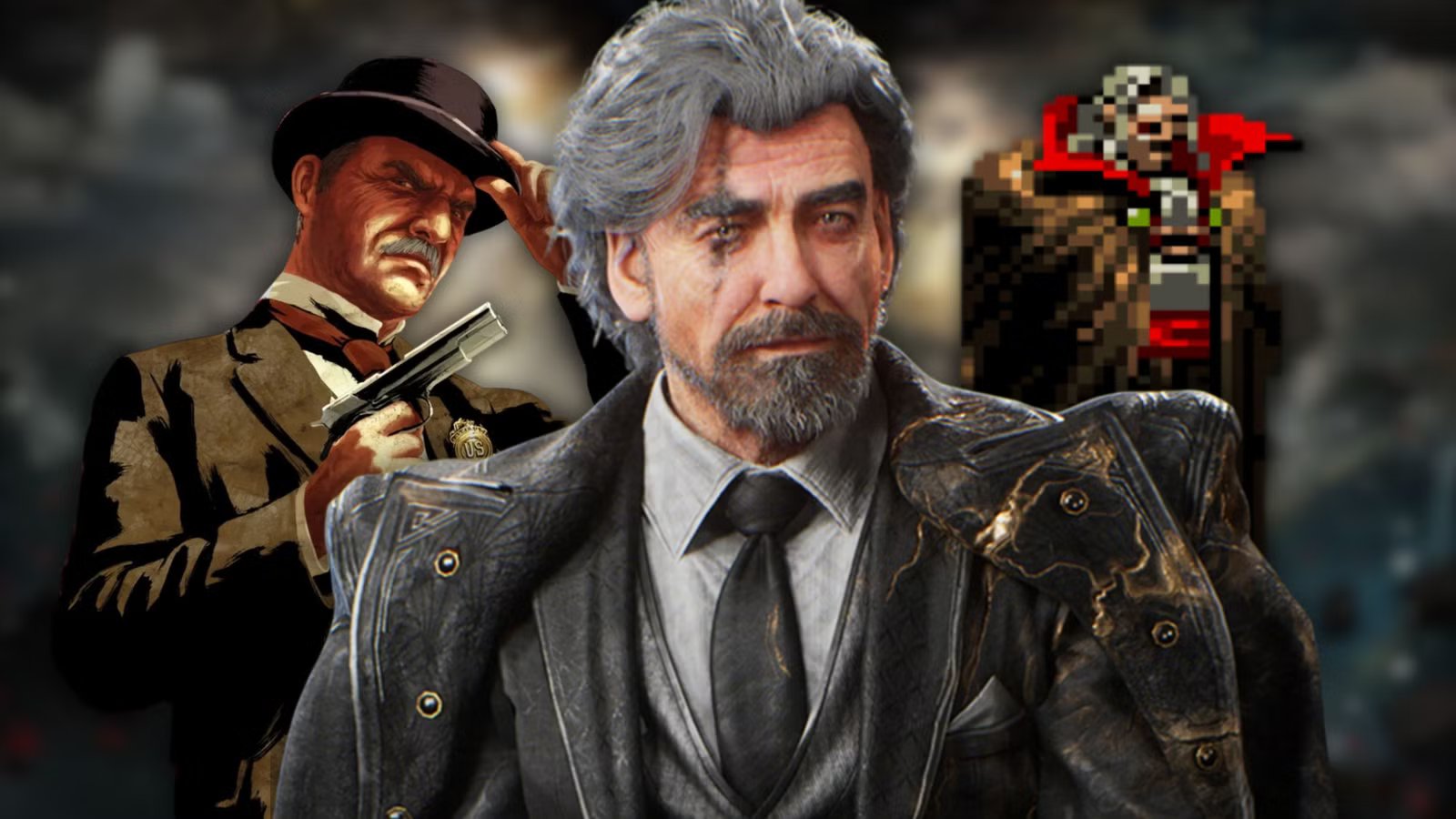
Look, I know this one is extremely tough to swallow, and it was honestly hard for me to write! We all collectively despise Edgar Ross for his cold-hearted betrayal of John Marston at the end of the original Red Dead Redemption, on top of holding his family hostage. But if you step back and look at the brutal reality of the American frontier through an objective lens, the lawman had a point.
As shown extensively across Red Dead Redemption 2, the Van der Linde gang weren’t just romanticized Robin Hood outlaws. They pulled off ferry heists, multiple train and bank robberies, extortion, kidnappings, deadly shootouts with rival gangs, and preyed on the desperate (and we all know where that led Arthur Morgan).
Ross was a ruthless man of the law tasked with ushering in modern civilization and eradicating a violent, dying era of bloody outlaw rule. Yes, his methods were dirty, deceitful, and completely lacking honor, but his goal of removing lethal, armed militia gangs from society was legally correct, whether we like it or not.
4
Asgore Dreemurr
Undertale

In Undertale, every step is a test of morality, so naturally the main “villain” of the game isn’t so simple. Actually, his story is a very heartbreaking topic.
Sure, on the Genocide route, basically every boss is actively trying to stop you from committing a horrifying massacre, suddenly making you the villain. But even on a normal playthrough, Asgore’s actions come from a place of unbearable grief and duty to his suffering people.
To understand this, we have to look at the context: all monsters were trapped underground for generations behind a magical barrier, slowly losing all hope. Driven by the tragedy of losing his children, Asgore declared war on humanity and committed dark acts. But he hated every second of it. He grieved the humans he had to kill, delayed the final battle as long as possible, and desperately wished for another way. He was devastatingly wrong in his violent methods, but as a king trying to save an entire doomed civilization from eternal imprisonment, his ultimate goal was kind of right.
3
Fireflies
The Last of Us

Throughout the gritty journey of both The Last of Us titles, the Fireflies are painted as a desperate, militia-like resistance group operating in a decaying post-apocalyptic world. Their methods were messy, their military operations were sloppy, and their final decision to execute a surgery on Ellie without her explicit consent was morally horrifying.
Yet, from a utilitarian perspective, they were holding the single most important key to human survival: a potential cure for the Cordyceps brain infection. Driven by the urgency of finally achieving a breakthrough, they believed that sacrificing one immune girl to potentially synthesize a vaccine that could save millions of future lives and rebuild human civilization was the right call.
Their plans are shattered by Joel, who chooses to slaughter them all out of fatherly love. But whether you side with Joel or the Fireflies, the militia’s macro-level logic was fundamentally right for the survival of the human race.
2
Takuto Maruki
Persona 5 Royal

Unlike the corrupt, selfish politicians and abusive figures that populate the rest of Persona 5 Royal, Dr. Takuto Maruki isn’t driven by greed, power, or malice. He is simply an empathetic school counselor who suffered immense personal tragedy and decided that the real world contains far too much unavoidable pain.
Using his reality-warping powers, Maruki attempts to rewrite the universe into a painless utopia where everyone’s darkest trauma is erased, deceased loved ones are brought back, and everyone lives in tailored happiness.
Sure, taking away human free will and personal growth makes his ideal reality a golden cage, but you can’t help but feel immense empathy for him and understand his desperation. He just saw a world overflowing with suffering and chose to offer comfort, making it almost impossible to call him a true evil villain.
1
Renoir
Clair Obscur: Expedition 33

When you first encounter Renoir in Clair Obscur: Expedition 33, he appears to be a ruthless, unstoppable antagonist hunting down members of the expedition. But as the layers of this masterfully crafted story unravel, you realize his intentions weren’t bad at all.
Renoir understood the harsh, painful reality behind the Canvas, which is a false, painted reality created as an unhealthy coping mechanism to escape grief. While the painted citizens felt real, he knew that hiding inside an artificial, painted dreamworld was actively destroying his real family and preventing them from facing the truth of their loss.
In the end, we find out he wasn’t acting out of pure cruelty. He was actually the only rational voice in the story willing to play the villain to tear down an illusion he believed was harmful, forcing his loved ones to finally process their grief and wake up to reality.