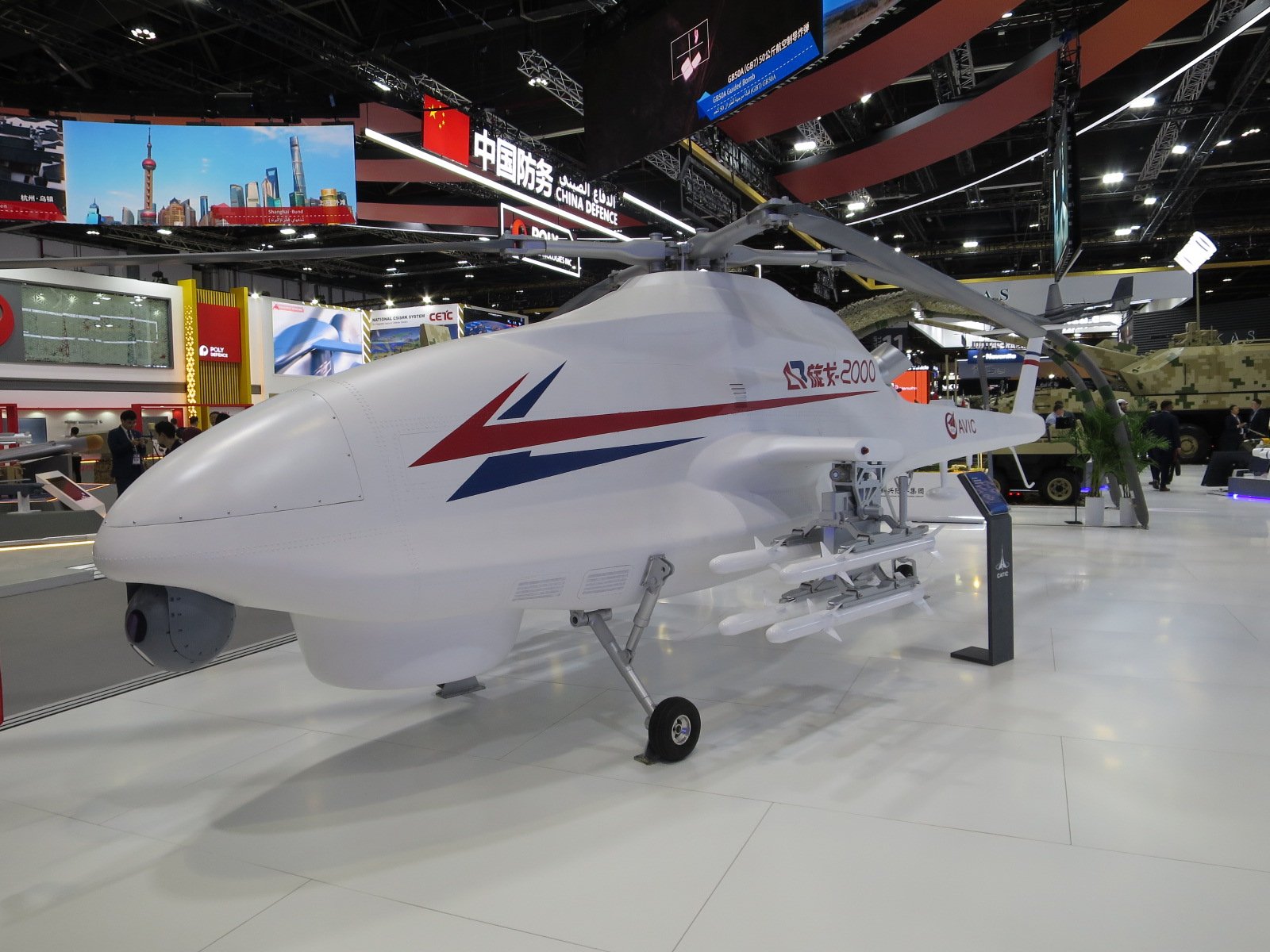
China’s new drone swarm system claims to hunt targets despite jamming
A Chinese research team claims to have developed a new artificial intelligence (AI) algorithm capable of allowing drone swarms to autonomously hunt and eliminate targets even when communications are jammed and visibility is severely degraded.
The algorithm, called Heterogeneous Graph Spatio-Temporal Reasoning (HG-STR), was detailed in a paper published in China’s leading aviation journal, Acta Aeronautica et Astronautica Sinica, earlier this month.
According to the researchers, it is the first known system capable of achieving a “100 percent kill rate” while operating quickly enough to keep pace with modern combat conditions. However, a word of caution.
As with many military AI claims, the headline figure should be treated carefully. Especially since a perfect kill rate in simulation is very different from real battlefield performance.
Modern warfare introduces weather, deception, civilian presence, damaged sensors, electronic warfare, and countless unpredictable variables that can rapidly degrade even highly advanced systems.
Drone swarms just go deadlier
That said, the underlying technology is worth paying attention to because it reflects a broader and very real shift in how militaries are approaching autonomous warfare. After all, most existing drone systems still rely heavily on human operators.
Even advanced swarms often depend on stable communications and relatively simple coordination logic. Lose the radio link or block the drones’ sensors, and effectiveness can collapse quickly. HG-STR is reportedly designed specifically to address that problem.
Traditional battlefield AI systems often treat all incoming information similarly. A drone, a tank, a building, or a hill may simply become another object inside a dataset.
The Chinese researchers argue that this approach struggles to capture the true complexity of combat environments. Their system instead builds a dynamic “graph” of the battlefield, where different entities are treated differently and linked together through relationships.
Seen in this light, a radar installation is not merely an object. It is a threat node connected to terrain, airspace, jamming sources, and defensive positions.
Further, a forest becomes concealment, a hill a line-of-sight blocker. Other things, like friendly drones, become information-sharing assets rather than isolated units. The result is a swarm capable of making higher-level tactical inferences rather than simply reacting to what it directly sees.
Human-in-the-loop
In practical terms, this could allow drones to continue pursuing targets even when communications are severed or direct visual confirmation is lost. A swarm may infer likely enemy positions from terrain, movement patterns, or previous observations and continue adapting independently.
That capability matters because modern warfare is increasingly dominated by electronic warfare. The conflict in Ukraine has demonstrated how rapidly drones can become blind, jammed, spoofed, or disconnected.
Future autonomous systems will need to function inside exactly those kinds of degraded environments. The most striking part is the suggestion that swarms could eventually be sent into contested battlespaces with only a final human instruction before operating independently.
So, instead of humans directly controlling drones, future operators may increasingly define objectives while AI systems determine execution in real time. And China is far from alone in pursuing these technologies.
The United States, NATO countries, and Russia are all investing heavily in autonomous swarm warfare, collaborative combat aircraft, and AI-assisted battlefield coordination.