5 household repairs a 3D printer fixes that you’d normally toss the whole thing for
When something breaks around the house, my instinct has always been to replace it: a new fridge shelf, a new chair foot, sometimes maybe even a whole new appliance. The only problem is, most of the time it’s not the whole thing that’s broken. It’s one small plastic part, like a clip, a gear, a chair foot, and once I started digging into what a 3D printer can actually fix instead of making it from scratch, I found five repairs people make all the time instead of throwing the whole thing out.
A stand mixer’s worm gear is built to break first
It’s not you, it’s the design

If your KitchenAid or Cuisinart stand mixer suddenly stops turning an attachment, don’t assume the motor died. Sears PartsDirect’s own repair guide confirms the worm gear teeth are designed to strip if the drive system binds up, sacrificing itself to protect the more expensive gears and the motor from damage. iFixit has a full teardown guide for replacing the worm gear in a KitchenAid K45SSWH, and designers on Printables have modeled replacement gears for Cuisinart mixers specifically because people keep needing them.
It’s a repair well-documented enough, and the part small enough, that it’s worth keeping a spare gear file on hand before you ever need it. Just be ready to transfer the old grease to the new gear when you reassemble, and don’t mix up the locking screws with the regular ones; more than one commenter on that iFixit guide learned that the hard way.
Refrigerator door shelf clips fail one at a time, not all at once
The part is smaller than the fix you were dreading
Refrigerator door shelves rarely fail all at once; they fail one clip at a time. Samsung’s parts documentation lists a door shelf bin guard (part DA97-06419C) as the component that keeps bins from popping loose, and Repair Clinic and Home Depot both sell equivalent OEM clips and guards for $15 to $50 depending on the model. There’s a sizable library of printable clips, end caps, and bin guards for Samsung, Whirlpool, Frigidaire, and Kenmore fridges on sites like Thingiverse and Printables, almost always because someone’s door shelf started sliding around or falling out entirely.
These designs are almost always model-specific, of course, and a print made for one Samsung fridge won’t necessarily fit another, even a similar one. Match your exact model number against the listed design first, and if nothing matches, measure the broken clip yourself and use a parametric design you can resize, rather than assuming any “Samsung fridge” print will do.
Vacuum cleaner belts and wheels are printable, and cheap
Flexible filament makes the difference

Consumer Reports has a whole guide dedicated to replacing a vacuum belt, confirming it’s one of the most common vacuum repairs there is: usually a five-dollar part and a few minutes with the bottom plate off. People have been printing their own belts in flexible TPU filament for years, including a parametric cogged belt design built specifically as a stand-in for a Kenmore power head belt, because the OEM part was sold out or discontinued. Cracked wheels are the other common failure point, and printable replacements show up for those too.
If a cheap OEM belt or wheel is in stock for your model, though, that’s still the easier path. Where a printed version earns its keep is when the part for your specific vacuum is discontinued, back-ordered, or simply more expensive than the few grams of TPU it would take to print one.
Cabinet hinges and drawer brackets don’t need a whole new cabinet
Reinforce stripped screw holes instead of replacing the door

The most common cabinet failure isn’t the hinge itself, it’s the wood around it. Concealed hinge screws pull out of soft particleboard over time, and the hinge starts sagging or falling off entirely. Rather than replace the whole door, people print a reinforcement plate that gives the screws a new, solid surface to bite into, alongside similar fixes for snapped drawer glide brackets that let a drawer keep sliding instead of sagging. The failure mode described in these repair write-ups (stripped screw holes, sagging hinges) is a common one for older cabinets, so if that’s you, give these prints a try.
Dining chair feet are worth measuring and printing yourself
They’re almost never sold as standalone parts

Plastic chair feet are almost never sold as standalone parts because they’re not standardized between manufacturers. One Printables designer bought a discounted Ikea Langfjall office chair that was missing its feet entirely and just sliding around on bare metal legs, so they photographed the underside of the leg and modeled a replacement from scratch rather than track down an original part. The fix is the same one used for stools, patio furniture, and dining chairs alike: measure the leg’s tube diameter, either use a parametric design or model a simple sleeve that presses over the old stub, and print it in something durable enough to take a chair’s weight, like PETG rather than plain PLA for anything that gets moved around a lot.
If you’re doing this yourself, measure every leg before you print rather than assuming they’re identical; older chair sets often warp slightly differently from leg to leg, and a snug fit on one won’t guarantee a snug fit on the rest.
The printer earns its keep with the boring stuff
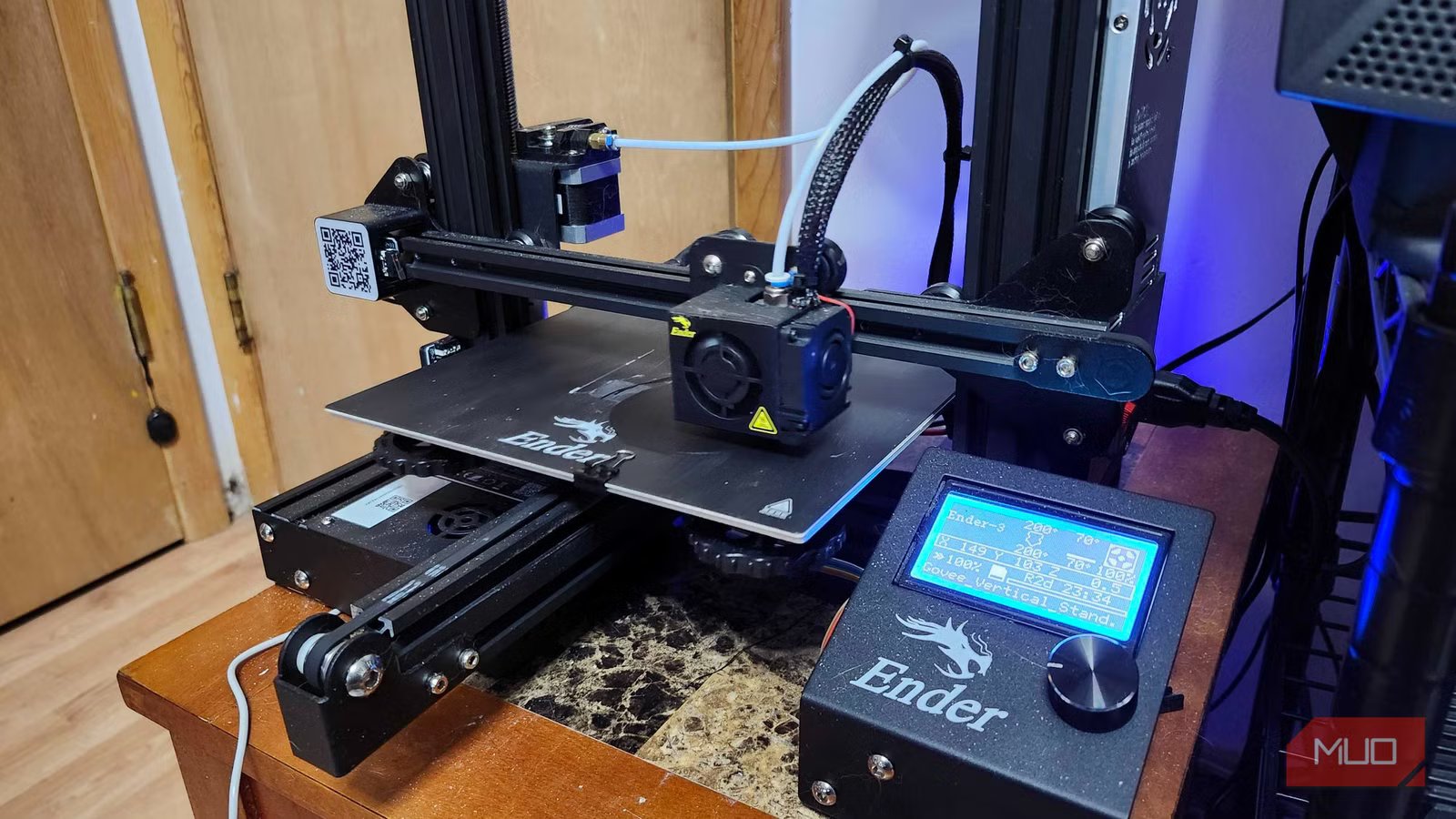
Printing a dragon or a Benchy is way more fun, but fixing something that was headed for the curb is the kind of print that actually pays for the filament. Every repair on this list is a recommendation built from other people’s documented fixes rather than my own results — my printer’s out of commission as I write this — but the pattern holds up across enough models and manufacturers that I’d try the fridge clip or the chair feet before I’d shop for a replacement shelf or a whole new chair. None of it fixes structural wood damage or anything electrical, of course, but fixing stuff is a great first step before replacing it entirely.