Roland Berger says humanoid robot manufacturing could be $750 billion market by 2035
The preserve of dystopian science-fiction for the best part of a century, a new study from Roland Berger claims that humanoid robots are on the verge of moving from the prototype phase to industrial-scale rollout. According to the researchers, the machines could be used to cover for labour shortages, creating a robot manufacturing market worth as much as $4 trillion – though such an approach would require “harmonised legislation” to ensure ethical use.
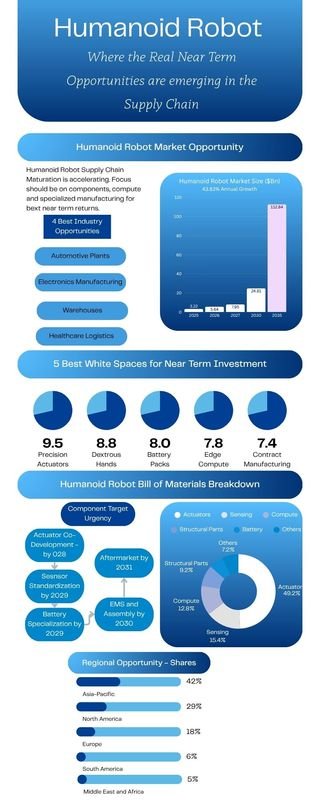
According to the study, robotics manufacturers could reach revenues of $300 billion by 2035; and in more optimistic scenarios, up to $750 billion. In the long term, the market could reach up to $4 trillion. The researchers believe it could therefore achieve a market size comparable to the automotive industry.
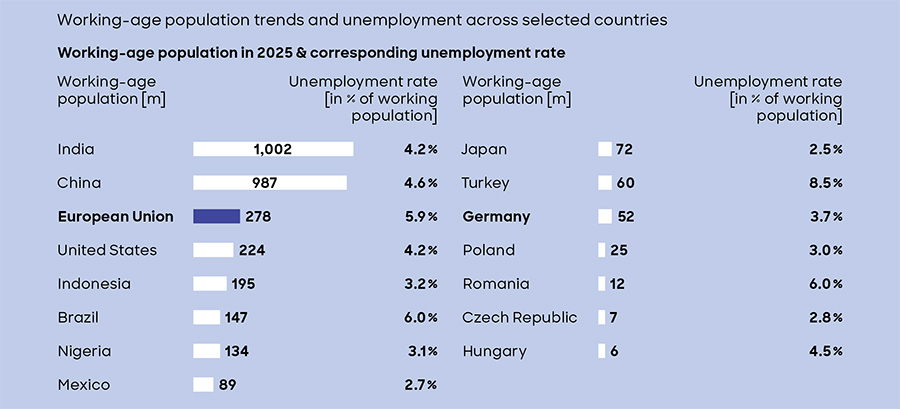
That is because Roland Berger asserts that advances in AI and robotics hardware could enable humanoid systems to operate at “running costs of around two US dollars per hour in the future.” In the firm’s own terms, this would make them “a decisive lever in high-wage countries to safeguard competitiveness” – which critics might say sounds like they would be used to supress wage growth – because they could “counter the shortage of skilled labour” in many leading economies.
![Global humanoid robotics market size by system/component, 2035 [USD bn]](https://www.consultancy.uk/illustrations/news/detail/2026-06-26-023842703-Global_humanoid_robotics_market_size_by_system_component__2035.jpg?webp "Global humanoid robotics market size by system/component, 2035 [USD bn]")
Source: Roland Berger
Multi-billion opportunity along the value chain, Roland Berger argues that humanoid robots could create new sales markets far beyond the robot itself: from motors, mechanics, and sensors to electronics and production equipment – a complex value chain that, in large parts, builds on existing industrial capabilities. As is often the case with revolutionary technologies in the 21st century, however, this seems to still be largely speculative.
“Before humanoid robots can take on fully autonomous production tasks, the technology must progress further,” Roland Berger admits. While the hardware might already be “at an advanced stage”, software, supply chains, and regulations are maturing gradually. This means benefits “will initially emerge in clearly defined, repetitive applications such as unpacking or transporting items.”
While software maturity increases could grow the range of tasks, issues such as durability, safety, and liability will also determine the speed and breadth of industrialisation, the researchers believe. But this may move slowly, as while existing safety standards are designed for traditional, fenced-off automation, humanoid robots, “work dynamically and move in the same spaces as people”. As a result, new testing and certification approaches as well as “harmonised legislation” will be needed before their wider implementation. Even so, the researchers are confident in the technology itself – if not its application.
Source: Roland Berger
“The key question is no longer whether humanoid robots will emerge as a viable technology, but how quickly they will scale – and which companies position themselves early enough to capture the opportunity,” claimed Damien Dujacquier, a managing partner at Roland Berger.
Creating more work than executing
While Roland Berger’s excited research might suggest big things are soon to come from this market, they might also be taken with a pinch of salt. After all, multiple studies have made trillion dollar predictions about artificial intelligence – often rolling out similar “not if but when” rhetoric in the process – but such a meteoric return on investment is still a long way from being realised. Even in the long term.
But it is also worth noting how humanoid robots have worked out when they have actually been deployed so far in one of the world’s most technologically advanced nations. Ageing populations in many developed economies have left states in between a rock and a hard place since the turn of the century. While these demographic changes mean countries like the US, UK and Japan need more care workers than ever, to help tend to the rising population of elderly citizens, this has coincided with a historic rise in anti-immigrant sentiment across those countries.
In the case of Japan, long touted as the way of the future, technology was touted as the way forward. With public and private investment accelerating markedly in the 2010s, by 2018, the national government alone had spent well in excess of $300 million funding research and development for humanoid robots to care for the elderly – and indirectly avoid loosening immigration controls. However, a major national survey of over 9,000 elder-care institutions in Japan showed that in 2019, only about 10% reported having introduced any care robot, while a 2021 study found that out of a sample of 444 people who provided home care, only 2% had experience with a care robot.
Plenty more evidence suggests that even when robots are purchased, they often end up being used for only a short time before being locked away in a cupboard. In actuality, robots themselves require care: when implemented, they have to be moved around, cleaned, booted up, operated, updated, repeatedly explained to residents, and constantly monitored during use. As a result, a growing body of evidence is finding that robots tend to end up creating more work for caregivers.
On that basis, whether robotics in other lines of work are advancing or not – implementing them in a way that genuinely benefits people, and finds efficiencies, may be easier said than done.