July 26, 2000: Comet LINEAR disintegrates
Today in the history of astronomy, a weird and wonderful comet breaks up.
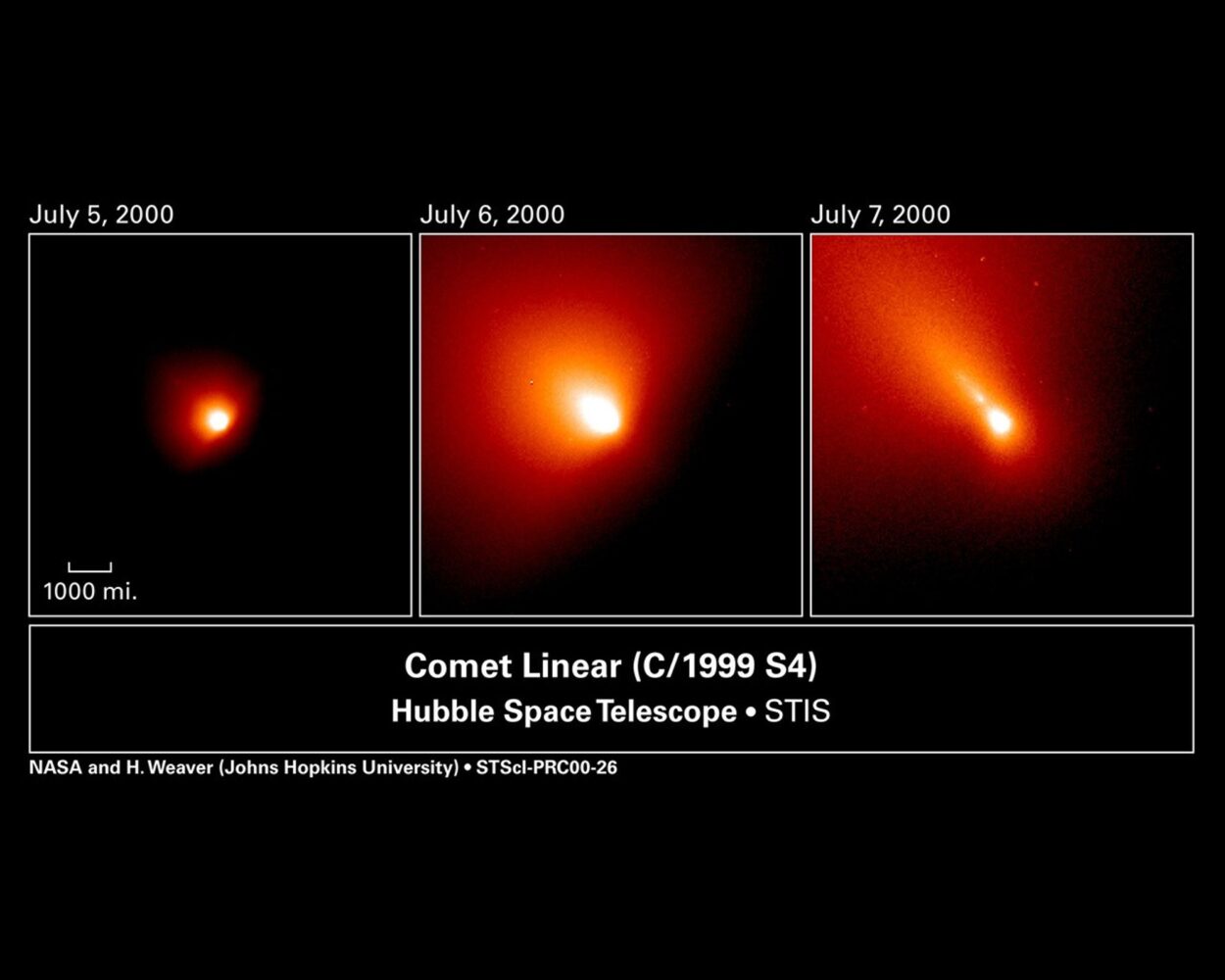
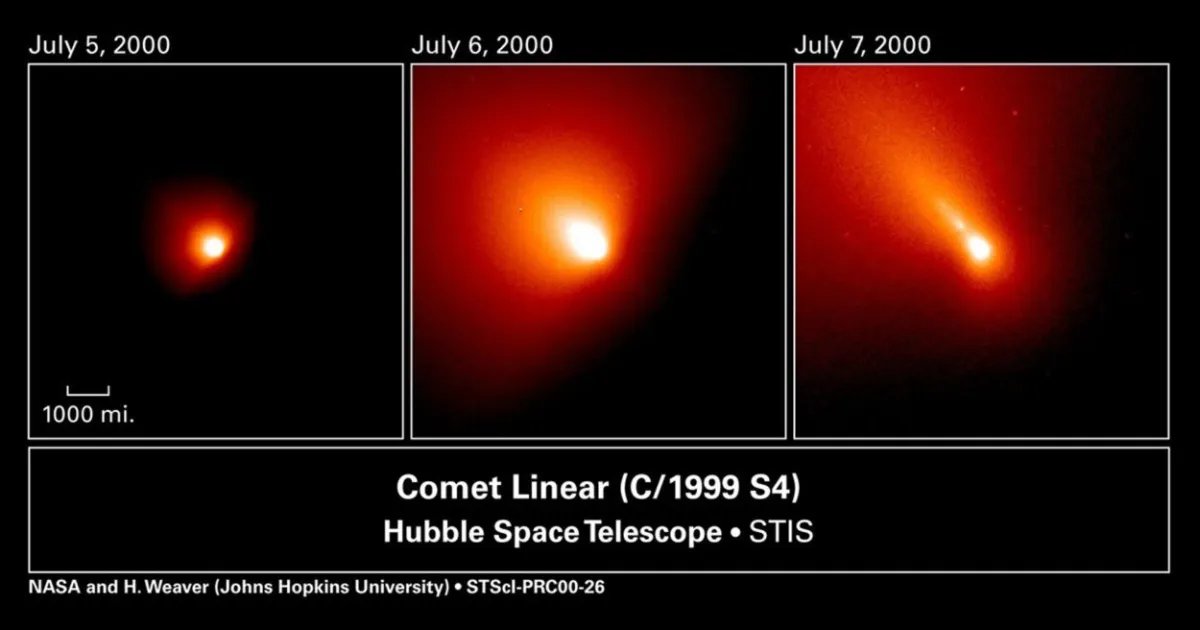
Over three days in 2000, the Hubble Space Telescope watched Comet LINEAR blow off a piece of its crust. The explosion generated a lot of dust, which in turn reflected a lot of light, increasing its brightness. Credit: NASA and H. Weaver (Johns Hopkins University)/STScI-RPC00-26
In September 1999, the Lincoln Near Earth Asteroid Research (LINEAR) project discovered a comet – Comet C/1999 S4, or Comet LINEAR – on a course for the Sun. Its unusual behavior drew attention: By July 5-7 of the following year, the Hubble Space Telescope had watched a piece of its crust blow off as if in an eruption. Such an explosion offered tantalizing insight into the composition of the comet’s nucleus. On July 14, the Chandra X-Ray Observatory observed its X-ray emissions, and on July 26, the comet began to fragment. Its disintegration played out across several weeks, until by mid-August nothing visible remained. Analysis of its characteristics and behaviors suggested it formed in the Jupiter-Saturn region, not a usual location for comet creation.
Elisa Neckar is senior production editor of Astronomy magazine, and the editor of the Today in the History of Astronomy feature on Astronomy.com.