Silicon Valley Rejects Open-Weight AI Curbs — Except Anthropic

Technology companies leading Silicon Valley, including Nvidia CEO Jensen Huang, have voiced opposition to regulating Chinese open-source artificial intelligence (AI) models.

Anthropic CEO Dario Amodei. AFP Yonhap News
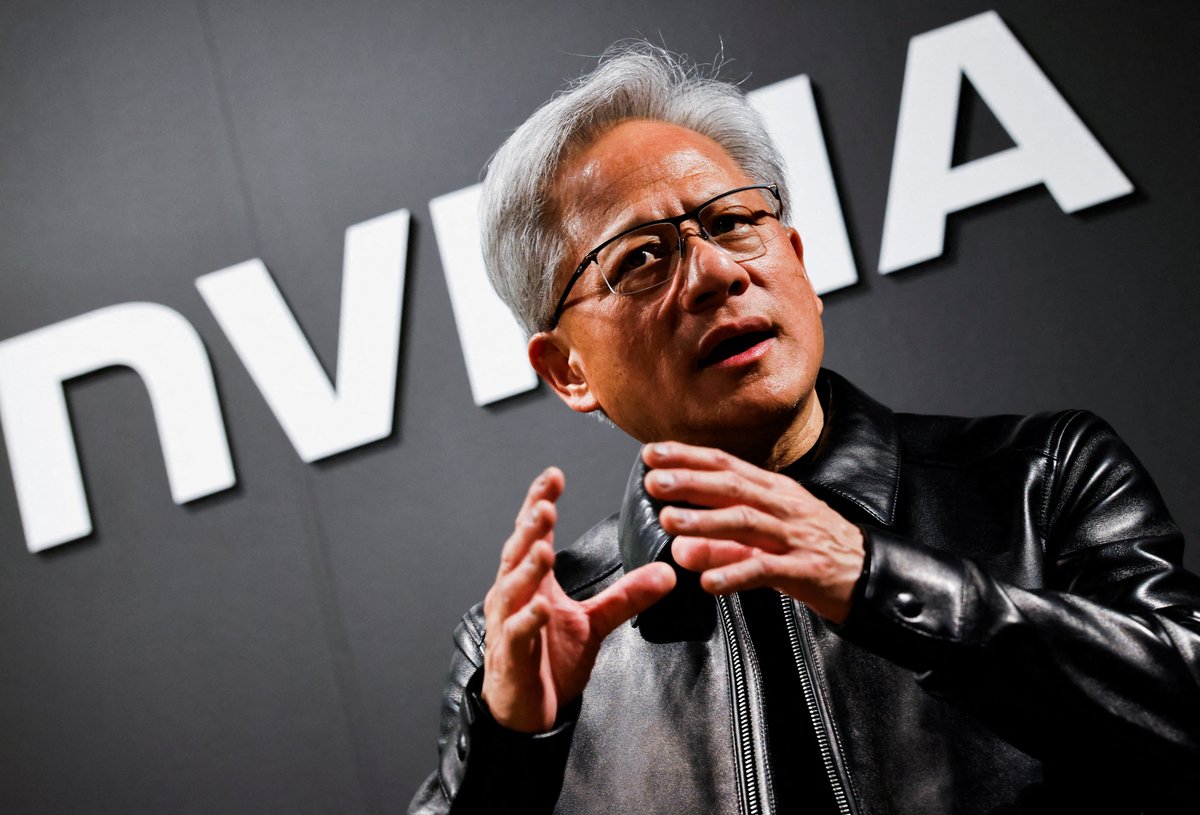
Nvidia CEO Jensen Huang. Reuters Yonhap News
On the 24th, Microsoft (MS), together with 25 companies including Nvidia, Meta, and Palantir, released a joint letter titled “Open Weights and American AI Leadership.” Weights refer to a method of releasing an AI model’s trained parameters so that anyone can use them. Huang and Microsoft CEO Satya Nadella shared the letter on X (formerly Twitter), and SpaceX CEO Elon Musk also posted on X that the letter had received “full support.”
In the letter, the companies emphasized the benefits of the models, stating that “open-weight models that anyone can download, review, modify, and run on their own infrastructure make advanced AI more accessible, adaptable, and widely usable,” and that “this expands access to the AI economy.” Their logic is that such openness allows certain technologies to be shared broadly rather than concentrated among a few, strengthening competition in the AI industry while promoting technological advancement.
They further argued that “relying solely on closed models is inherently unsafe,” and that “we must avoid premature regulation of open models that suppresses competition or drives innovation overseas.”
This is interpreted as a Silicon Valley-level response following reports that the White House is reviewing regulations on open-weight AI models released by Chinese firms, such as the “Kimi K3” model from Chinese AI startup Moonshot AI. “Kimi K3” was found to deliver functions similar to those of American AI companies that grew on massive capital, causing a “Kimi shock” in the market, following DeepSeek, another Chinese AI model. In response, U.S. Treasury Secretary Scott Bessent stated that the administration of Donald Trump would investigate whether Chinese companies had stolen American intellectual property.
However, after the Little Tech Association, which comprises more than 200 startups and venture capital (VC) firms, sent a letter to the Trump administration on the 22nd proposing restrictions on open-weight model regulation, major companies also stepped forward with a joint statement, spreading the ripple effects within Silicon Valley. The number of companies joining the letter rose to 50 within a single day. OpenAI and Google, which operate closed models, also participated in the letter.
Why Did Anthropic Stay Out? The Veiled Claude

By contrast, Anthropic, which operates the closed model Claude, did not put its name on the list. This is not unrelated to suspicions that Moonshot AI developed Kimi K3 by “distilling” Anthropic’s technology. Distillation refers to a technique of training a new model using an existing, powerful publicly released model. White House adviser Michael Kratsios criticized that “large-scale, covert industrial distillation aimed at stealing American proprietary technology cannot be tolerated.” Anthropic has been lobbying to strengthen regulation of open models, citing security concerns should open models proliferate.
Given the situation, analysts say that the interests of Anthropic — which has adhered to a closed-model policy and is directly threatened by the growth of Chinese open models — are diverging from those of other companies within the AI infrastructure sector. TechCrunch analyzed that “the benefits of open-weight models are clear for major AI companies,” and that “if users increase spending outside closed labs, it means that the return on the massive investments closed companies have poured into model training will inevitably be lower.”
In particular, analysts say this point is emphasized for Anthropic, whose revenue structure is concentrated on application programming interfaces (APIs) and which has no experience releasing weights. Meta and Google, which have entered the frontier AI model market, have each released weights through their Llama and Gemma models. Even OpenAI released the open-weight model “GPT-oss” last year. Anthropic, however, is the only company that has not fully released its weights. Amazon, Anthropic’s closest partner and the world’s largest cloud company, also did not put its name on the letter.