The existential choice facing UK physics facilities: commercialize or close

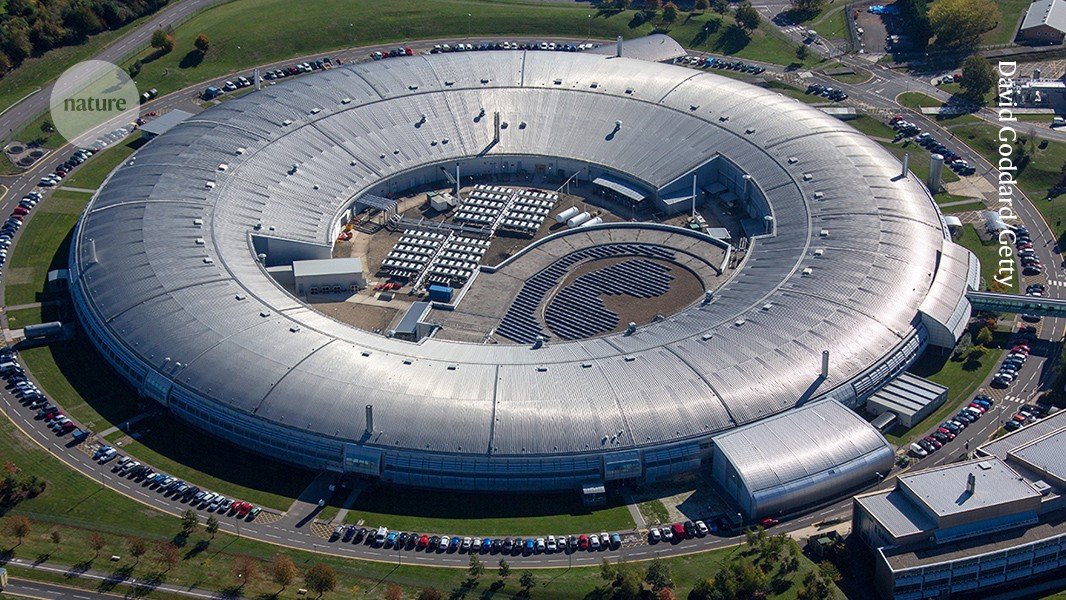
Credit: David Goddard/Getty
Can commercial funding fill a hole of £42 million (US$56 million) a year in the finances of some of the United Kingdom’s flagship science laboratories and facilities?
That is the challenge facing sites run by the UK Science and Technology Facilities Council (STFC), which funds the Diamond Light Source — the national synchrotron facility in Harwell — as well as other scientific instruments and labs.
The UK government has said that all STFC-funded sites must raise money to cover more of their own running costs, or risk closure.
The remodelling comes amid an overhaul to UK public research funding in line with the government’s strategic priorities, and during a rocky period for UK science. The country’s new prime minister, Andy Burnham, has merged the Department for Science, Innovation and Technology into a larger Department of Business, Innovation, Science and Trade. Patrick Vallance, a clinical scientist popular among research leaders, resigned as science minister on 20 July. Chemical engineer Chris McDonald, a member of the UK parliament who had a prior career in industry research, was appointed to the role on 24 July.
Nature looks at where the cuts stem from, how facilities in other countries generate income and whether it is feasible to make up the shortfall in this way.
Why are there cuts when UK science is promised a record budget?
The Labour government, led by former prime minister Keir Starmer until 20 July, promised that the budget for the country’s main research funder, UK Research and Innovation (UKRI), would grow from £8.8 billion in 2025–26 to £10 billion in 2029–30. But under this plan, cash for ‘curiosity-driven research’ — meaning mostly that led by individual researchers through grants — would stay roughly flat. By contrast, spending on strategic government priorities, such as artificial intelligence, supporting businesses and investing in talent and infrastructure, including computing resources, would receive most of the increase. AI is slated to get more than £1.6 billion over four years.

Science funding needs fixing — but not through chaotic reforms
Under these plans, the STFC’s core budget will remain flat. STFC says cuts will be required elsewhere to free up funding for the rising costs of grants for postdoctoral researchers and the costs of membership fees to international organizations such as the European particle-physics lab CERN.
Diamond and its neighbours, the ISIS Neutron and Muon Source and the Central Laser Facility (CLF), both also in Harwell, will fall by 15% (or £28 million a year) by 2030.
Moreover, STFC spending on national labs and estates — which covers sites such as the Daresbury Laboratory, a campus near Warrington that works across fields from nuclear physics to supercomputing, and RAL Space, the national space laboratory, also in Harwell — will fall by 8% (£14 million a year) by 2030. Some labs will be hit harder than others. For example, in the same period, annual funding will fall by 40% for the Boulby Underground Laboratory, which is situated 1.1 kilometres down a salt mine near Whitby and is used for dark-matter and quantum research.
How are these labs supposed to make up the shortfall?
UKRI has given the STFC a one-off, £135-million injection over three years to enable facilities to stay open long enough to find cost savings and extra income to cover the shortfalls.
According to the STFC, sites should cut user support and technical assistance, for example. Ian Chapman, chief executive of UKRI, told journalists at a briefing on 9 July that the amount of time that ISIS beams are run will fall from 80% to 66%. He also confirmed that jobs across the STFC will be cut. STFC staff numbers have risen sharply since 2021 to around 3,000 people, and he said the council was “expecting some headcount reductions, and it will probably be in the hundreds”.
At the same time, facilities are being asked to bring in external income through industrial activity. Many already do this. Sites including Diamond and ISIS charge companies to use their instruments for proprietary research, but there is no payment under certain conditions, such as for research that will be published.
ISIS, for example, has an instrument called ChipIr, which generates high-energy neutrons that simulate those in space, and is used by the aviation industry to test how the particles disrupt materials and electronics. Facilities can also sell technology they develop, such as new kinds of detector, or charge for access to lab space, such as the unique low-noise environment at Boulby.
Can UK facilities learn from counterparts in Europe?
Chapman said at the 9 July briefing that staff at STFC sites are relatively inexperienced at generating revenue from external sources, but that there isn’t resistance to the idea.
Comparing commercial activity across facilities is difficult as each counts income from industry differently. The UKRI’s annual report says that the STFC received £29 million in revenue in 2025–26 from facilities, goods and services, which represents around 3.5% of the STFC’s annual budget. This proportion is slightly belowthe around 5% the Institut Laue–Langevin (ILL), a neutron beam facility in Grenoble, France, generates from industry through selling beam time and generating radioactive isotopes used in medicine, according toMark Johnson, head of partnerships at the ILL.
Is UK science in jeopardy? Huge funding reforms spark chaos and anxiety
Other European facilities, however, earn even more. The Paul Scherrer Institute (PSI) in Villigen, Switzerland, a research lab which also hosts an array of large science facilities, including X-ray, muon and proton beams, generates around 7% of its income through commercial collaborations, says Ines Günther-Leopold, deputy chief of staff at PSI. The institute has had industry collaboration built in from the start, she says, and has an X-ray beamline dedicated to use by pharmaceutical companies to do protein crystallography.