Interest in Dumb Phones Is Skyrocketing. Are We Finally Rethinking What Smartphones Cost Us?
We grew up with a phone that never stopped talking to us. Every app wanted a notch of attention, every red dot demanded a tap, every silence got filled with a buzz in the pocket. That was the deal from middle school on, and for a long time, nobody thought to question it because there was no memory of anything else.
Now a growing number of us are asking for less. Not a better phone: a dumber one.
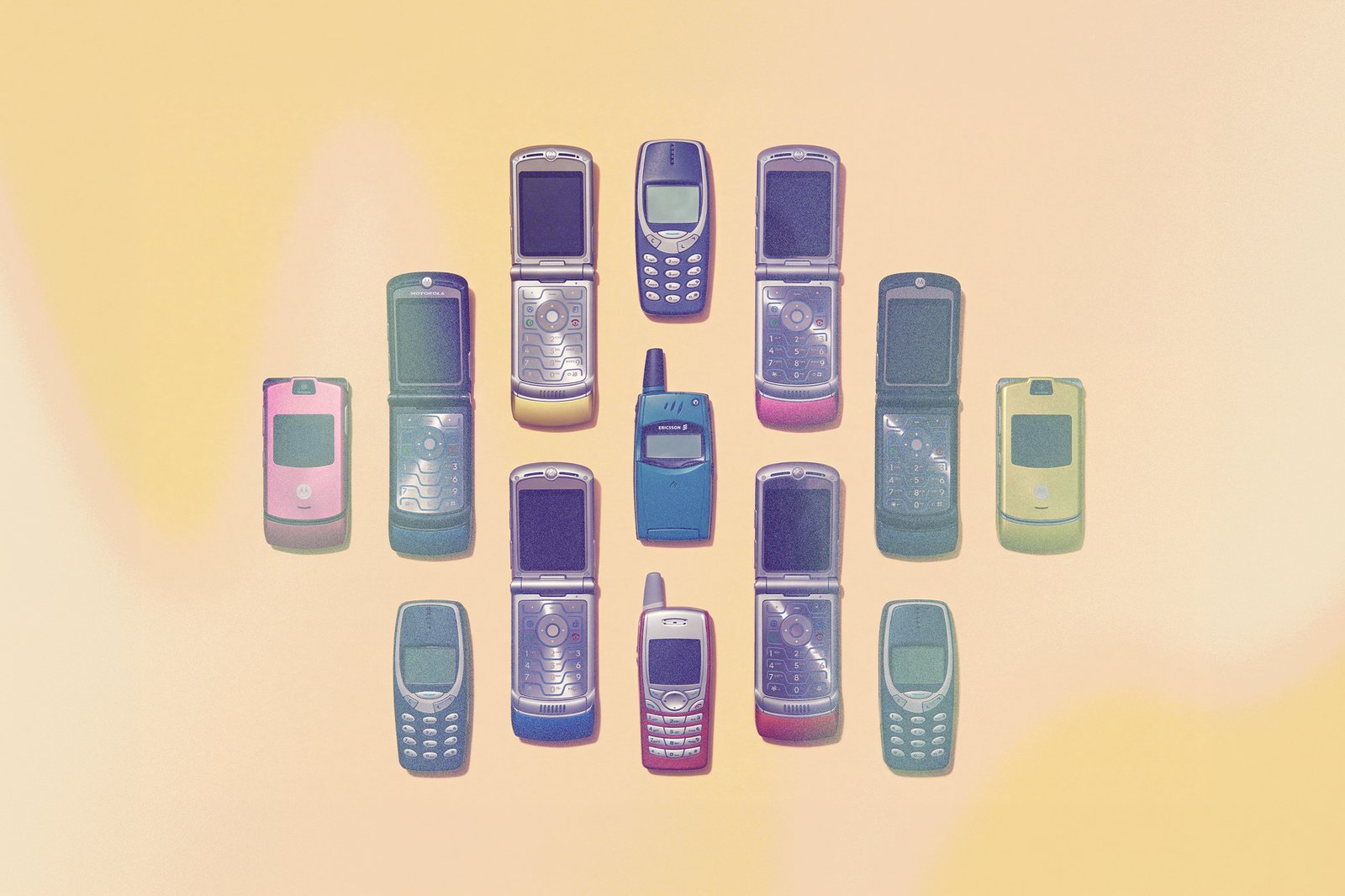
Google searches for “dumbphones” jumped 89% between 2018 and 2021, according to SEMrush data. The trend hasn’t slowed. From 2021 to 2024, brick phone sales among 18 to 24 year olds surged 148%, while smartphone use in the same age group dropped 12%, according to a study published in the journal Partners Universal Innovative Research Publication. Youth-marketing firm YPulse found Gen Z adults now over-index on interest in acquiring a dumb phone compared to the general population, at 28% versus 26% for millennials.
Academic research backs up what the numbers suggest. A study out of the University of Texas at Austin, published in PNAS Nexus, found that when 467 participants blocked internet access on their smartphones for two weeks, 91% reported meaningfully better mental health and well-being. Their sustained attention improved by an amount researchers compared to reversing roughly a decade of decline. Psychologist Adrian Ward, who led the study, found the results were comparable to those seen with antidepressant treatment.
Some outlets have started calling this shift the “dopamine diet,” a deliberate scaling back of the stimulation smartphones are built to deliver. Melissa DiMartino, associate professor of psychology at the New York Institute of Technology, told Yahoo Life the pull toward a phone works on the brain the same way other habit-forming behaviors do.
“Smartphones have the same chemical reaction in the brain as drugs and alcohol,” DiMartino said.
Digital psychologist Dr. Rachael Kent has observed something similar among the young people making the switch. Kent told Tyla the trend reflects a broader awakening to how much the digital world shapes daily thought, feeling and behavior.
Gabriela Nguyen is one example of that awakening in practice. The 23-year-old Harvard graduate student didn’t set out to build a following. She was trying to finish her homework at 15 when she looked at her phone and felt something closer to betrayal than convenience. The thing meant to connect her to people was sabotaging her focus instead.
For years, she tried moderation. Silencing notifications. Five-minute limits on certain apps. None of it stuck, because the apps are built to make moderation nearly impossible. So she started deleting accounts one at a time, then bought a flip phone to remove any easy way back. By the time she started her master’s program, she was fully off social media, staying in touch through calls, emails and video chats.
“I have stronger relationships now than I ever did when I was constantly connected,” Nguyen said.
She’s since built her experience into a framework called APPstinent, centered on what she calls the 5D Method: decrease, deactivate, delete, downgrade, depart. She didn’t expect anyone else to follow her lead. Instead, classmates at Harvard started asking for advice, and a personal decision grew into a following among high-achieving young adults recognizing the same trap she did.
NYU social psychologist Jonathan Haidt offers a possible explanation for why this generation in particular is pulling back. Haidt, author of “The Anxious Generation,” has argued Gen Z’s brains developed around constant connectivity in a way no prior generation’s did, comparing the effect to tree roots growing around a tombstone. His research points to the swift shift from a play-based to a phone-based childhood as a driver of the broad decline in youth mental health.
Seen against that research, the dumb phone trend looks like a generation recognizing, from the inside, what its own childhood cost it. Gen Z didn’t choose the environment it grew up in. Smartphones and social media were already in place by the time most of Gen Z hit puberty, shaping attention spans and emotional regulation before anyone had a chance to opt out. The flip phone and the deleted Instagram account are among the few opt-outs available now.
Nguyen’s story resonates beyond her own graduating class for that reason. She isn’t nostalgic for a childhood without technology, because she never had one. Once she gave up constant connection, she found more presence and deeper friendships, not less connection overall. Kent’s research points to the same pattern showing up more broadly, an awareness that tools built to hold attention are doing exactly what they were designed to do.
Ward’s study suggests the shift isn’t about abandoning technology altogether. Participants in his research weren’t giving up their phones so much as reclaiming a portion of their attention from them, and the psychological gains showed up within two weeks. Nguyen still uses video chat and email. The dumb phone crowd still buys concert tickets online. The default assumption changing is that more connectivity is automatically better.
For a generation raised to measure its worth in followers and screen time, choosing a device that does less has become a quiet form of resistance.