AI is hitting new limits. This tech may hold the solution
Opinion: As AI hits an infrastructure wall, quantum technologies could help Australia seize its next big tech opportunity, argues Petra Andrén.
The next phase of the AI economy will be determined more by infrastructure than by algorithms.
As AI powers increasingly large and compute-intensive models across logistics, supply chains, finance, and more, its limits will be defined by what we can power, cool, and physically build.
Demand for compute, storage, and advanced analytics in data centres around the world is accelerating faster than the infrastructure required to support it. As a result, the economics of digital growth are transforming rapidly, too.
For decades, advances in computing came from scaling hardware and improving efficiency. Now, where we can build infrastructure and how quickly we can scale it increasingly shape progress. This in turn determines which regions become or remain competitive.
Unless we fundamentally improve how we optimise these complex systems, scaling AI will become more expensive. So too will its demand for energy and physical systems.
The good news is that another emerging technology has the potential to address these growing infrastructure requirements. Furthermore, it is in the process of shifting from research-driven capability to practical application.
Where quantum comes in
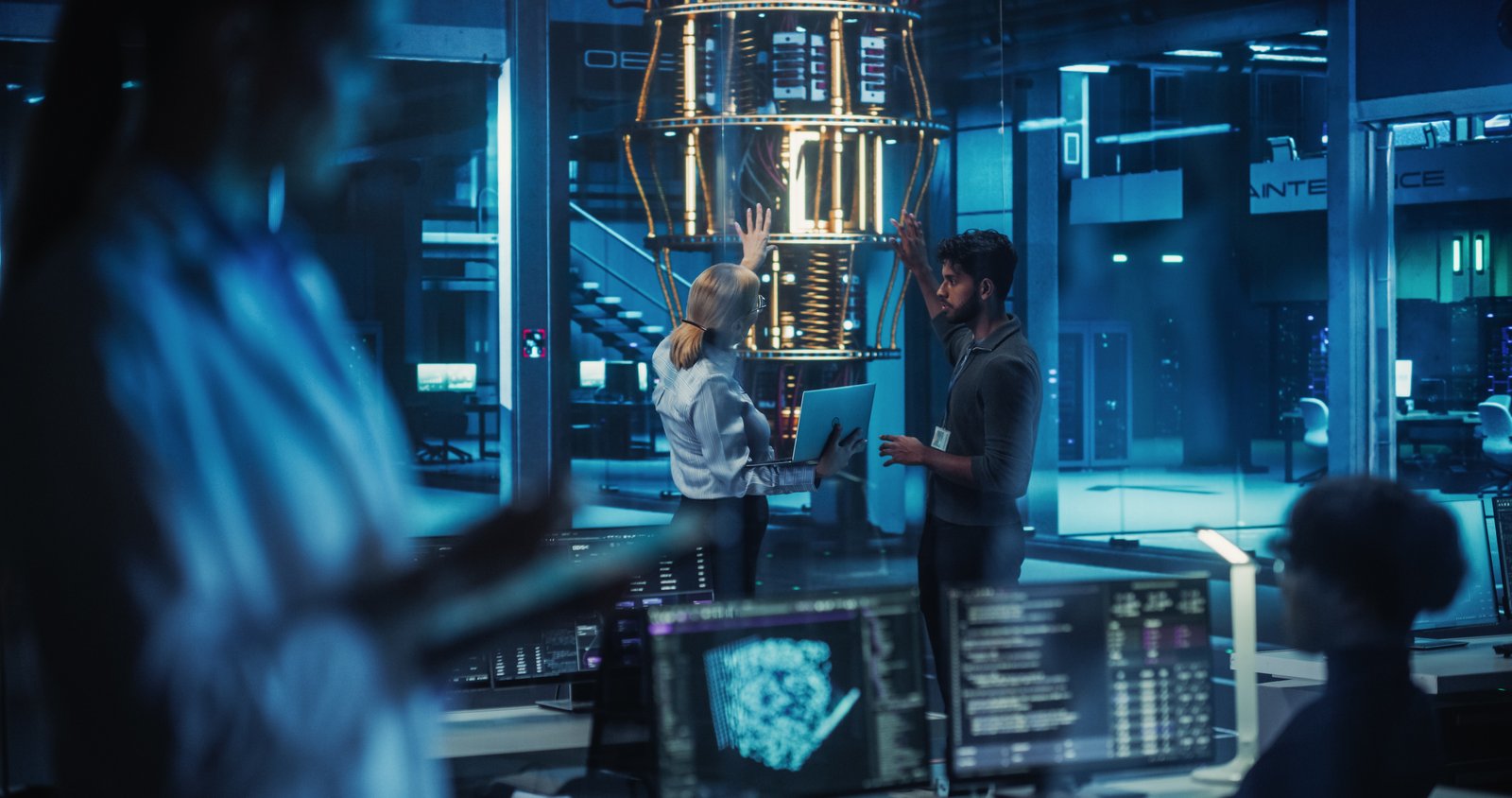
Quantum computing uses quantum bits (“qubits”) to solve certain highly complex problems faster than the most powerful classical supercomputers.
It could help tackle larger and more complex optimisation and simulation challenges than today’s computers can handle. This is especially the case where they must rely on estimates or shortcuts.
In data centres and energy networks, this could change how operators allocate workloads, distribute power and manage systems under stress. In short, it could help run AI infrastructure more efficiently, reliably, and sustainably.
But quantum computing is not the only quantum technology that is relevant to AI.
Quantum sensing uses quantum effects to measure things like temperature, movement, and magnetic fields with exceptional precision. It is already helping operators measure and control physical systems more precisely, with growing relevance for complex infrastructure.
More precise monitoring of temperature, airflow and equipment performance can reduce energy waste and improve reliability at scale, particularly when organisations combine quantum technologies with advances in AI chips and computing infrastructure.
Quantum communications and post-quantum cryptography also address a growing vulnerability. These technologies use quantum principles and new encryption methods to help protect data and communications against future cyber threats, including attacks from powerful quantum computers.
As digital infrastructure becomes more critical, many of today’s encryption methods could eventually become vulnerable to quantum computers, driving a global shift towards post-quantum cryptography.
The goal therefore becomes managing complexity at scale, with many major technology companies integrating AI, advanced computing, and quantum technologies into their long-term infrastructure strategies.
For Australia, this presents a significant opportunity.
Australia’s quantum advantage
Australia is unlikely to compete with frontier AI platforms or global hyperscalers such as Amazon, Microsoft, and Google. The scale of capital and market concentration make that outcome improbable.
But we have built internationally recognised strength in quantum research, translation, and commercialisation, creating a different point of leverage.
As quantum capabilities increasingly shape how AI infrastructure is optimised and scaled, Australia has an opportunity. We can help shape the infrastructure layer that global hyperscalers and frontier AI platforms depend on.
This requires ensuring that quantum capabilities are considered in today’s infrastructure decisions. They can’t merely be added in later once systems are already locked in.
It also requires alignment across policy, investment, and industry adoption so quantum becomes an enabling capability within current infrastructure planning, not a separate initiative.
There are significant value-creation opportunities in this approach. It would also align with the Australian Government’s expectations that new data centre infrastructure prioritises energy efficiency, system optimisation, and resilience.
The next phase of the AI economy will be defined by how effectively these systems scale under real-world constraints. For Australia, the window of opportunity is open now.
But it will close once the architecture is already locked in.
Read more: Six Australian women shaking up the Australian Quantum scene
Petra Andrén is a recognised innovation leader and venture builder currently serving as CEO of Quantum Australia. She also serves on the board of Innovation and Industry Science Australia (IISA).
Want to see more Forbes articles on your feed? Tap here to make Forbes Australia a preferred source on Google.
Look back on the week that was with hand-picked articles from Australia and around the world. Sign up to the Forbes Australia newsletter here or become a member here.