This Startup Will Pay You To Provide Home Care For Your Loved Ones
On Jesse Vega’s first date with Deaunda Lira, a romantic sushi dinner in Colorado Springs three years ago, he was upfront: He has epilepsy and suffers severe seizures. “It could be scary,” Jesse, 49, recalls telling her. Deaunda, 52, was wary at first, especially after witnessing one of his seizures firsthand. But she shortly came around. “He’s so handsome, I’m gonna have to give it a try,” she remembers thinking, laughing.
The seizures started in 2002, when Jesse was 25. At first, they were minor, leaving him flushed and nauseated before smelling a scent of ammonia. These temporal lobe seizures (sometimes referred to as “déjà vu” seizures) happened about 60 times a day and left him exhausted. They eventually progressed to grand mal seizures: violent shaking and stiff muscles, vomiting, tongue-biting and a loss of bladder or bowel control. The couple married in 2023, and Deaunda quit her nearly $50,000-a-year job in medical billing to take care of Jesse. He wasn’t working either: He had to give up his job at the Department of Defense because of his condition. Money got so tight that the middle-aged newlyweds moved in with Jesse’s dad.
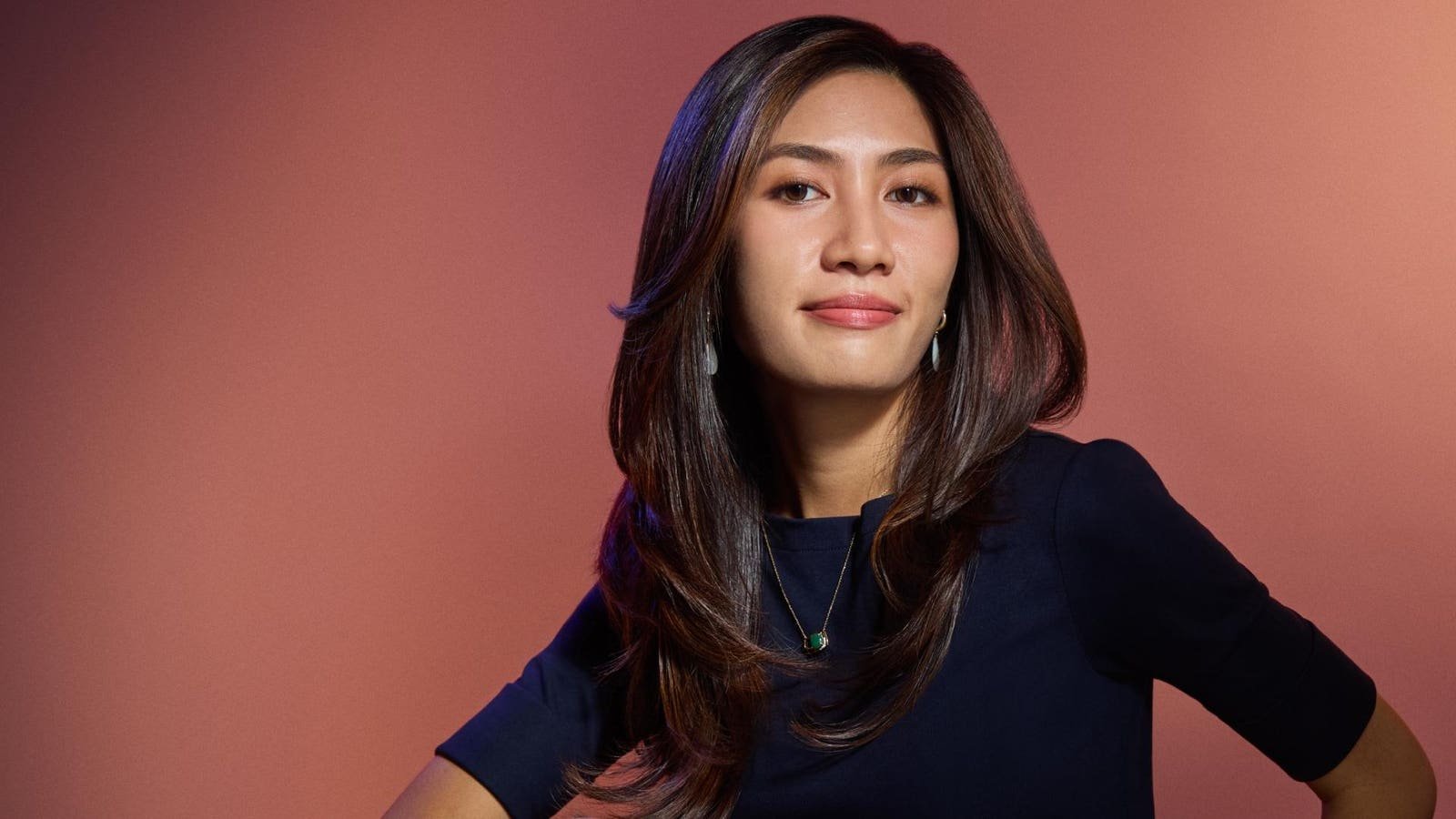
Then in December 2025, through a disability resource program, the couple learned of Abby Care, a San Francisco startup that helps train family members or friends of people with medical conditions to become licensed caregivers, enabling them to get paid—in Colorado, at least $20 per hour—for the aid they’ve been providing anyway. The company is the brainchild of 26-year-old Havi Nguyen, who started the company five years ago.
Nguyen sees Abby Care as the solution to a supply problem for a market with staggering demand. She thinks Abby Care can do with in-home health care what Uber did for taxis and Airbnb did for hotels. “Why don’t we just reimagine a new care model or health care system where we can leverage the family caregiver or the parent who really understands the patient best?” she says.
It’s a huge market. In 2024, an estimated 59 million family caregivers of adults in the U.S., mostly unpaid, worked almost 50 billion hours, according to a March report by AARP. If the work was paid, at an average rate of $20.41 per hour, it would have generated roughly $1 trillion in wages. The opportunity costs are even larger. Caregivers looking after family members for free rack up an estimated $80,000 to $100,000 per year in lost earnings, lack of job advancement and “other life quality losses,” according to a May study by the University of Pennsylvania.
Next Billion-Dollar Startups 2026
Artificial intelligence once again dominates Forbes list of venture-backed startups we think are likely to become unicorns.
VIEW THE FULL LIST
Abby Care wants to get these people paid. It does so by essentially acting as a Medicaid provider that takes advantage of rules that allow family members to become paid caretakers for qualified patients who need long-term care, like people with autism or cerebral palsy, or the elderly. The caretakers become employees of Abby Care, which receives Medicaid funds from insurance companies, then passes on those wages to caregivers. Abby Care provides online lessons that help family caretakers get state certification and two days of in-person training where they learn techniques such as CPR and the Heimlich maneuver. After completing training, they work with one of the company’s roughly 80 staff nurses to create a plan for the patient. Once that’s in place, caretakers use Abby Care’s app as a one-stop shop for time sheets, medical charting and asking questions of the company’s AI medical assistant. The company now operates in eight states, including Colorado, Pennsylvania, New Jersey and Florida.
Abby Care booked $15 million in revenue last year. Blue-chip backers including Sequoia Capital, Thrive Capital and Khosla Ventures have bought into the idea, investing $45 million in total funding, most recently at a $225 million valuation. “We just thought, hmm, this is a very interesting unlock if she can create a platform and a marketplace,” says Sequoia partner Alfred Lin, who has ranked No. 1 on Forbes’ Midas List of top VCs multiple times. Thanks to its early traction and even bigger promise, Abby Care qualifies for inclusion in this year’s Next Billion-Dollar Startups list, our annual showcase of companies we think most likely to reach a $1 billion valuation.
Nguyen grew up in Baytown, Texas, a suburb 25 miles east of Houston. Her parents, both immigrants from Vietnam, ran a nail salon, where Nguyen spent weekends and summers working the cash register, scrubbing floors and painting nails. The place didn’t make much money. Her family’s income was low enough to qualify them for Medicaid benefits, which is how she learned firsthand how to navigate the complicated federal and state-sponsored medical system. “From an early age, I was in charge of applying to Medicaid, renewing benefits, helping my sisters make sure that they could go to the right appointments,” she says. “It forces you to grow up very quickly and take on that responsibility.”
Nguyen first got into tech at age 16, learning how to code because she wanted to build video games. She earned a scholarship to Columbia University to study computer science and scored summer internships at Google and Facebook. Her first full-time gig was at a San Francisco–based therapy startup called Songbird, where she led strategy and operations. There she struggled to set up autistic children with in-home care. That experience sparked the idea for Abby Care.
In those earliest days, Nguyen went state by state to figure out what programs already existed. Paid family caregiving has existed in some form or another for decades. Home and Community-Based Services Waivers, which allowed Medicaid patients to receive long-term care at home instead of at nursing homes or other institutions, were introduced in the early 1980s. But she wanted her startup to provide a level of attention that went beyond most typical home care. She imagined training family members to provide medical-level care, doing things like ventilator treatment or tube feedings. She soon discovered Colorado had had a program like that since 2001. That was the good news. The not-so-good news: At the time, Nguyen recalls it was one of only three states providing that type of support for family home care (the others were New Hampshire and Arizona). “I had a really hard decision to make,” she says. “Do you truly want to build a company where your model is only viable in less than a handful of states?”
But then she thought of Uber, which had to fight tooth and nail to launch in every market it entered in the early days. That’s when she decided to make Colorado her proof-of-concept market and try to persuade other states to hop onboard. “Of course, ride sharing and health care are very different,” she says. “If you’re able to prove the value prop right, then could you use that as a way to influence other states or regulations to change over time?” A turning point in the regulatory landscape came after the pandemic, when states expanded home care support as people tried to remain safe in their houses. Now, she says, 37 states offer support for the type of care Abby Care offers—though the company is still in just eight.
There are big risks in being so closely tied to Medicaid: Sudden policy swings have the potential to dramatically alter the business model. President Trump’s One Big Beautiful Bill contained more than $1 trillion in health care budget cuts and created new restrictions and work requirements for Medicaid eligibility. In response, some states, including Colorado and Indiana, where Abby Care operates, have proposed slashing pay for family caregivers. “The politics are complicated, and whether you agree or not, I think what this bill sends is a clear message,” Nguyen says. “We have spent a lot of money in our U.S. health care system, and we need to assess if we’re seeing value from it.”
Another big challenge: The home care market faces ongoing fraud from scammers. To pick just one case, in June, Pennsylvania’s attorney general charged two caretakers with collectively purloining $180,000 in Medicaid funds for hours they falsely worked. So why do heavyweight venture firms that are also backing OpenAI or SpaceX believe in Abby Care? “Them being AI-forward really does make a huge difference,” says Nworah Ayogu, a partner at Thrive Capital, adding that Abby Care’s software tools allow caregivers to “operate at a new level.” Sequoia’s Lin says the app’s digital charting requirements help the startup to police against fraud.
For Jesse and Deaunda, Abby Care has been an enormous boon. Before Deaunda quit her job to care for him, there was an incident when Jesse stopped answering his phone while visiting his father. Deaunda went over and found him unconscious with a bruise across his face, having fallen during a seizure, and rushed him to the emergency room. That visit cost roughly $80,000. No one can guarantee there won’t ever be another accident, but there is comfort in knowing Deaunda is on the job now. And getting paid for it.