South Africa: A continental leader in science, innovation and technology
By William Baloyi
South Africa is a nation of innovation, where scientific curiosity, research and technological advancement continue to shape solutions for some of society’s greatest challenges. Our scientists, researchers and innovators are contributing to global progress using science and technology to improve the lives of people in our country.
The Lodox scanner, which was first developed in the mining industry to detect smuggled diamonds through low-dose, full-body X-ray imaging, is one such invention. Today, this technology is widely used in trauma centres and hospitals in South Africa and internationally, providing full-body images within seconds while exposing patients to significantly less radiation than traditional X-rays or CT scans. This innovation demonstrates how a solution developed for one sector can be transformed to improve healthcare outcomes and save lives.
South Africa’s contribution to science and innovation extends across several fields. In medicine, the country has a proud history of pioneering breakthroughs that have influenced global healthcare. The first successful human-to-human heart transplant was performed by South African cardiac surgeon Professor Christiaan Barnard at Groote Schuur Hospital in Cape Town in 1967, placing South African medical expertise at the forefront of international innovation.
Today, South African researchers continue to contribute to global health through advancements in infectious disease research, HIV prevention and treatment, vaccine development and healthcare solutions that respond to challenges facing communities.
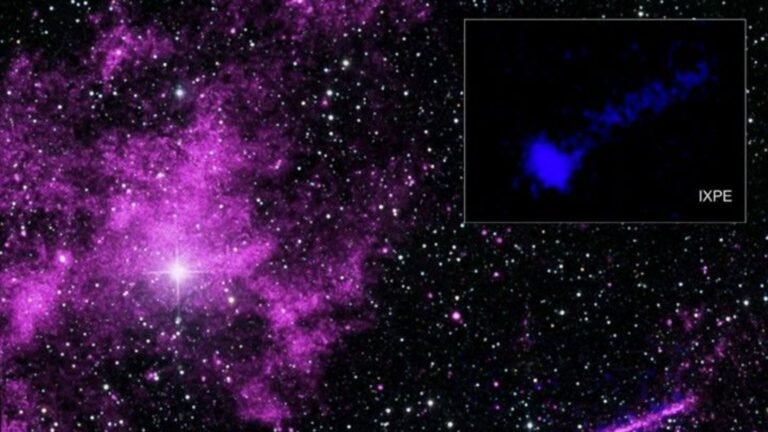
Inventions and discoveries such as these have ensured that South Africa remains a hub of innovation and technology. Even on a global level, South Africa is at the frontier of scientific exploration through projects such as the Square Kilometre Array (SKA), hosted in the Northern Cape, which is pushing the boundaries of science and our understanding of the universe.
The SKA project is an international effort to build the world’s largest radio telescope, with a collecting area equivalent to approximately one square kilometre. Co-located in Africa and Australia, the project will generate groundbreaking scientific discoveries that will deepen our understanding of galaxies, black holes, the origins of the universe and the fundamental laws of nature. South Africa’s participation in this global project demonstrates our ability to host and contribute to some of the most advanced scientific initiatives in the world.
The country’s leadership in astronomy is further demonstrated through the MeerKAT radio telescope, located in the Karoo. This world-class facility has produced important scientific discoveries, including detailed observations of the centre of the Milky Way and research that is helping scientists better understand space phenomena. MeerKAT has positioned South Africa as a key contributor to global astronomy and serves as a precursor to the SKA.
South Africa is also at the leading edge of scientific research. In 2023, South Africa produced 25 775 scientific articles, placing the country 29th in the world and second in Africa after Egypt. South African research is widely used by researchers around the world, showing that our knowledge and expertise are trusted and valued internationally. Our research has demonstrated strength in health sciences, humanities and natural sciences, where local expertise continues to contribute to global knowledge.
South Africa’s contribution to medical innovation also extends to cancer research, where institutions such as the University of Cape Town are advancing research that responds to the needs of African populations.
Through initiatives such as the Cancer Research Initiative, UCT researchers are working across disciplines to improve cancer prevention, diagnosis and treatment while building knowledge that can contribute to global efforts against the disease. This work demonstrates how South African science is developing solutions that are both locally relevant and globally significant.
The country is also making significant strides in agricultural innovation. Through advanced plant breeding, biotechnology, climate-smart agriculture and research into improved crop varieties, South African scientists are helping to strengthen food security and support farmers in adapting to changing environmental conditions. Plant breeders’ rights applications increased from 263 in 2022 to 318 in 2023, placing South Africa among the global leaders in agricultural innovation. These advances demonstrate how science can directly support livelihoods, economic development and resilience.
South Africa’s innovation journey also extends into space technology and Earth observation. Through initiatives such as SumbandilaSat, the country’s first locally developed microsatellite launched in 2009, South African engineers and scientists demonstrated growing expertise in satellite technology. These capabilities support applications such as environmental monitoring, disaster management, agriculture planning and the management of natural resources.
In the energy sector, South African innovation continues to contribute to finding solutions to some of society’s most pressing challenges. Through research in renewable energy, solar technologies, energy storage and advanced engineering, local scientists and institutions are creating solutions that can strengthen energy security and support economic development.
Our innovation and technology ecosystem is supported by institutions such as the Council for Scientific and Industrial Research (CSIR), the National Research Foundation, universities and other research organisations that provide platforms for scientific discovery and technological advancement. These institutions play a critical role in transforming ideas and research into solutions that improve lives and strengthen the economy.
Furthermore, government’s investments in research, development and innovation are helping to grow the economy while supporting sustainable development. Science, technology and innovation provide pathways to address societal challenges, create industries, support job creation and build a more capable and competitive nation.
South Africa’s journey in science, innovation and technology demonstrates that investment in knowledge is an investment in the nation’s future. As National Science Month draws to a close, its legacy should extend far beyond a single month of awareness and celebration. It is also an opportunity to inspire the next generation of scientists, engineers, researchers and innovators to pursue careers that will shape the future.
Government remains committed to creating an enabling environment through sustained investment in research and development, strengthening partnerships among academia and the public sector, and expanding access to quality science, technology, engineering, and mathematics (STEM) education.
By harnessing the power of science, innovation and technology, South Africa is not only improving the lives of its people but also reinforcing its position as a continental leader and a trusted global partner in advancing sustainable development. Together, we can build a more inclusive, competitive and resilient economy, ensuring that innovation continues to drive progress and create opportunities for all.
*Mr William Baloyi is the Deputy Government Spokesperson