Apple’s M6, M7 and M8 chip roadmap shifts focus toward AI: Report
Apple is reportedly reshaping its Mac chip roadmap to prioritize artificial intelligence (AI), with future M-series processors designed around stronger AI capabilities instead of following the company’s traditional release cycle.
According to the latest report by Mark Gurman of Bloomberg, Apple’s canceled self-driving car project laid the foundation for many of the AI technologies now used across its devices. The project, canceled in 2024, reportedly involved thousands of employees, hundreds of patents, specialized facilities and more than $10 billion in spending. Although it never resulted in a commercial vehicle, the technologies developed during the project later became part of Apple’s AI hardware strategy.
Apple Car project laid the AI foundation
The report says Apple originally planned a fully autonomous Level 5 self-driving vehicle, requiring major advances in machine learning and custom silicon. Although the processor designed for the vehicle was never completed, the underlying technologies eventually contributed to the creation of the Neural Engine.
Introduced with the iPhone X in 2017, the Neural Engine later expanded across Apple’s product lineup. Since the M1 debuted in 2020, every Mac has included a Neural Engine, enabling on-device AI processing.
The technology has also influenced:
- Ultra-class Mac chips
- Apple Intelligence server processors
- Apple’s broader on-device AI strategy
Apple has continued improving the Neural Engine, including significant gains with the M4. While the company has faced delays with Siri and Apple Intelligence, the report says its long-term investment in AI hardware is becoming increasingly important as more AI workloads move to devices.
Apple changing its M-series roadmap
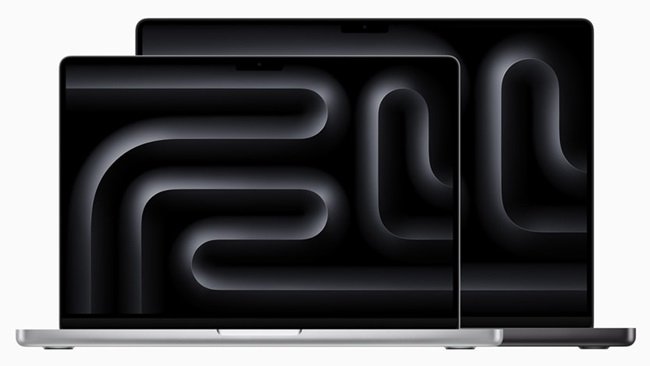
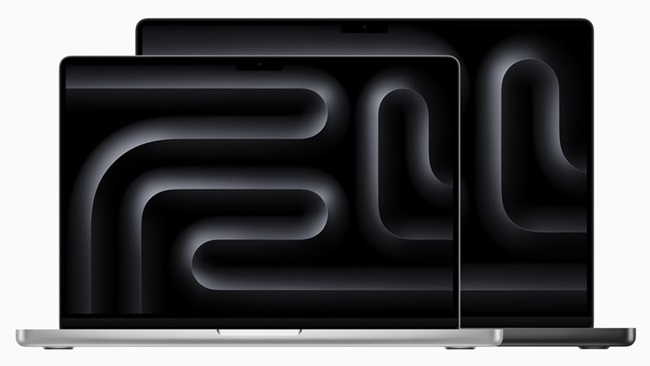
The report says Apple’s next Mac chip generation will begin with the base M6 later this year. Instead of introducing the usual M6 Pro, M6 Max and M6 Ultra variants, Apple is reportedly moving directly to the M7 family.
Expected roadmap:
- M6: Later this year
- M7: First half of 2027
- M7 Pro: Late 2027
- M7 Max: Late 2027
- M7 Ultra: 2028
Apple reportedly finalized the M7 design just six months after beginning work on the M6. While the company has skipped Ultra chips before, the report says skipping an entire generation of Pro, Max and Ultra chips would be a first.
AI driving future chips
According to the report, Apple accelerated the M7 family to bring major AI improvements sooner.
The M7 Ultra is expected to:
- Deliver a significant increase in AI performance
- Approach the capabilities of dedicated AI accelerators such as Nvidia’s Blackwell
- Form the basis of a next-generation AI server planned for around 2029
Before that, Apple is reportedly preparing a more powerful AI server based on the M5 Ultra under the internal codename J246.
The M7 Ultra is also being designed to support up to 1.5TB of memory, roughly double the capacity planned for the M5 Ultra. However, the final configuration could depend on memory availability, as industry-wide shortages have increased costs and limited supply.
M8 chips already in development
The report adds that Apple is also developing the M8 generation with even stronger AI capabilities.
Key details include:
- A chip codenamed Soko is expected in 2028
- Another high-end Mac processor project is internally known as Cardinal
- The 2028 chip generation is expected to use a 1.4nm manufacturing process for improved performance and power efficiency
AI becoming central to Apple’s chip strategy
According to the report, AI is now becoming the primary factor influencing Apple’s future chip development, replacing the traditional emphasis on CPU performance, graphics, battery life, and thinner designs.
Although the Apple Car project never reached production, the technologies developed during the program have become an important part of Apple’s long-term AI hardware and silicon strategy.