The most important sci-fi movie of the century is about to leave Netflix
It’s tough to picture it now, but AI used to be the stuff of science fiction. Ever since the ‘60s, the topic has been fertile ground for inspiration, resulting in memorable creations, from the evil HAL in 2001: A Space Odyssey to the pity-inducing replicants of Blade Runner. While these movies remain classics, we’re in an era of AI that might reshape the way the technology is depicted in fiction. Instead of visualizing it as something far off and ripe for exploring, we’re encountering it in our daily lives. Your opinions on AI may vary, but one thing is clear: It’s a far less sexy topic than what was promised.
However, one movie released over a decade ago managed to predict where technology and culture were headed better than almost any other, making it the perfect bridge between the past and future of AI-based sci-fi. That movie is streaming now on Netflix, but you only have a couple of days left to watch before it leaves the platform on Aug. 1.

Twelve years ago, Alex Garland released one of his best and most thought-provoking movies. Ex Machina marked his directorial debut after writing the scripts for films like 28 Days Later and Sunshine, and it remains one of the sharpest works of his career. It’s a project that asks some uncomfortable questions about humanity and presents one of the most truthful depictions of men. Even stripped of its sci-fi gloss, Ex Machina stands the test of time because, beyond exploring cool topics like humanoids and tech, it’s ultimately a movie about men and the way in which they view women.
Ex Machina follows Caleb (Domhnall Gleeson), a 26-year-old engineer who wins a workplace lottery to stay at the home of his visionary boss. The film does quick work in its opening moments, showing Caleb arriving at a remote and isolated compound that’s a cross between a bunker and a brutalist tech palace. There, he meets Nathan (Alpha male Oscar Isaac), the creator of a Google and Facebook-like company called Blue Book. While Caleb has a clear admiration for Nathan, they never click; the two are polar opposites. Caleb is meek and shy, while Nathan is brash and a drunk, punishing his excesses the following day with grueling workouts.
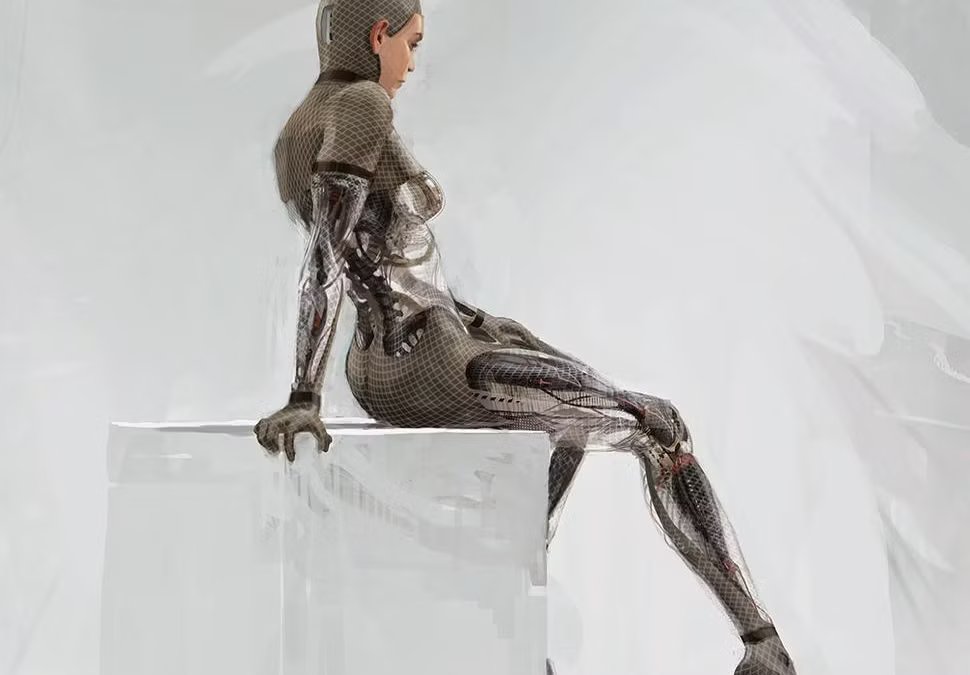
Caleb soon learns that there’s a purpose to his visit. After signing a restrictive NDA, it’s revealed that he was brought to test the effectiveness of a humanoid robot called Ava (still Alicia Vikander’s best performance) by conducting a Turing test of sorts to check whether her AI is developed enough to trick humans and make them believe she has consciousness. If Ava passes, she gets to live. If she fails, her code is rearranged and folded into Nathan’s next creation.

Garland takes his time unraveling the story, which develops slowly between its three main characters and their shifting dynamics. The script is split according to the sessions between Ava and Caleb, tracking the slow progression of their relationship, which goes from strangers into a courting of sorts, all under Nathan’s watchful eye.
The interview portions of the film are catnip for a certain kind of sci-fi fan, bringing to mind moments like Blade Runner, where humans are faced with a version of themselves that they recognize, yet somehow feels off. Ava is able to read Caleb’s emotions and influence his behavior according to her needs. Beyond her preternatural understanding of humans, Vikander plays Ava as a blank onto which Caleb can project his emotions, finding kinship in this reflection of his own consciousness. Even if she didn’t have the appearance of a gorgeous and fragile woman, Nathan is such a repellent character for Caleb that it’s impossible for him not to take the robot’s side.
In the film’s final act, Ex Machina does what all of these stories do best. As the line between AI and humanity is blurred, characters are thrown into chaos, questioning their own agency. Most interestingly, the film becomes an exploration of men and their desires, which can leave them blind to dangers that come in pretty packages. For all the disgust that Caleb feels for Nathan and his disturbing view of women, from the point of view of the audience, he isn’t much better. Throughout his sessions with Ava, he pivots between seeing her as a child or a victim, blinded by his loneliness and desire for her.
As we move through a world that’s crawling with AI, it’s refreshing to revisit stories where we could be more philosophical about agency — asking, pointedly, what happens when men fashion technologies that let them wield power over women. And while Garland encourages you to root for his AI heroine, she’s never really accessible. Both Caleb and the audience extend a privilege that only humans could: humanizing her. We project our feelings and desires onto Ava, thinking of her as a different shade of person. It’s a potent message to keep in mind in a world where AI chatbots blur the line between technology, friendship, and even romance.
After all, when Ava achieves her hard-won escape, she keeps her thoughts to herself. By the end of the film, she’s as unknowable as she was when the story started.
Ex Machina is streaming on Netflix from now until Aug. 1.