U.S. economy slowed to 1.5% growth rate in Q2; June core inflation at 3.3%
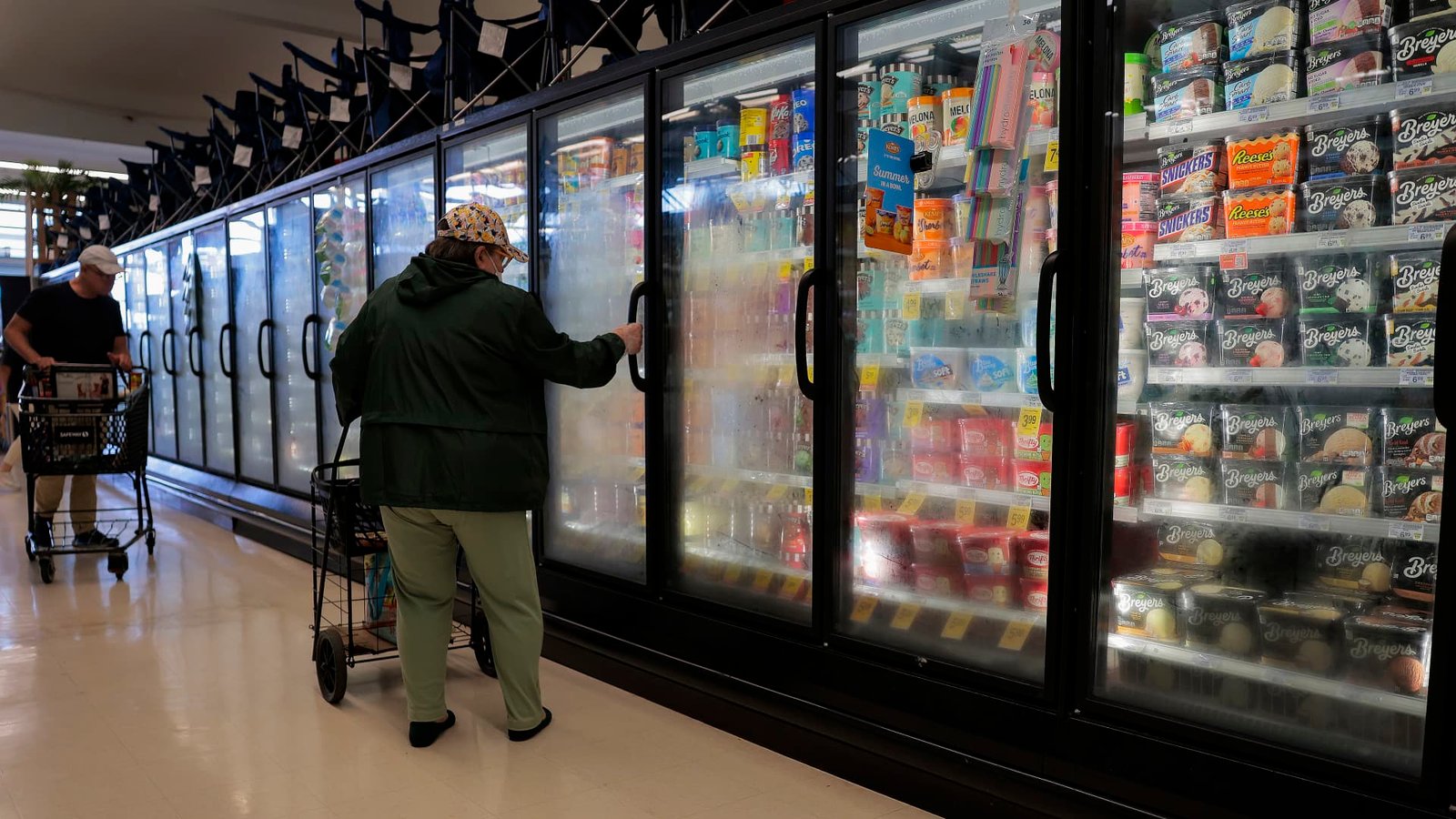
A person shops for ice cream in the freezer aisle of Safeway on July 20, 2026 in San Francisco, California.
Heather Diehl | Getty Images
Economic growth was weaker than expected in the second quarter while inflation in June held well above the Federal Reserve’s goal, the Commerce Department reported Thursday.
Gross domestic product, a broad measure of goods and services, increased just 1.5% for the April-through June period, according to Bureau of Labor Statistics numbers adjusted for seasonality and inflation.
Economists surveyed by Dow Jones had been looking for a growth rate of 1.8%, following the 2.1% increase in the first quarter.
A separate report showed that the personal consumption expenditures price index, which is the Federal Reserve’s primary forecasting gauge, fell a seasonally adjusted 0.1% for the month, putting the annual inflation rate at 3.7%. The readings were in line with forecasts.
Excluding food and energy, core PCE posted a monthly increase of 0.1% and an annual level of 3.3%, against respective forecasts for 0.2% and 3.3%.
While the Fed technically uses the headline PCE number as its gauge for setting policy, most officials consider core inflation as a better indicator of longer-run trends.
Stock market futures were positive following the report while Treasury yields were sharply higher.
The reports come a day after a divided Fed voted 9-3 to hold its benchmark borrowing rate in a range between 3.5%-3.75%, where it has been all year.
Inflation has taken the primary focus for Fed policymakers as labor market indicators have stabilized this year, with the three dissenting votes coming from regional presidents who have expressed concerns about higher prices and the failure to make progress towards the prices side of the central bank’s mandate.
GDP: Better than the headline
While the GDP number was below expectations, the miss appeared to come from a decline in federal government spending and inventories. Other parts of the economy appeared strong.
Key areas of the economy continued to show improvement: Personal spending rose 2.1% after eking out a 0.4% gain in the first quarter, while a key indicator of underlying demand called final sales to private domestic purchasers posted a robust 3.9% increase.
However, inventories fell 0.7% and federal spending was off 0.3%, subtracting from the top-line reading.
Gross private domestic investment rose 0.5% while exports also increased 0.5% and imports declined 1.5%. Exports generally add to GDP while imports subtract.
This is breaking news. Please refresh for updates.