Hellbender Doubles Pittsburgh Campus, Claims Sole US-Owned Physical AI Maker Status
The robots, autonomous vehicles, and intelligent industrial machines that physical AI companies are building need hardware to see and think. Almost none of that hardware is made in America — and Pittsburgh startup Hellbender says it intends to change that. On Wednesday, the company announced it has moved its global headquarters to the Roundhouse at Hazelwood Green and will open a manufacturing operation at nearby Mill 19 — a 90,000-square-foot (8,361-square-meter), 10-year campus that positions it, the company says, as the only fully US-owned and domestically manufactured Tier 1 supplier for physical AI.
That claim matters beyond Pittsburgh. The physical AI supply chain — the hardware that gives robots their eyes, brains, and decision-making capacity — is today concentrated in East Asia and Europe in ways that mirror the semiconductor supply chain before COVID-era disruptions exposed its fragility. Hellbender, founded in 2021 by Brian Beyer after his work on robotic systems at Carnegie Mellon University’s National Robotics Engineering Center, is the first commercially backed company to explicitly stake a US manufacturing position at the Tier 1 level of that supply chain.
The expansion is expected to create more than 500 Pittsburgh-area jobs over five years across manufacturing, hardware engineering, product development, and operations.
What Hellbender Actually Builds
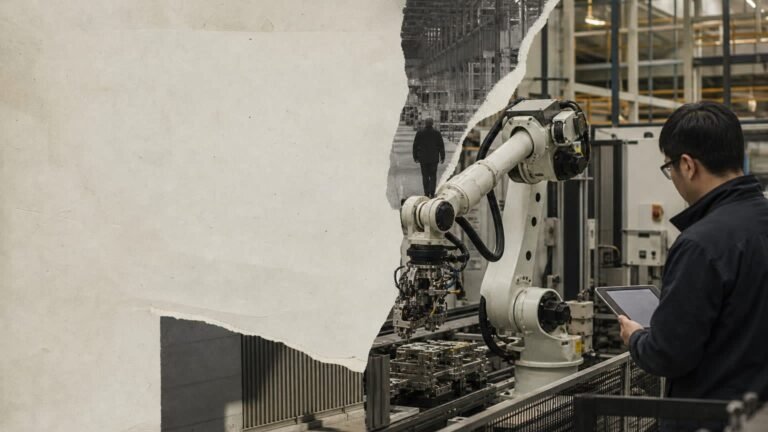
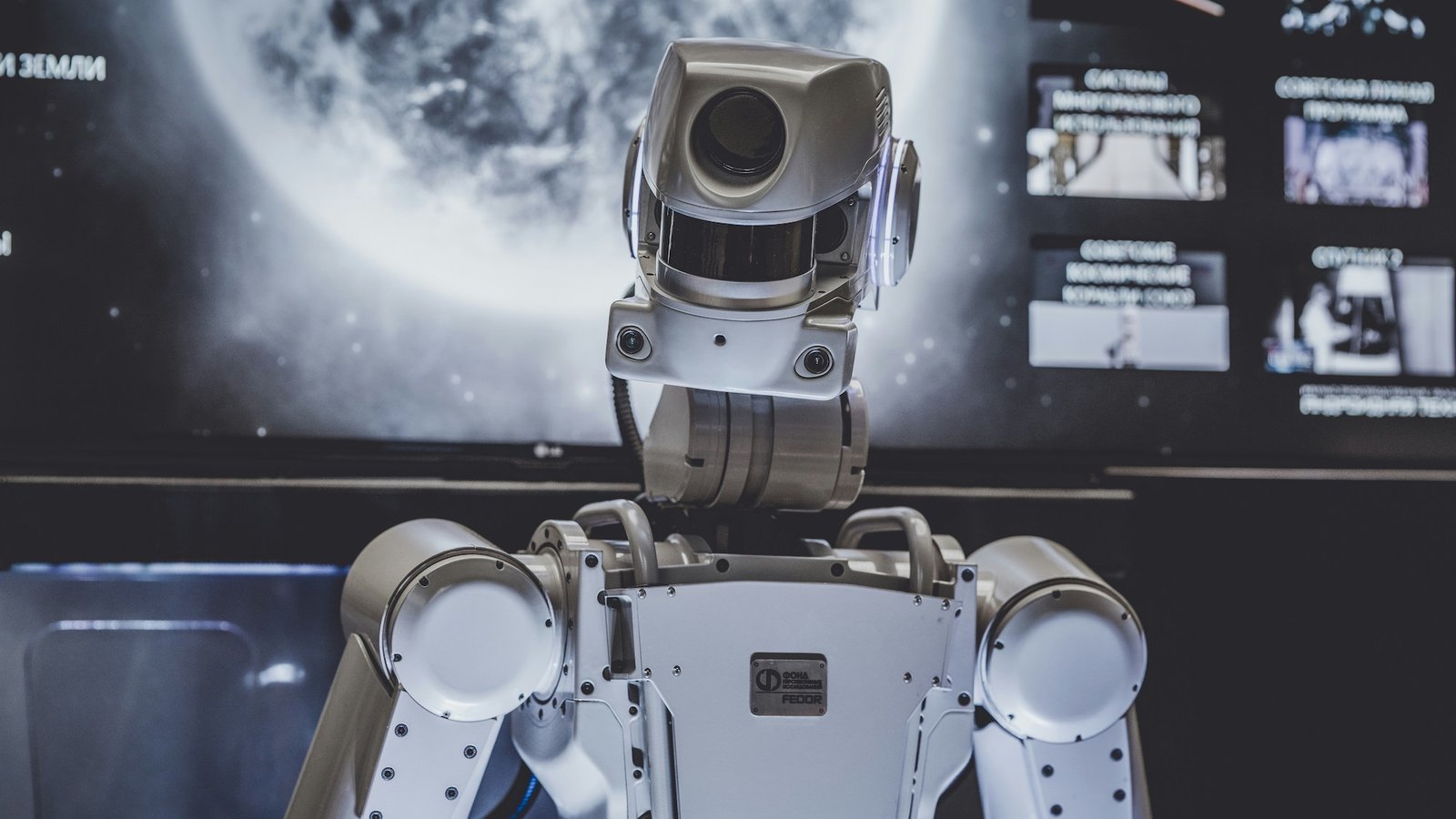
Hellbender makes what it calls the “eyes and brains” of autonomous systems: integrated perception platforms that enable robots, autonomous equipment, and intelligent machines to see, understand, and act in real time without routing data through a cloud server.
The company’s hardware runs on a specific and deliberate technical stack. Its edge AI camera platforms pair Hailo AI accelerators — purpose-built neural processing units from Israeli fabless semiconductor company Hailo Technologies — with Raspberry Pi compute modules as the host processor. The Hailo-8 delivers up to 26 TOPS (tera-operations per second) of inference throughput at roughly 2.5 watts — enabling real-time computer vision tasks including object detection, depth estimation, and semantic segmentation at a power draw orders of magnitude below GPU-class hardware. The Raspberry Pi Compute Module handles application logic, API communication, and system orchestration.
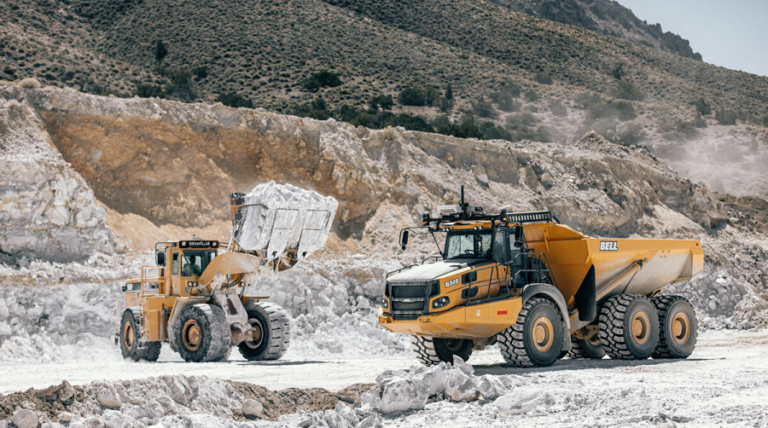
The design philosophy is an explicit rejection of cloud-dependent architectures. By executing perception, reasoning, and decision-making entirely on-device, Hellbender’s systems can operate in environments where continuous network connectivity is unavailable, undesirable, or a security liability — a practical requirement for physical AI deployments in energy infrastructure, agriculture, healthcare, and industrial settings.
The current product line includes three platforms. The Vine Camera System supports distributed monitoring across large physical environments, accommodating up to 64 cameras over hundreds of feet through a single native API — currently in pilot with a national convenience store chain and assisted living facilities. The Tadpole Camera delivers high AI acceleration in a compact footprint, targeting OEM hardware integration, insurtech, and security deployments. The Stereo Camera combines depth perception with AI acceleration and peripheral device control for use in low-light and complex environments, currently piloting with a major national utility provider.
The trade-off of the Hailo NPU architecture is intentional but worth naming: Hailo chips are inference-only and cannot run model training or on-device fine-tuning. All model development happens off-device, in data centers, with the resulting trained model then deployed to Hellbender’s field hardware. For production-scale physical AI deployments — where consistency, repeatability, and power efficiency matter more than flexibility — this is the right architectural choice. For applications requiring continuous on-device learning, it is a constraint to engineer around.
Why US-Made Hardware Now Matters
For the physical AI sector, the question of where hardware is manufactured has shifted from a procurement preference to a strategic consideration. The supply chain for edge AI camera systems — AI accelerator chips, compute modules, sensor arrays, ruggedized enclosures — is currently concentrated in East Asia, Israel, and the UK. US robotics companies scaling commercial deployments depend on a supply chain that has no major domestic anchor.
That concentration echoes the semiconductor supply chain as it existed before 2020, when COVID-era disruptions forced a global reckoning with geographic hardware dependencies. Federal policy has since directed hundreds of billions into domestic semiconductor manufacturing. Physical AI hardware — which sits one level above commodity chips in the stack — has received no equivalent structural attention.
Hellbender’s Tier 1 supplier claim is the company’s assertion, not a third-party certification. But the structural gap it is addressing is real. A Tier 1 supplier in manufacturing supply chain terms means a company that integrates components into systems-level products and delivers directly to an OEM — rather than supplying commodity components to an intermediary. The physical AI sector, which is in the process of defining its own supply chain conventions, does not yet have a formal Tier 1 designation body. Hellbender is effectively claiming the category and asking robotics integrators to treat it as such.
Lead investor Jay Katarincic of Magarac Venture Partners put the case plainly at the May seed round: “As AI and robotics move from research to real-world deployment, the need for secure, onshore engineering and production has never been more important.”
Two Buildings, One Ecosystem
Hellbender’s new campus spans two historic structures at Hazelwood Green, a 178-acre (72-hectare) brownfield redevelopment on Pittsburgh’s Monongahela River riverfront — the site of the former Jones and Laughlin Steel Works, which ceased steel production in 1998.
The Roundhouse, now Hellbender’s global headquarters, carries personal significance for CEO Brian Beyer, who previously worked on robotic programs at CMU’s National Robotics Engineering Center in the same building. Hellbender’s team has already moved in. The company also plans to open the building’s ground-floor space to early-stage companies that can benefit from its design and prototyping capabilities — an extension of its legal structure as a benefit corporation, which requires it to consider public benefit alongside profit.
Located a short walk from the Roundhouse, the approximately 60,000-square-foot (5,574-square-meter) Mill 19 manufacturing operation is expected to open in early 2027, with support from the Richard King Mellon Foundation and RIDC (Regional Industrial Development Corporation of Southwestern Pennsylvania). The company is also seeking Pennsylvania state funding through the Redevelopment Assistance Capital Program.
Mill 19’s existing tenants include CMU’s Manufacturing Futures Institute and the Advanced Robotics for Manufacturing Institute. The site sits adjacent to CMU’s Robotics Innovation Center — a 150,000-square-foot (13,935-square-meter) research hub that opened in February 2026 — and the University of Pittsburgh’s BioForge biomanufacturing center.
“When RIDC first built Mill 19, our vision was to create a centerpiece of a vibrant new technology center,” said RIDC President Donald F. Smith Jr. “That is now coming to fruition, with Hellbender bringing manufacturing back to the historic Mill 19 — manufacturing critical components and systems for the entities driving our economy into the future.”
How Hazelwood Green Became Pittsburgh’s Physical AI Address
The Hazelwood Green site is not a newly fashionable innovation district. Three Pittsburgh foundations — the Richard King Mellon Foundation, The Heinz Endowments, and the Claude Worthington Benedum Foundation — purchased the dormant steel mill site in 2002 with a long-term coordinated plan to redevelop it into a manufacturing and research hub. That patience is paying off.
Five months after CMU cut the ribbon on the Robotics Innovation Center on the site of the former steelworks, Hazelwood Green is drawing global partners, state investment, and a projected 4,500 permanent jobs to one of Pittsburgh’s most storied neighborhoods. Fujitsu co-located a Physical AI Research Center inside the RIC in partnership with CMU. Robotics startup FieldAI has also established a presence. Governor Josh Shapiro announced a $1.5 million state investment in a new 25,000-square-foot (2,323-square-meter) Physical AI Accelerator to be constructed inside the RIC, with construction expected to begin later in 2026 and completion in 2028.
Hellbender’s arrival adds a manufacturing anchor to a cluster that previously consisted primarily of research institutions and early-stage companies. The company’s 10-year lease commitment is the signal that Hazelwood Green is moving from research campus to production environment.
“Hellbender is translating Pittsburgh’s strengths in robotics and artificial intelligence into products made here, jobs created here, and national economic leadership,” said Sam Reiman, Director and Trustee of the Richard King Mellon Foundation.
Jobs Beyond Advanced Degrees
Hellbender is making a deliberate pitch to the broader Pittsburgh workforce — not just candidates with advanced technical credentials. The more than 500 projected jobs span manufacturing, hardware engineering, product development, and operations, and the company says many positions will be accessible through technical training rather than formal degrees.
The company plans to develop career pathways for residents of Hazelwood and surrounding communities, working with local workforce partners and running its own internal technician training programs.
“A lot of people think you need an advanced degree to work in AI, but that is not the case,” said Chief Revenue Officer Brett Phillips. “We’re proud to carry forward Pittsburgh’s tradition of making things by investing in people with technical aptitude, hands-on skills, and a willingness to learn.”
Pittsburgh’s manufacturing workforce — shaped by decades in steel production and advanced manufacturing — is a specific asset Hellbender is positioning itself to draw on. Whether the company can convert that tradition into a trained edge AI manufacturing workforce will be one of the clearest tests of whether the Pittsburgh physical AI hub produces local economic benefit or concentrates opportunity in a narrow technical tier.
Can a $12.5 Million Seed Stage Hellbender Actually Scale?
Hellbender closed a $12.5 million seed round in May 2026, led by Magarac Venture Partners and Veredas Partners with participation from Mana Ventures, Gaingels, Sum VC, and the Active Angels Network. The company says it has been nearly doubling revenue each year since founding, reflecting both commercial traction and a market hungry for US-manufactured physical AI hardware.
The manufacturing ambitions embedded in the Mill 19 expansion — a 60,000-square-foot production facility opening in 2027 — are significant for a seed-stage company. The path from a $12.5 million round to scaled production of edge AI hardware involves capital outlays that typically require a Series A before break-even. Hellbender has not disclosed its next funding plans.
The institutional backing from the Richard King Mellon Foundation and RIDC, and the sought RACP state funding, reduce some of the real estate and infrastructure burden. But the central wager of Hellbender’s next five years — that it can grow from promising startup to indispensable infrastructure supplier while simultaneously building out 90,000 square feet of manufacturing capacity — is a bet that requires both commercial execution and continued capital access to pay off.
Frequently Asked Questions
What is a Tier 1 supplier in the physical AI context, and why does Hellbender’s claim matter?
In traditional manufacturing supply chains — automotive especially — a Tier 1 supplier integrates components into complete systems and delivers directly to an original equipment manufacturer. A Tier 2 supplier sells components to a Tier 1, which assembles them further. Hellbender is claiming the Tier 1 designation for physical AI hardware, meaning it delivers integrated perception and edge computing systems — ready to plug into a robot or autonomous machine — rather than selling commodity components for someone else to assemble. The significance of a US-owned company occupying this position is that every robotics integrator currently building physical AI systems who relies on overseas hardware suppliers for this layer of the stack has no domestic alternative. If Hellbender can successfully occupy this space at commercial scale, it becomes a strategic asset for US physical AI development in the way that domestic semiconductor fabs are becoming a strategic asset for AI compute.
How does edge AI hardware like Hellbender’s differ technically from cloud-dependent AI systems?
Cloud-dependent AI systems send sensor data — camera feeds, LiDAR point clouds, sensor readings — to a remote data center, run inference there, and return a decision to the machine. Round-trip latency on this architecture is 100 milliseconds or more, which is too slow for many real-world robotics applications. Edge AI systems run inference on-device: Hellbender’s cameras use Hailo AI accelerators — purpose-built neural processing units — to perform object detection, depth estimation, and decision-making locally, with latency under 10 milliseconds, no cloud connection required, and power draw around 2.5 watts for the Hailo-8 chip. The trade-off is that Hailo’s NPUs are inference-only — model training still happens in data centers — but for production deployments where trained models are pushed to field hardware, this is the right architectural trade-off for power, cost, and latency.
Is the physical AI hardware supply chain actually at risk in the way that semiconductors were?
The parallel is real, if not yet a crisis. The semiconductor supply chain disruption of 2021–2022 traced directly to geographic concentration in East Asia, compounded by geopolitical tensions affecting Taiwan. The physical AI hardware supply chain — edge AI chips, compute modules, sensor arrays — is today similarly concentrated outside the US: Hailo (chips) is Israeli, Raspberry Pi (compute) is British, and most edge camera systems at commercial scale are manufactured in China or Taiwan. US robotics companies scaling physical AI deployments have no major domestic anchor in this supply chain layer. Federal policy has not yet addressed physical AI hardware with the same urgency it applied to semiconductor manufacturing. Hellbender’s bet is that it can establish that domestic anchor before competitive or geopolitical pressure forces the issue.
What specific industries is Hellbender targeting, and what products are currently in pilot?
Hellbender’s platforms serve energy, logistics, agriculture, manufacturing, and healthcare. Its Vine Camera System — which supports up to 64 cameras over hundreds of feet via a single native API — is currently in pilot with a national convenience store chain and assisted living facilities. Its Stereo Camera, which provides depth perception and AI acceleration for machines operating in low-light environments, is piloting with a major national utility provider. Its compact Tadpole Camera targets OEM hardware integration and insurtech applications. Use cases documented in public reporting include wound care monitoring in hospital settings, autonomous navigation for industrial robots, and infrastructure safety monitoring for electrical systems.