Missed some of our top stories from the week? Check out our round-up below, covering the biggest science news and stories that matter.
This week’s stories, from July 25 to July 31, 2026, include the start of human vaccine trials for the Bundibugyo Ebola virus, a newly discovered Late Triassic dinosaur from Zimbabwe, how industrial poultry farming is driving foodborne pathogens, woolly mammoth bones found during the Danube drought, how melatonin may not be the answer for long-term sleep issues, and wildfires in Europe are creating dangerous “fire clouds.”
1. Ebola Outbreak Surpasses 3,000 Cases as First Human Vaccine Trial for Rare Bundibugyo Virus Begins
Ebola virus under the microscope. (Image Credit: Giovanni Cancemi/Shutterstock)
The WHO has updated the Ebola infection count to more than 3,200 during the Democratic Republic of the Congo’s (DRC) latest outbreak that started in May 2026. Caused by the rare Bundibugyo species, the virus has spread alarmingly fast, reaching a growing number of provinces and crossing into neighboring Uganda.
2. Newly Discovered Dinosaur From Zimbabwe Could Change What We Know About Ancient Southern African Ecosystems
The animal is named Musango matusadonaensis, a new sauropodomorph that lived about 210 million years ago during the Late Triassic, when dinosaurs were diversifying before becoming dominant in the Jurassic. Together with other recent finds from Zimbabwe, Musango indicates that southern Africa supported distinct dinosaur communities rather than one broadly shared fauna.
3. How 31 Billion Chickens Are Driving the Evolution of a Major Foodborne Pathogen
Industrial poultry production appears to have altered how Campylobacter jejuni moves between bird species and evolves. The bacterium is the world’s most common bacterial cause of diarrhea, and researchers trace an estimated 60 to 80 percent of human C. jejuni infections to poultry.
4. Woolly Mammoth Bones Emerge From Bulgaria’s Danube Riverbank During Drought
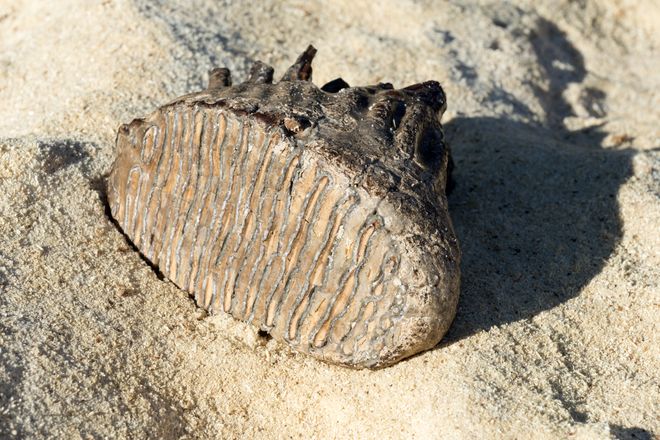
Fossilized mammoth tooth, not associated with the recent findings from the Danube. (Image Credit: ppart/Shutterstock)
Only days after record-low water exposed decades-old shipwrecks along the Danube, the same river has given up something older, hundreds of miles downstream in Bulgaria. A resident near the Bulgarian village of Ryahovo spotted large bones along the Danube riverbank. They photographed the remains and sent the images to local officials.
According to the Bulgarian News Agency (BTA), those images led specialists from the Regional History Museum in Ruse to the site, where they identified the remains as belonging to a woolly mammoth.
5. For Long-Term Sleep Improvement in Adults and Children, Melatonin May Not Be the Answer
Melatonin has become a go-to for both children and adults who have trouble sleeping. According to theSleep Foundation, nearly half of all adults have used the sleep aid to fall asleep, and 39 percent say they take it every day. In all, 46 percent of parents report giving melatonin to their children to help them fall asleep.
But when it comes to long-term use, the data is sparse. Is it safe to take it to sleep, and if so, for how long? And what do we know about children and melatonin use?
6. Wildfires in Europe Can Create “Fire Clouds” That May Trigger Lightning, Fierce Winds, and Even More Flames
Known as pyrocumulonimbus, or pyroCb, this rare phenomenon is sometimes described as a “fire cloud.” With France and Spain currently dealing with historic wildfires, these towering clouds are creating abundant challenges for firefighters. As blazes become intense enough to produce their own weather, they create a feedback loop in which lightning and extreme winds start new fires, repeating the cycle.
Michael Kratsios, chief science adviser to US President Donald Trump, released a report this week that reimagines how science in the country is funded. Credit: Daniel Heuer/Bloomberg via Getty Washington DC It was a big week for science in the administration of US President Donald Trump. On Tuesday, the president’s chief science adviser, Michael Kratsios,…
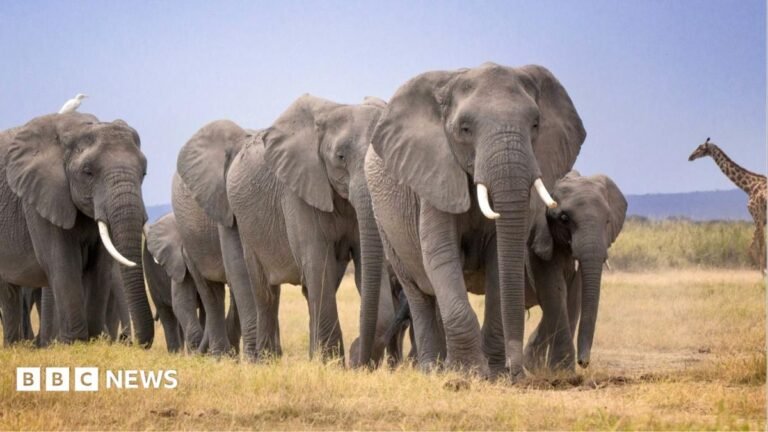
An urgent investigation has been launched into the mysterious deaths of 14 elephants in southern Kenya near the Amboseli National Park. The Kenya Wildlife Service (KWS) told the BBC that experts were examining the carcasses and said that tissue samples had been sent to laboratories to determine whether the deaths were caused by disease, poisoning…
In 2024, astronomers detected a rocky exoplanet, GJ 3378b, orbiting a red dwarf sun just 25 light-years from Earth in the direction of the northern constellation Camelopardalis. Based on radial velocity measurements, the discovery team estimated that this planet is 2.3 times as massive as Earth – making it a “Super Earth.” Thanks to revised…
The Solar System is full of the ghostly remnants of its violent birth. This ancient debris includes sad little rocks that never coalesced into large bodies, as well as the rocky guts of ancient planetary objects smashed apart by the catastrophic collisions that were surprisingly common more than 4 billion years ago. Until recently, these…
The fossil turned out to be a hatchling of a crocodile-like creature, and it suggests, according to a new study, that early animals did not use metamorphosis to evolve to dwell on land Eli Stark-Elster | AAAS Mass Media Fellow June 18, 2026 Two fossils of juvenile embolomeres—crocodile-like creatures, illustrated here—suggest that they did not…
During several recent conversations, people have told me that they’ve stopped checking their phones in the morning. Not because nothing was happening, but because everything was. They described the feeling as standing under a waterfall of perpetual bad news. This experience is far from an isolated one. According to Reuters Institute’s 2025 Digital News Report,…