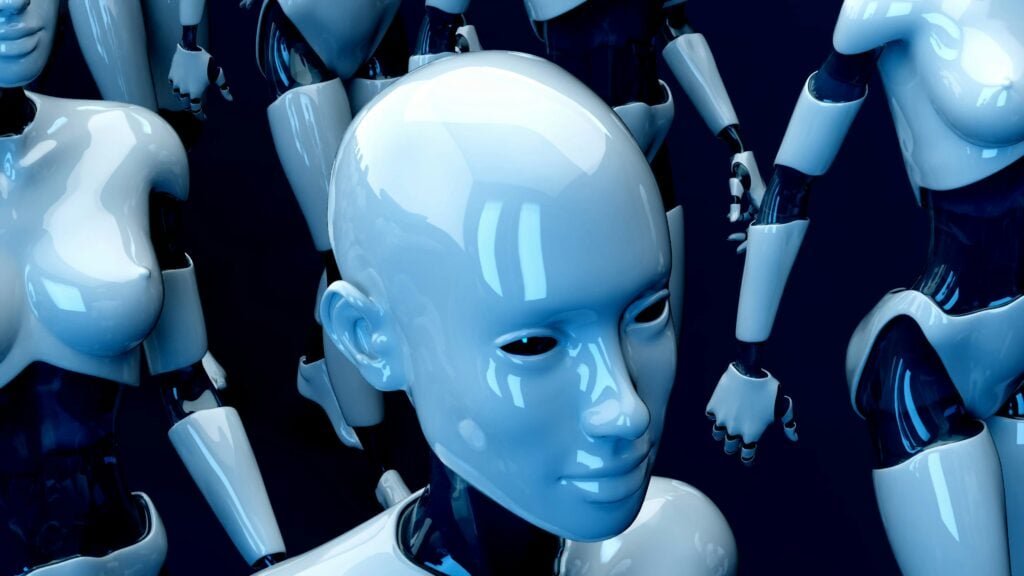
Future Roomba rivals are about to be banned in the US
When the Trump administration announced a ban on new Chinese humanoid and quadruped robots on Tuesday, it was easy to picture robots with legs and AI brains complete with impressive tricks. But the new rules are much broader than that. They could also affect robot vacuums.
The Federal Communications Commission’s definition of the robots covered by the ban extends to certain autonomous machines that move around on the ground, including robot vacuums.
Your robot vacuum is now a national-security issue
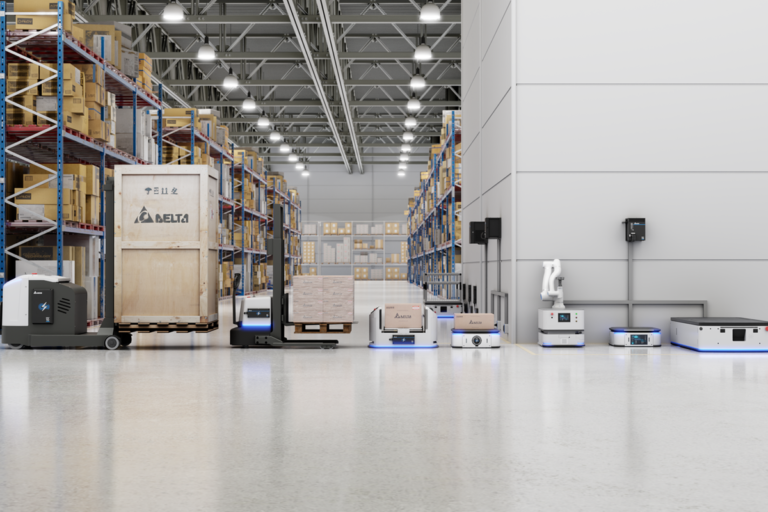
The FCC’s rules are much broader than the phrase “humanoid robots” makes them sound. They cover future software-controlled robots that move along the ground, weigh more than 4.4 pounds, including their dock, can perceive their surroundings, and have wireless connectivity. That can include robot vacuums, lawnmowers, delivery robots, and even some machines used to move packages around warehouses.
In other words, the government is not just looking at robots that look like humans. If it has wheels, sensors, Wi-Fi and enough artificial intelligence to know where the furniture is, it is a suspect.
China happens to dominate robot vacuums
China has become a major force in consumer robotics, and many of the biggest robot-vacuum brands, including Roborock, Ecovacs, Dreame, Xiaomi, and Narwal, are Chinese companies. Even the Roomba story has become complicated: iRobot’s former Chinese contract manufacturer, Picea, acquired the Roomba brand after iRobot’s bankruptcy.
So a policy aimed at foreign-made advanced robots lands particularly hard on an industry that relies heavily on Chinese manufacturing.
The government’s concern is not entirely out of left field
A modern robot vacuum can be very sophisticated. Depending on the model, it may have cameras, microphones, mapping technology, sensors and a connection to the internet. That means beyond simply figuring out where the crumbs are, a robot vacuum may also be building a digital map of its user’s home and sending data back to a company’s servers.
The FCC specifically referenced security problems involving DJI’s Romo robot vacuum in its national security justification. A vulnerability previously reported by The Verge allowed unauthorized access to thousands of those vacuums around the world.
Aside from robot vacuums and lawnmowers, there are humanoids and quadrupeds. Chinese company Unitree is one of the biggest players in that emerging market. Its robots have become increasingly visible in demonstrations and research, and the company recently partnered with Nvidia to use its Blackwell chips. Amid all the growth on the company’s end, the U.S. government worries that connected robots could potentially be used for surveillance, data collection, or remote disruption.
“These devices could create supply chain vulnerabilities that could disrupt U.S. economic and national security and could create a cybersecurity risk that threatens American critical infrastructure,” the FCC said in a statement on the restriction.
This is really about the AI supply chain
The restrictions come amid the Trump administration’s efforts to reduce America’s dependence on Chinese technology in industries expected to become strategically important from AI and robotics to energy infrastructure. The fear is that a future supply-chain crisis could leave the U.S. vulnerable to the same kind of leverage China has over critical rare-earth minerals.
China’s government, unsurprisingly, is not thrilled by the development and its officials are urging the United States to heed the objective and rational voices of the business communities in both countries and “stop smearing Chinese companies and threatening them with sanctions.
The Chinese embassy in Washington said Beijing will “take all necessary measures in response to any action that causes material harm to its interests.”
You don’t have to hide your Roomba
It is important to note that the restrictions apply to new models that have not yet been approved for sale in the U.S., not the robot vacuum you already own. If you bought a Roborock, Ecovacs, Roomba, or another approved model, nothing in these rules requires you to throw it away.
Exceptions already exist for self-driving cars and trains, unmanned aircraft and underwater vehicles, surgical robots, wheelchairs, and certain fixed industrial and medical robots. The FCC is also expected to exempt many non-Chinese suppliers, according to Reuters.
Also, companies can seek waivers for future products. But even that process could be difficult for manufacturers that do not have enough U.S. production. Matic, a robot vacuum company that assembles its machines in California, may still need a waiver for new models because it doesn’t yet source enough of its components from the United States. So, even an American company making robots in America is not necessarily automatically in the clear.
![Semiconductor Wafer Inspection EquipmentMarketSize,Share,Growth&Forecast[2034]](https://jobssz.com/wp-content/uploads/2026/07/Global_Growth_Insights_Final_Black.png)


![[United States] – Do I actually need part 107 for this?](https://jobssz.com/wp-content/uploads/2026/07/jjpd9nfwsheh1.jpeg)