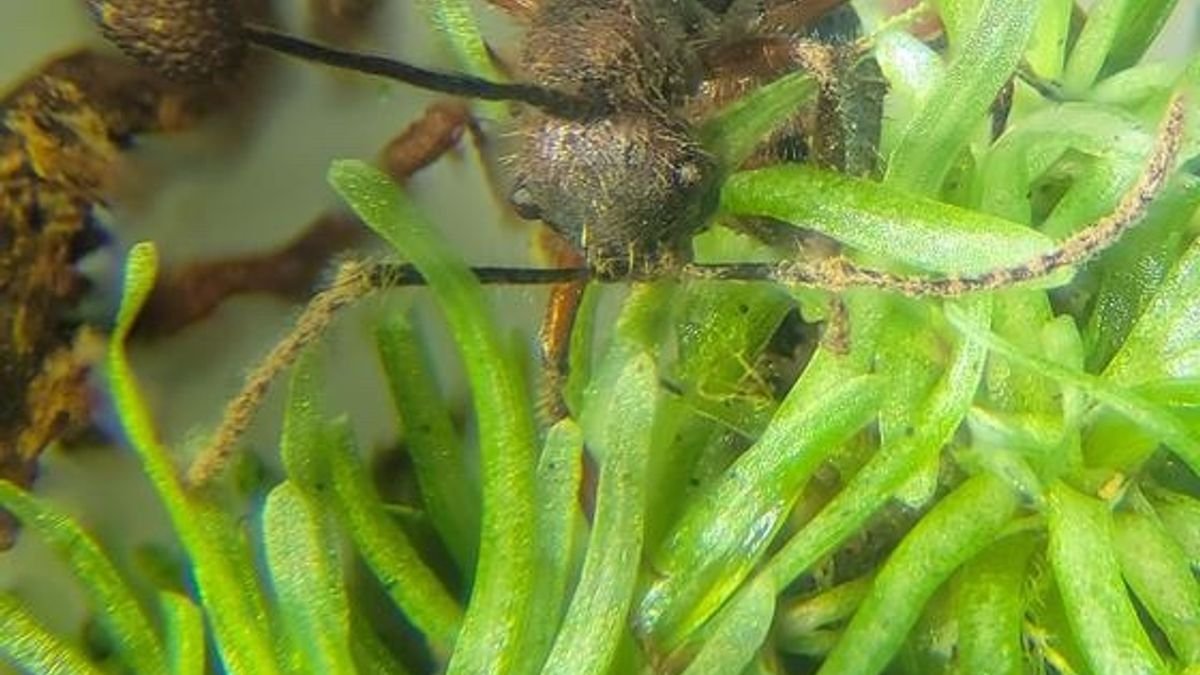
This Freakish Fungus That Turns Ants into Zombies May Be Hiding Inside Amazon Mosses

A zombie outbreak has made its way across parts of the Amazon, but the zombies in question aren’t humans. They’re insects. As if the rainforests’ creepy crawlies couldn’t get any creepier, they’re being zombified by a fungus that basically takes over their whole body. The nightmarish fungus doesn’t just corrupt insects, either — it may also live inside plants, too.
A team of scientists at the National Institute for Amazonian Research (INPA) found that mosses in the Amazon can harbor Ophiocordyceps, a genus of fungi that includes the fittingly nicknamed “zombie-ant” fungus. Their observations, published in the journal IMA Fungus, reveal that the fungus may have another stage in its life cycle beyond infecting insects as parasites.
“We have always thought of this fungus (Ophiocordyceps) as a parasite exclusive to insects, especially the ones it manipulates. What our data suggest is that the story is much larger: the same fungus appears to be ubiquitous in the surrounding moss communities,” said study lead author Tales Alves Jr., a biologist at INPA, in a statement.
Turning Ants into Zombies
The genus Ophiocordyceps contains more than 350 species of fungi that infect a wide range of insects, the most notable of all being the zombie-ant fungus itself, Ophiocordyceps unilateralis; this fungus is known for its morbid way of controlling ants.
After a spore of Ophiocordyceps attaches itself to an ant, it proceeds to drill into the ant’s exoskeleton with a combination of enzymes and pressure, according to the Library of Congress. When it breaks through, it then starts to spread throughout the ant’s body.
But scientists investigating the infection noticed that the fungus grows around the brain without fully enveloping it. The fungal invader seemed to impact the ant’s muscles, rather than its mind, with a variety of chemical compounds.
The infection causes an ant to “self-sabotage” and abandon its colony to seek out the optimal microclimates for the fungus to disperse. In the end, the ant will reach a specific spot and clamp down on it with a “death grip” before dying, thereby releasing the fungus spores in that area.
Read More: The Ocean’s “Real-Life Zombie” Is a Sea Cucumber Whose Amputated Tissue Survived for Three Years
The Best Plants to Bite
Ophiocordyceps, however, doesn’t only prefer insects as victims. It can also live in plants, in what’s called an “endophytic” stage. While scientists have already seen Ophiocordyceps take up residence in certain plants, the new study shows that insects infected with the parasitic stage of the fungus consistently bite plants that harbor the endophytic stage of the fungus.
This suggests that infected insects’ choice of plant for its final death grip isn’t as random as once believed.
The team of INPA researchers found evidence of Ophiocordyceps living in mosses at the Adolpho Ducke Forest Reserve, just north of Manaus, the capital of the Brazilian state of Amazonas. Upon collecting the mosses, they read the DNA of all fungi present in the samples with a technique called metabarcoding. The process confirmed that fungus was present in mosses, including those that were more than 32 feet away from any ant infected by the parasite.
A Widespread Fungal Link
While researchers had previously noticed that some infected ant species tend to seek out mosses to bite, they weren’t aware that these mosses were often colonized by the same fungus that acts as a parasite to insects.
The researchers believe the capacity of Ophiocordyceps to live in plants may help it persist through times when insect hosts are scarce. Though more research is needed to fully understand the fungus’ endophytic lifestyle, this revelation could reframe how scientists look at Ophiocordyceps and the ties between its relationship with insects and its relationship with plants.
“The well-known behavioral manipulation caused by Ophiocordyceps may not result solely from the interaction between fungus and ant, but from a complex relationship among the fungus, its host, and the plant where the same fungus lives silently as an endophyte,” said study co-author João Paula Machado de Araújo, a researcher at the Natural History Museum of Denmark.
Read More: New Spider Species Appears to Mimic a Deadly Fungus to Fool Prey and Predators
Article Sources
Our writers at Discovermagazine.com use peer-reviewed studies and high-quality sources for our articles, and our editors review for scientific accuracy and editorial standards. Review the sources used below for this article: