The Sky Today on Saturday, August 1: Open cluster NGC 6709
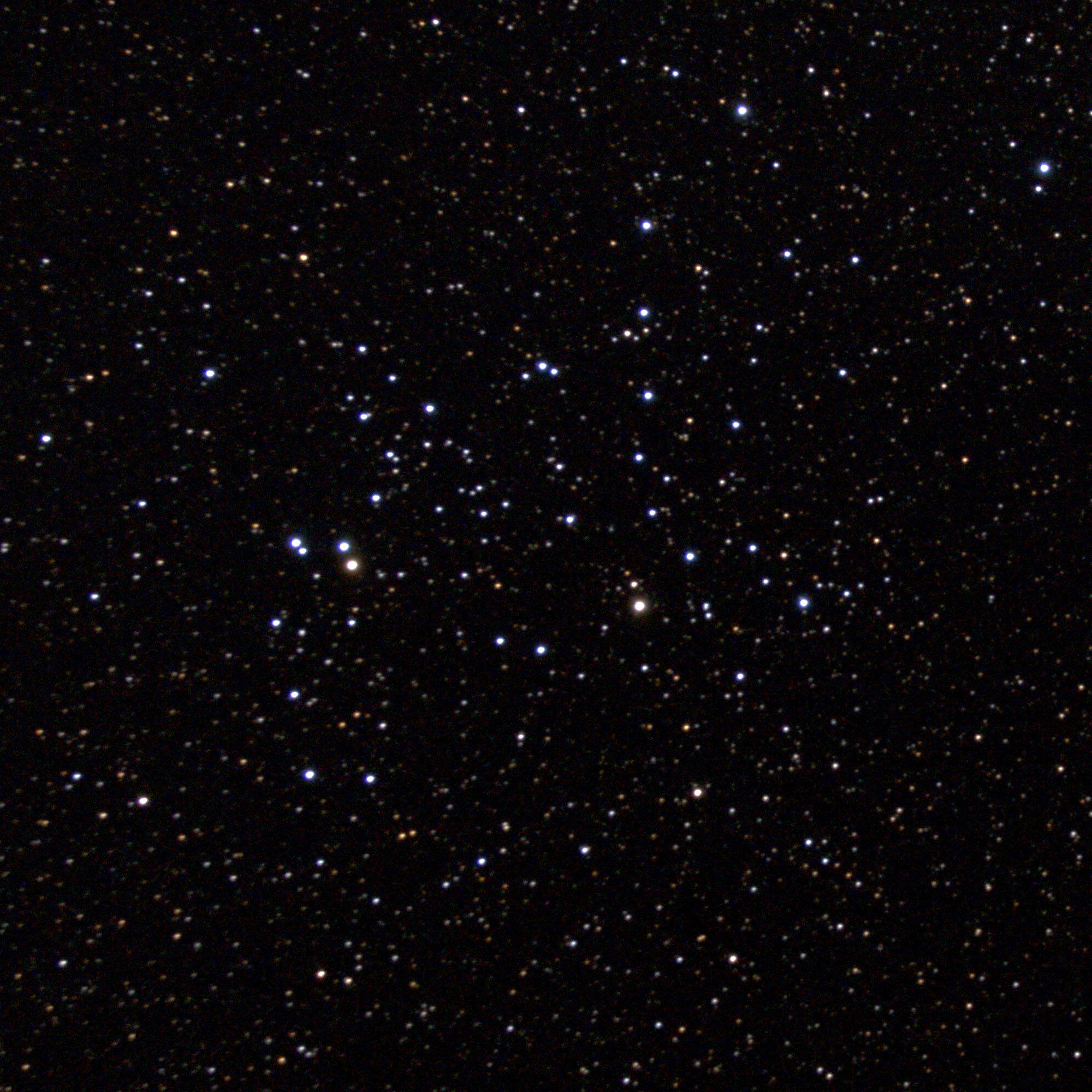
This rich grouping of young suns shines brightly in Aquila the Eagle, ripe for observing just after sunset and before moonrise.
Looking for a sky event this week? Check out our full Sky This Week column.
July 31: Mercury brightening
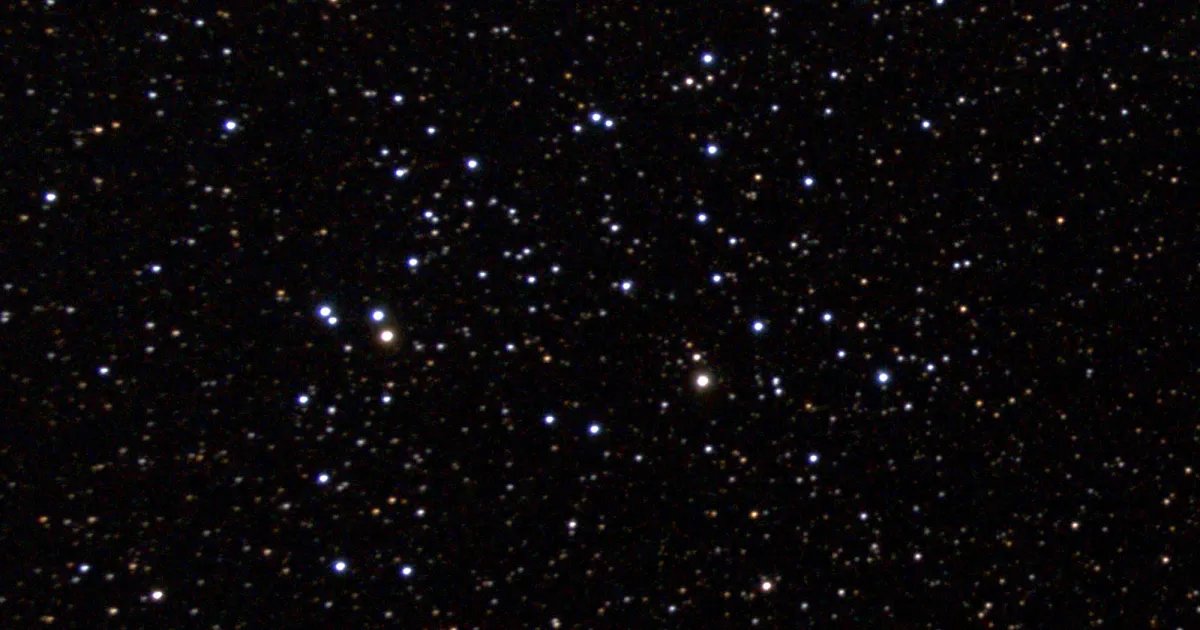
With the Moon rising later each night as it wanes, there’s a slightly longer dark window tonight for deep-sky observing. Let’s use it to track down NGC 6709, a lovely open cluster in the constellation Aquila the Eagle.
By 9:30 P.M. local daylight time, twilight should have faded significantly. Look high in the east to spot the Summer Triangle, bounded by the three bright stars Deneb, Vega, and Altair. The last star is the alpha star of Aquila, and lies to the lower right of the other two points in the triangle. From this star, near Aquila’s northern border, we need to move to the upper right, toward Aquila’s western border, where it meets Ophiuchus.
NGC 6709 is located just under 5° southwest of the 3rd-magnitude star Zeta (ζ) Aquilae. It’s a rich cluster of young suns spanning some 13’ and shines at magnitude 6.7 — easy to pick up in a small scope. You’ll spot several dozen stars in a 4-inch scope, and 100 or more stars in larger amateur scopes of 12 inches or more.
Sunrise: 5:59 A.M.
Sunset: 8:13 P.M.
Moonrise: 9:47 P.M.
Moonset: 8:58 A.M.
Moon Phase: Waning gibbous (88%)
*Times for sunrise, sunset, moonrise, and moonset are given in local time from 40° N 90° W. The Moon’s illumination is given at 10 P.M. local time from the same location.
Mercury reaches its greatest western elongation at 4 A.M. EDT on August 2, standing 19° from the Sun. The tiny planet reaches an altitude of almost 5° above the eastern horizon an hour before sunrise, glowing at magnitude 0.2. It’s the brightest object in Gemini, sitting to the right of the Twins’ heads, marked by the stars Castor and Pollux. Mercury is about 9° to the right of the lower star, Pollux. Over to the far right of Mercury is the familiar hourglass shape of Orion the Hunter, his three-star belt standing vertically in the sky just above the horizon.
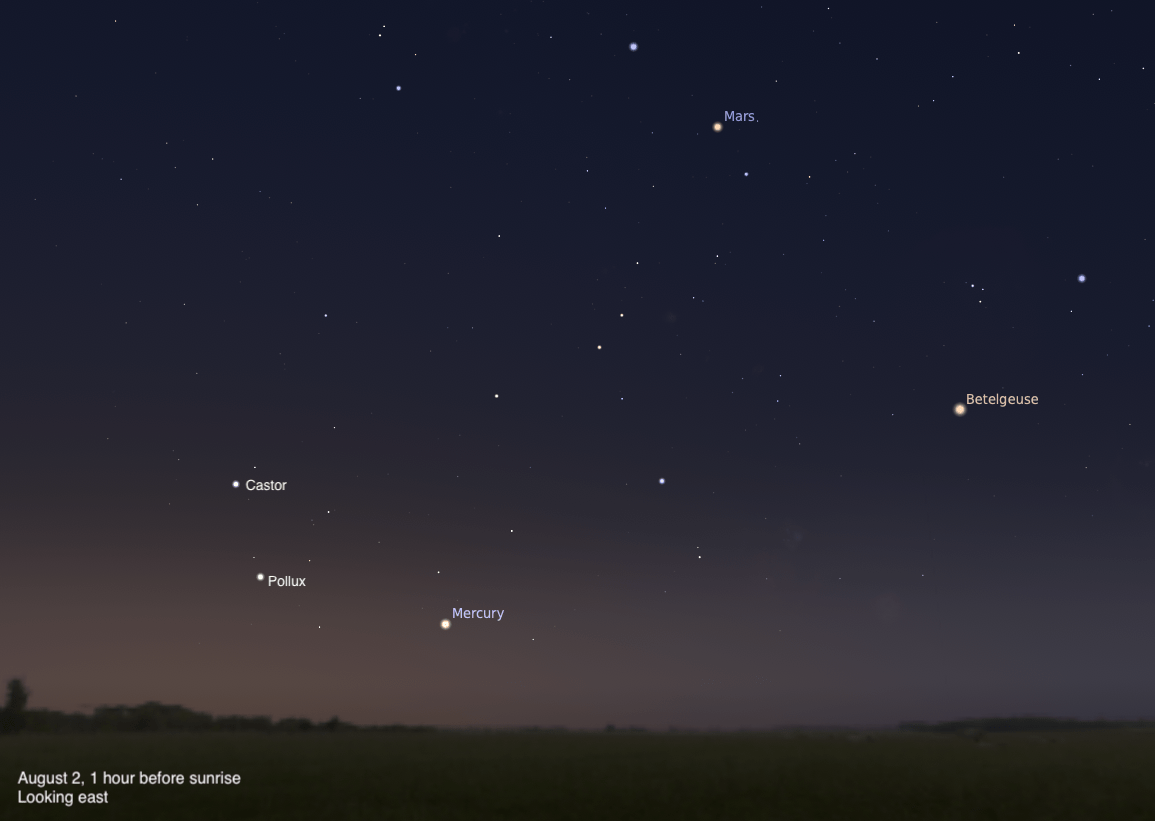
Through a telescope, Mercury’s disk stretches 8” across. It shows off a crescent phase that is 39% lit; you may be able to spot the phase visually if you’ve got good seeing and steady air near the horizon. Follow the planet as long as you can in the brightening sky, but make sure to put away any optics well ahead of sunrise from your location, which may differ from the time given below.
Alison Klesman is senior editor of Astronomy magazine. She holds a Ph.D. in astronomy and has studied a variety of topics, from minor planets to supermassive black holes.