Science news this week: Secret lives of whale sharks revealed, Earth’s coldest temperature registered, and Amazonian geoglyphs show clues to lost civilization
We also have an update of our own: Live Science has launched Live Science Pro, a paid membership that gives you access to our exclusive features, analyses, interviews, book excerpts and opinion pieces, all without ads And to celebrate, we’re offering an introductory price of only $3 for the first three months! You can subscribe here.
Earth registers coldest temperature
Concordia is considered the most isolated field station in the world.
(Image credit: GUY CLAVEL/AFP via Getty Images)
While the Northern Hemisphere battled heat waves and wildfires, Antarctica just experienced the lowest temperature recorded on Earth in over a decade. High-altitude research station Concordia, located in the icy continent’s interior, logged a low of minus 119.4 degrees Fahrenheit (minus 84.1 degrees Celsius) on July 18, just shy of the coldest temperature ever recorded at the station.
“Even here, where extreme cold is expected, temperatures below minus 84 C are remarkable and highlight how variable Antarctic weather can still be,” Gabriele Carugati, the station leader at Concordia for Italy’s National Antarctic Research Program, told Live Science from the station.
Discover more planet Earth news
Get the world’s most fascinating discoveries delivered straight to your inbox.
Cats have a tuft of four to six whiskers on the back of each front leg, each about 0.8 to 1.2 inches (2 to 3 centimeters) long.
(Image credit: sellyhutapea Getty Images)
Cats are known for having whiskers on their faces. But if you look closely, you’ll see they also have them on their legs. So what are these leg whiskers for? And how do they differ from the ones on their face?
Archaeologists discovered ancient geoglyphs like this square-shaped one in Acre, Brazil.
(Image credit: Martti Pärssinen)
A significant portion of the Amazon rainforest remains unexplored, and even from above, it’s almost impossible to see through the trees’ thick canopies to find out what lies beneath. However, thanks to modern laser scanning technology, scientists have peered through this wall of leaves — and what they’ve found may offer new insight into lost human civilizations.
Inflammation may fuel out-of-body experiences, early research hints.
(Image credit: Kate Hazell/Future)
We’re increasingly learning about the role of chronic inflammation in a range of diseases, from autoimmune conditions like rheumatoid arthritis to neurodegenerative diseases like Alzheimer’s. However, scientists may have now added a new surprising side effect to this immune response: “out-of-body” experiences.
If you’re looking for things to keep you busy over the weekend, here’s a selection from our best interviews, explainers, skywatching guides and crosswords that we published this week.
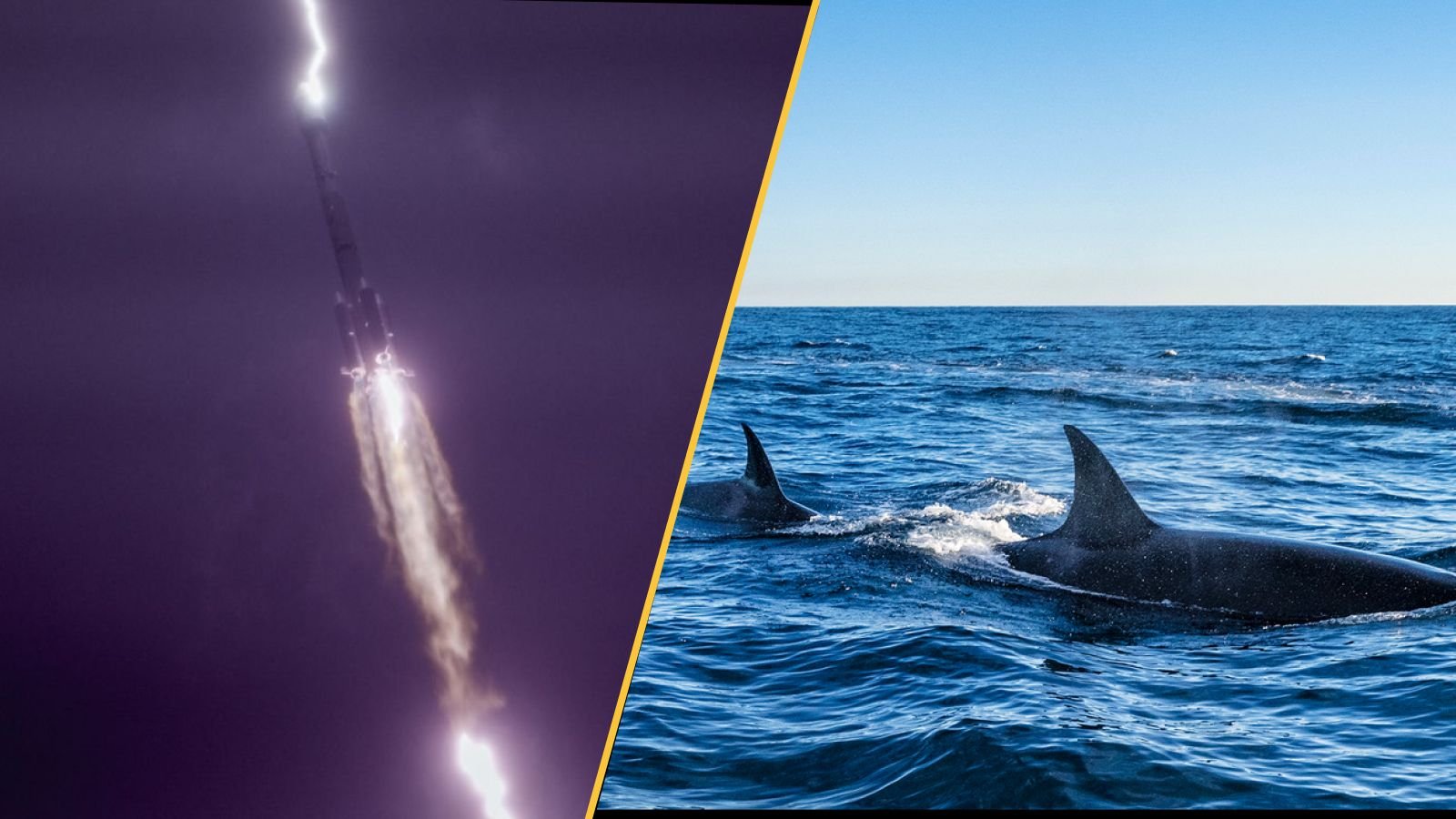
China’s Long March 3B rocket was struck by a powerful lightning bolt around 30 seconds after launching on July 23. Despite this, it made it to space and successfully deployed its payload.
(Image credit: Zhou Quan/VCG via Getty Images)
It’s like something from a movie: Seconds after China‘s Long March 3B rocket launched on July 23, the spacecraft was struck by lightning. Hundreds of spectators watched in shock as at least 100 million volts of electricity hit the craft and surged around its fuselage and through its exhaust plume, before shooting down to Earth.
Despite the strike, the uncrewed rocket safely reached space and successfully deployed its payload into orbit.
Quantum computing has been a white-hot industry for investors, but who’s actually winning the quantum computing race? The answer depends on what you mean by “winning.” If you’re asking which company has made the most progress commercially, I think the answer is fairly straightforward: IonQ. But it’s still early innings. Missed Nvidia in 2009? This…
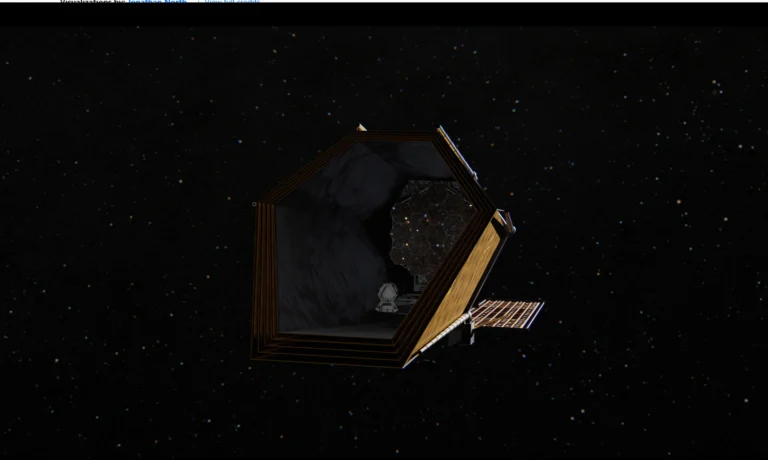
NASA’s Habitable Worlds Observatory (HWO) will be the premier exoplanet-hunting space telescope once it launches sometime in the 2040s. This large infrared/optical/ultraviolet space telescope will be the first observatory specifically designed to search for rocky planets orbiting within their parent stars’ circumsolar habitable zones (HZs) and characterize their atmospheres. Its powerful suite of instruments will…
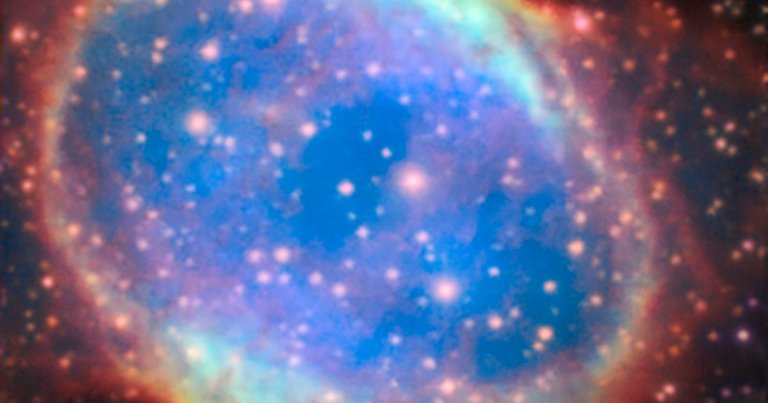
Back to Article List Planetary nebula 6563 is a worthy challenge for larger scopes, floating near the base of the Teapot asterism in Sagittarius late tonight. Planetary nebula NGC 6563 is faint but attainable in larger amateur scopes, located in the southern sky late tonight. Credit: ESO/P. Weilbacher Looking for a sky event this week?…
Wildfire season is fully upon us—and with it, the smoke. The most spectacular threat of a wildfire is of course the possibility it might directly threaten lives and homes, like the wildfires last year that devastated Los Angeles. But it is the smoke and the stinging haze—and especially the invisible particulate matter borne aloft for…