These Funky Open Over-Ear Headphones Let My Ears Feel the Breeze – Perfect for Summer

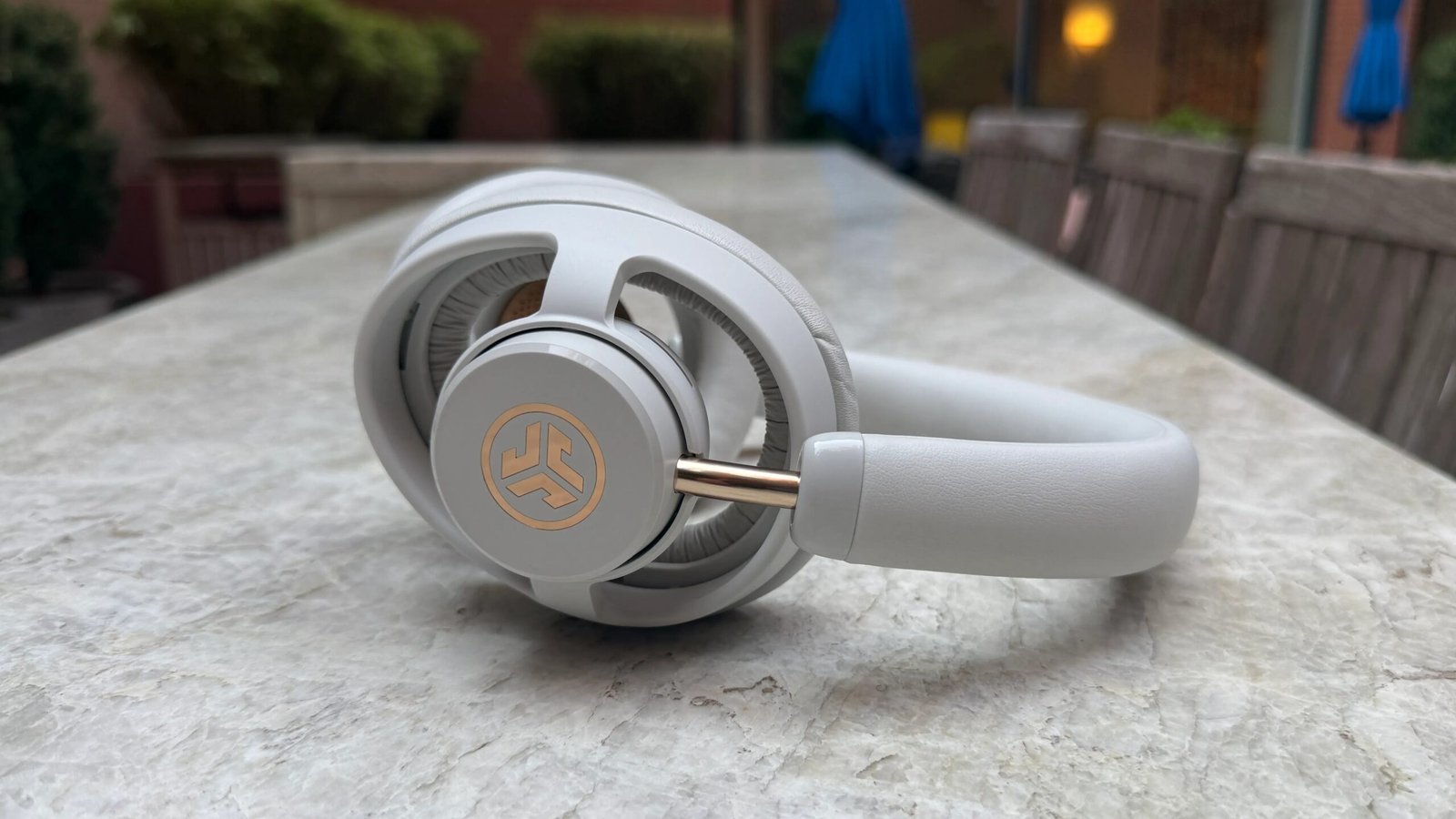
JLab JBuds Open Wireless headphones come in two color options: cloud and black
Pros & Cons
-
Lightweight and comfortable with good ventilation -
Truly open design allows you to hear the outside world -
Reasonably priced -
Removable grilles offer a more flexible listening dynamic -
Good sound with a nice openness -
Decent voice-calling performance and support for USB-C audio -
Carrying case included
-
Let ambient sound in (not good for noisy environments) -
Some sound leakage (may disturb people around you in quieter environments) -
Not always the cleanest sound and there’s a bit of siblance in the treble
Back in 2024, I did a video review of the NWM One Wireless, totally open over-ear headphones that featured ring pads instead of closed earcups to provide maximum ventilation and eliminate heat buildup. While they were a little weird, I liked them. However, their high $300 price made it hard to fully recommend them.
JLab has created similar over-ear headphones, the JBuds Open Wireless, that offer a truly open design but have some notable improvements by comparison. First, at $100, they’re a third of the price of the NVM model. Second, they have standard (and comfortable) memory foam earpads. And lastly, the headphones come with a set of perforated, removable grilles that change the acoustic dynamics a bit, offering a slightly different listening experience when they’re installed.
Read more: Best Headphones We’ve Tested
Why would you want headphones like this?
Open earbuds have become popular because some people don’t like having noise-isolated silicone eartips jammed in their ears, or they just want to be more aware of their surroundings for safety reasons and be able to interact with people without taking their earbuds out of their ears. Yes, noise-canceling earbuds have transparency modes that allow you to hear the outside world, but again, some people are uncomfortable with eartips that seal off their ear canals.

Open over-ear headphones offer similar exposure to the outside world. Just as importantly, they’re lighter than your typical over-ear headphones and allow air to flow around your ears so your ears don’t steam up in warm environments. As I write this, it’s over 80 degrees Fahrenheit in New York City and incredibly humid, so it really isn’t fun to wear over-ear headphones, which essentially act like earmuffs. The 245-gram JBuds Open Wireless allow you to ride with the top down, so to speak. You can feel the breeze (if there is a breeze).
They’re also good for people who like to run with over-ear headphones. I personally don’t, but my daughter sometimes runs on a treadmill at the gym with a pair of Sony WH-1000XM4 headphones, which creates a steamy situation on the sides of her head. In contrast, the JBuds Open Wireless give your ears that breathability I keep talking about. Runners may also appreciate that the headphones have physical buttons for controls, rather than touch controls, along with an interval timer in the companion JLab app.

Do the JBuds Open Wireless have a strong feature set?
No, the headphones aren’t terribly feature-rich, but that’s OK. They’re equipped with Bluetooth 6.0, have music and movie sound modes along with equalizer settings, multipoint Bluetooth and a spatial audio setting. They support the SBC and AAC audio codecs and USB-C audio for wired listening (there’s no 3.5mm port to attach a traditional headphone cable). JLab’s LabShare feature, which allows you to share audio wirelessly to compatible JLab headphones, is also on board (I didn’t test it).
You don’t get wear-detection sensors that pause your music when you take the headphones off your head and resume playback when you put them back on. The headphones also don’t have active noise canceling, and their open design makes them fully transparent (they let ambient sound in all the time). That makes it pretty easy to have a conversation with someone without taking the headphones off, as long as your music isn’t playing too loudly.
How do the JBuds Open Wireless headphones sound?
On the surface, JBuds Open Wireless appear to have similar drivers to the NVM One Wireless, which weighs in at only 185 grams. Both models are listed as having dual coaxial drivers with a 35-millimeter woofer and a 12mm tweeter. The NVM One Wireless drivers swivel a bit, allowing you to change the direction of the sound slightly. In contrast, the JLab drivers are fixed in position.
One of the impressive things about the NVM One Wireless is how little sound they leaked for being totally open. NVM touted its PSZ (or personalized sound zone) technology to reduce sound leakage, but JLab doesn’t mention anything about sound leakage, so I’m inclined to believe the NVM One Wireless’ driver design is more sophisticated. Those open headphones do sound superior, with better clarity and definition overall. They’re also lighter at 185 grams.

The JBuds Open Wireless generally sound good, and not surprisingly, they deliver open, airy sound. But the sound quality is a bit uneven. They’re strongest in the midrange and are at their best with acoustic material and ballads. They serve up a reasonable amount of bass, but you’re not going to get the thumping, more visceral bass of a closed-back headphone.
I mostly used JLab’s Signature sound setting, which I thought sounded better than the balanced and bass boost settings. I played around with the custom EQ setting, but didn’t come up with anything I really liked better than the Signature setting. The headphones don’t play incredibly loud, and I mostly listened with the volume at about 75% and sometimes went closer to 100% when I was outside in noisier environments. With more complicated tracks that have a lot of instruments playing at once, the sound gets slightly muddled (not clean), especially at higher volume levels. And there was a bit of sibilance in the treble and upper mids when I was playing some tracks. That said, the sound flaws weren’t really noticeable when I was outside in the streets of New York because my music was competing with so much ambient sound.
As I said, adding the perforated grilles did change the sound a bit (removing them drops only a small amount of weight from the headphones). The bass response improved a tad, and the headphones played slightly louder. There are also some very subtle shifts in tonal balance.

I was hoping the sound would improve slightly when I opted for wired listening with USB-C audio, but I really didn’t notice a difference. I also didn’t feel the spatial audio mode improved the sound, so I generally left that setting off in the JLab companion app.
The bottom line is that these headphones sound pretty decent — and sometimes quite good, depending on the track — but they’re probably not meant for critical listening. And they do leak sound at higher volume levels, so they’re less than ideal for, say, an open-office environment where you have people sitting around you (unless they’re all wearing noise-canceling headphones). However, I did like using them at my desk at home because they’re lightweight and comfortable and don’t close off your ears.
Voice-calling performance and battery life
I was pleasantly surprised by the voice-calling performance. I did occasionally have a little trouble hearing callers clearly when I was in the noisy streets of New York, but callers said my voice sounded fairly clear, and they only heard minimal background noise, so the noise reduction is solid.
Rated for 24 hours of use at moderate volume levels, the battery life is decent (that’s what Apple’s AirPods Max are rated for), though many over-ear headphones offer more than 40 hours of battery life these days, even with active noise-canceling on.

JLab JBuds Open Wireless final thoughts
The concept of open over-ear headphones isn’t totally new. After all, back in 1997, Sony produced its MDR-F1 “open-air” headphones (alas, they were discontinued; it would be cool if Sony made a wireless version of them). While I doubt they’ll take off like open earbuds have and their use case certainly has some limitations, their lightweight breathable design is appealing, and I like what JLab has done creating a much more affordable version of the NVM One Wireless. While they may not be as light or sound quite as good as the NVM model, and definitely leak more sound, they do offer decent sound along with some improvements, including padded earcups that make them more comfortable to wear.
Their convertible nature is interesting. Perhaps the next version will allow you to swap in a non-perforated third grille that seals off the earcups, creating closed-back headphones (and maybe even add an active noise-canceling option). That’s a lot more tricky from a sound engineering standpoint, but it would make for intriguingly versatile all-seasons, all-occasions headphones.