I replaced Windows on my gaming handheld a year ago, and the industry caught up to me
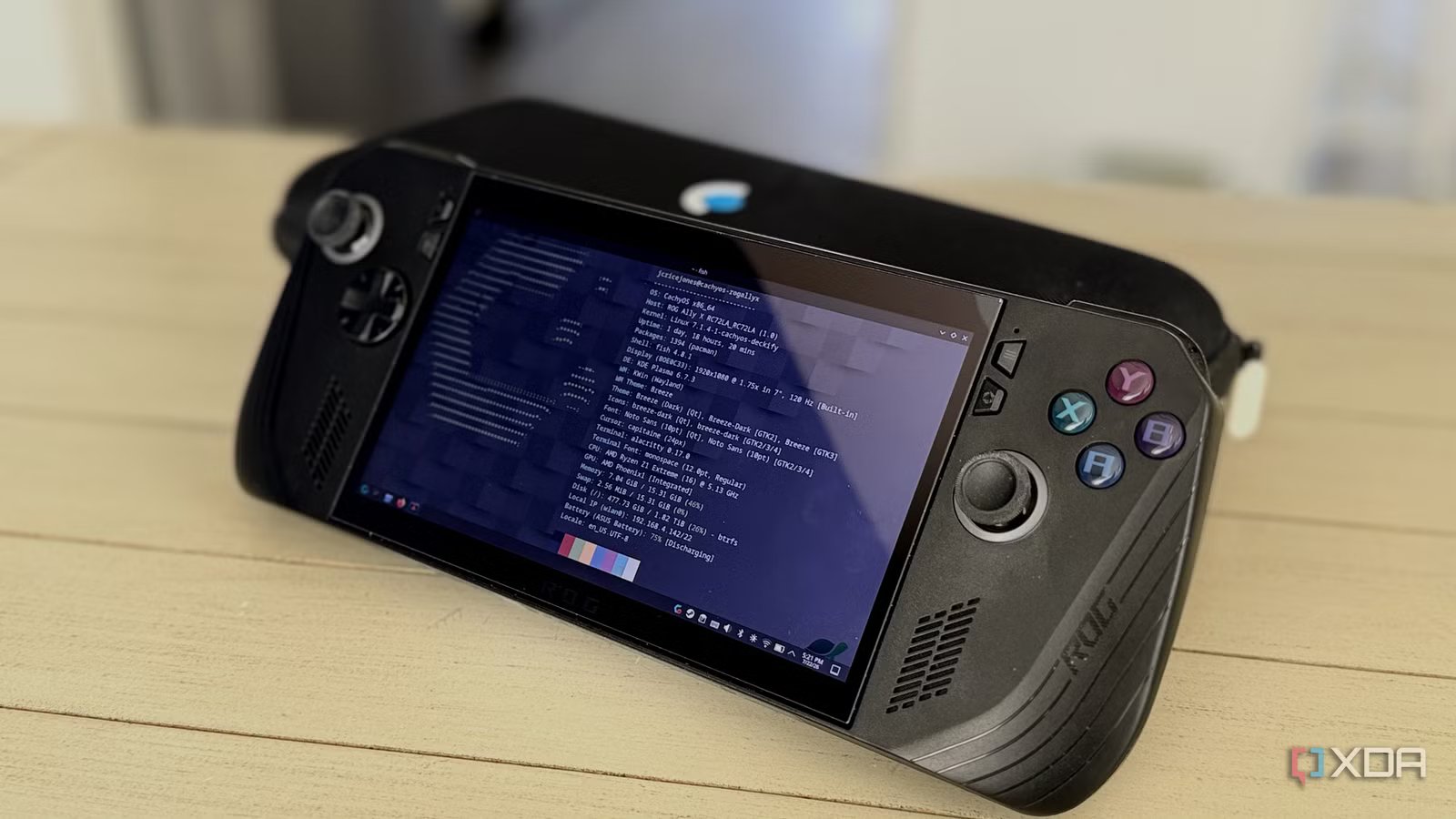
I’ve spent a considerable amount of this year with Linux under my thumbs, whether that’s putting CachyOS on my ROG Ally X and then benching handhelds like the MSI Claw 8 AI+ against it. I even put Proxmox on the ROG Ally X, because why not? And somewhere between installing my fourth Proton-GE build and watching SteamOS boot on Intel silicon, it hit me: the vendors have noticed too. For as long as I can remember, Linux gaming was a hobbyist project that hardware makers could politely wave at and then ignore, because the numbers gave them permission to. Those numbers don’t say that anymore.
The hardware makers are shipping Linux, not just tolerating it
Five percent of Steam is small until you multiply it by Steam’s user base

Steam’s hardware survey is fairly representative of the PC gaming market as a whole, and what it shows is a Linux market-share that’s not going away. It was over 5% in March 2026, and while it’s slightly lower again now, that’s still many gamers. It’s probably no coincidence that the last growth spike started when Microsoft ended Windows 10 support in October 2025.
Sure, the survey is noisy month to month. But the direction of travel has been consistent for two years, and hardware vendors don’t plan SKUs around one month’s data. They plan around trend lines, and this trend line points one way. And Lenovo got there before any other vendor.
Lenovo put SteamOS on its flagship, not its budget model
The thing isn’t that SteamOS exists on third-party hardware; it’s where OEMs are putting it. Lenovo put it on the flagship Legion Go 2, which was $1,199 MSRP. You don’t do that unless you believe there’s a market, not when every other PC handheld maker is clinging to Windows 11. Sure, they hedged by releasing a W11 version as well, but it’s still a vote of confidence for Linux gaming.
And for a good reason. We tested W11 and SteamOS on the Legion Go S, and it wasn’t even a fair fight. SteamOS won in every game, and sometimes up to 75% more frames. Not to mention that the Windows 11 experience on handhelds is a chore, and no number of additional dashboards will fix that.
The software stack finally earns the hardware
The Claw booting SteamOS ends the “AMD thing” era
SteamOS 3.8 delivered the broadest third-party support wave in the platform’s history, covering the ROG Ally line, the Legion Go family, and a pile of niche AMD handhelds from OneXPlayer, GPD, and Anbernic. And as of the 3.8.7 beta, the Intel-based MSI Claw family boots SteamOS too, which ends the “SteamOS is an AMD thing” era in one fell swoop.
Having benched the Claw 8 EX AI+ myself ( and last year’s model), that last one matters more than it looks. Intel spent two generations fighting for handheld relevance on drivers alone, and now its silicon has a path onto the OS that gamers actively prefer. That’s both manufacturers shipping APUs for handhelds on board, and now neither can claim Linux support isn’t their problem.
Sure, Arm and Nvidia are missing from that conversation. At least so far, but once the Steam Frame arrives, Arm will have support, and Valve is doing everything they can to get Nvidia onboard.
The Steam Machine sold out its controller in 30 minutes
The driving force behind SteamOS is the hardware that Valve developed to run it. Whether it was the original Steam Deck, the OLED upgrade, the Steam Machine, or the controllers to use with it, Valve has had trouble keeping them in stock for the gamers that want to buy one.
And the software stack keeps getting better. Proton’s Direct3D-to-Vulkan translation delivers near-native performance, AMD’s open-source driver stack is production-ready, and Wayland is now the default on many distros.
It’s not quite time for a victory lap
Anti-cheat is still a problem, and Valve is still driving adoption

Kernel-level anti-cheat remains the blocker it’s been for years. Fortnite, Valorant, and other competitive multiplayer games won’t run, and that’s a deliberate choice by the developers. If your gaming history is mostly that type of game, you need Windows and have no other choice.
The other thing is that Valve is part of many of the aspects that make Linux gaming viable in its current form. SteamOS, Proton, Deck Verified, these all matter to the end user. Other vendors are using Valve’s distribution of Linux, which does support open source, but it’s only one version of it.
Ignoring Linux is now a business risk, not a default
Hardware vendors never needed Linux to replace Windows; they just needed it to be viable. The pattern I keep coming back to is who’s moving. It’s not the enthusiasts this time; we were always here, dual-booting and filing ProtonDB reports. It’s Lenovo picking SteamOS for its halo product, Valve committing to living-room hardware at real volume, and Intel driver support joining the party. Those are supply-side decisions made by people with spreadsheets, and spreadsheets don’t do ideology.
Anti-cheat systems are still a problem to solve, and Valve has an outsized hand in the compatibility layers, but neither changes the equations for a hardware maker deciding what to ship in 2027. The safe bet used to be Windows-only. Now the safe bet is hedging, and every SteamOS SKU announcement makes the next one easier. If you’re weighing a handheld yourself for the first time, SteamOS options now come from more than one source.