SKT Leads Physical AI Robot Innovation, Partners With 8 Startups
SK Telecom is teaming up with eight promising South Korean “physical AI” startups to kick off an expansion of the robotics ecosystem in earnest. The move comes as the industry enters a paradigm shift in which AI pushes beyond virtual space into the physical real world, with the strategy of securing technological competitiveness early.
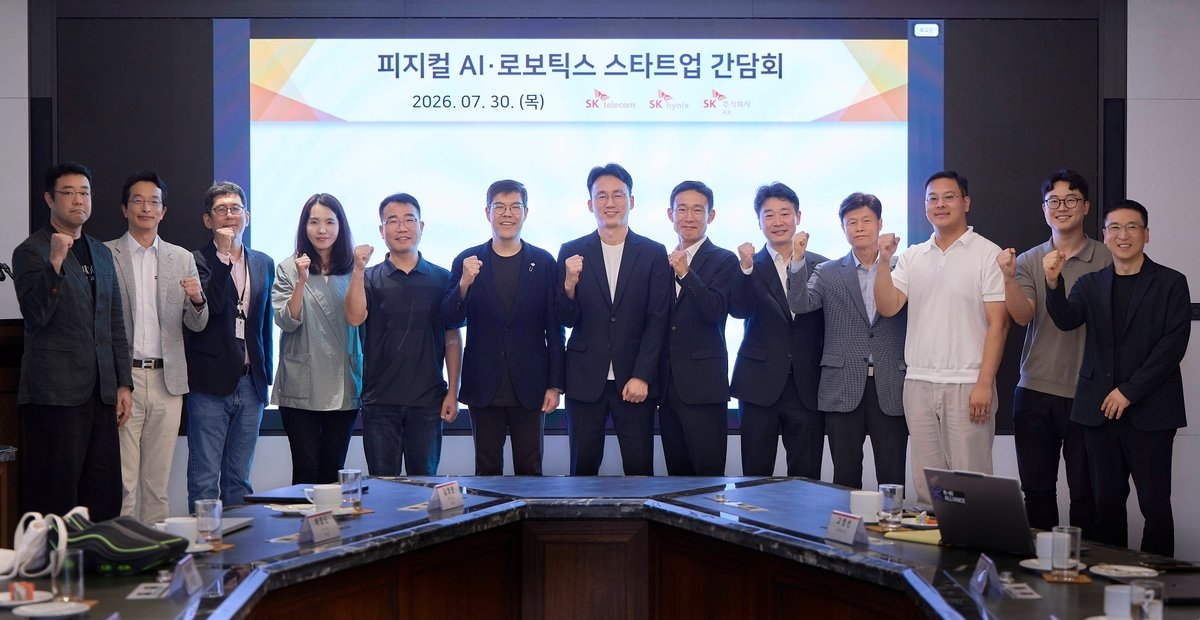
SK Telecom said Tuesday that on the 30th, at SK Searin 〈building〉 in Jongno District, it held a “physical AI and robotics startup meeting” and discussed trends in physical AI technology in which robots recognize and act on the real world on their own, along with plans for business cooperation.
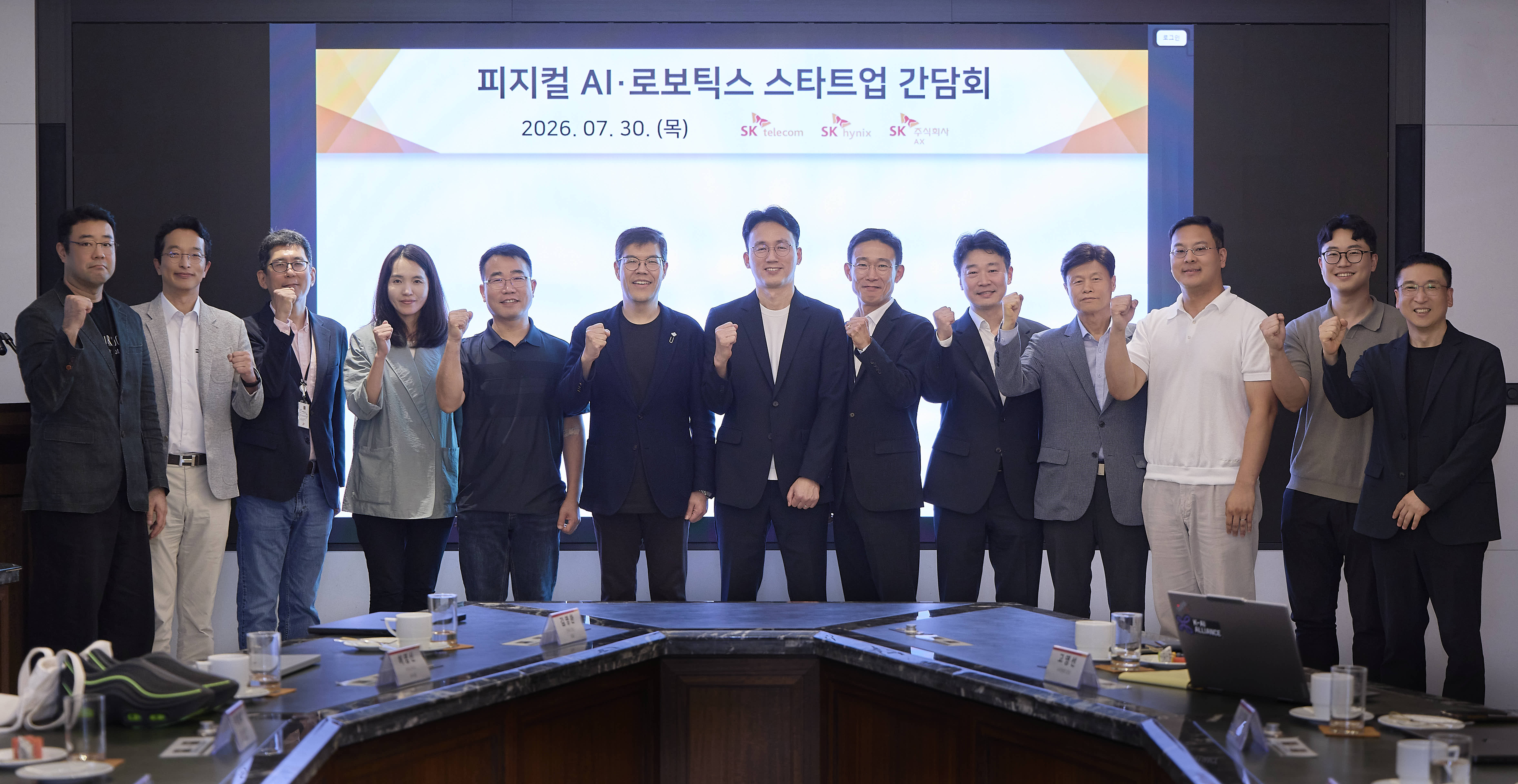
The event drew executives from major member companies, including SK Telecom, the AI committee of the SK Group, SK hynix, and SK AX. On the startup side, the CEOs of eight innovation companies attended, including Gauss Labs, Real World, MakinaRocks, C-Mes Robotics, Wiro Robotics, Uilo Robotics, Config Intelligence, and Holiday Robotics.
These startups have core technology across the entire range of physical AI—from humanoids and wearable robots to industrial collaborative robots—up to a robot foundation model that supports general-purpose task execution by robots.
At the meeting, plans for joint pilots (PoCs) in a variety of industry settings, including manufacturing, logistics, and services, were discussed in depth. In particular, the group focused on combining the SK Group’s AI chips, AI data centers, and digital twin capabilities with startups’ physical AI technology to create explosive synergy.
The most closely watched agenda was a plan to build training data for a robot foundation model in a digital twin space that virtually recreates industrial sites. Because the core of physical AI lies in securing high-quality data and pilot environments, SK Telecom expects that this collaboration will serve as a stepping stone that connects research-stage technology to commercialization.
The participating companies plan to expand cooperation across physical AI as a whole—robot hardware, data, AI models, and more—through ongoing exchanges going forward, and to create an open ecosystem. Yoo Kyung-sang, head of SK Telecom’s AI CIC, said, “In the physical AI industry, real innovation becomes possible when full-stack AI ecosystems—from semiconductors to robot foundation models to application services—are organically connected.” He added, “Based on a solid partnership with promising domestic startups, we will take the lead in developing the robotics ecosystem.”