Are there aliens on exoplanet K2-18b? Scientists just scanned it for signals
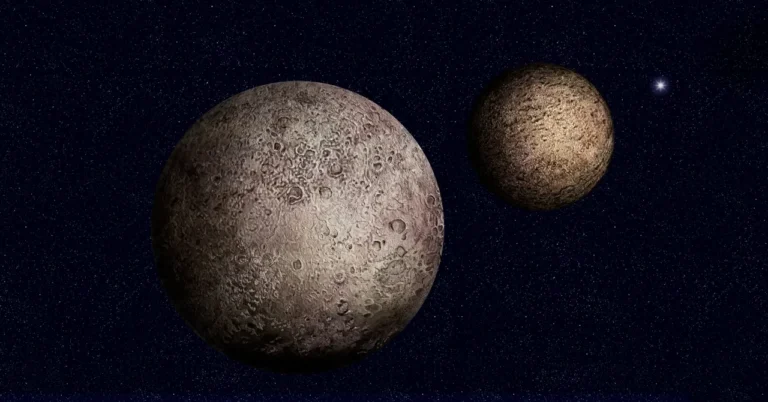
K2-18b has become one of the most closely watched exoplanets in recent years. The planet lies about 124 light years away in the constellation Leo and orbits within the habitable zone of a red dwarf star. Observations from the James Webb Space Telescope have revealed an atmosphere rich in carbon dioxide and methane, making K2-18b one of the leading candidates for a “Hycean” world, where a thick hydrogen rich atmosphere may surround a global ocean of liquid water.
Because of its potential to host conditions favorable for life, K2-18b has also become a prime target for the Search for Extraterrestrial Intelligence (SETI). Researchers recently used two of the world’s most powerful radio telescopes to search the system for signs of artificial radio transmissions. Their findings, published in The Astronomical Journal, found no evidence of narrowband radio signals comparable to technology currently used on Earth, despite identifying millions of possible candidate signals during the observations.
The project combined observations from the Karl G. Jansky Very Large Array (VLA) in New Mexico and the MeerKAT radio telescope in South Africa. Coordinating facilities of this scale for a single observing campaign is highly unusual and provided an exceptionally sensitive search of the K2-18b system.
Advanced Software Separates Earthly Noise From Possible Alien Signals
Collecting the observations was only part of the challenge. Equally important was the data processing system that analyzed the enormous volume of radio signals after they were recorded.
Radio telescopes are constantly flooded with signals produced on Earth, so astronomers rely on sophisticated software to identify and remove interference before searching for anything unusual. For this project, the VLA used the Commensal Open Source Multi Mode Interferometer Cluster system, while MeerKAT relied on the Breakthrough Listen User Supplied Equipment (BLUSE) system. Together, these tools automatically filtered vast amounts of data before researchers performed additional analysis.
Scientists then applied five separate screening methods to search for possible technosignatures.
The first was radio frequency interference (RFI) masking, which removed signals falling within frequency ranges already known to be heavily contaminated by human made transmissions. If an extraterrestrial civilization happened to transmit within those same frequencies, detecting it would likely require a radio telescope located somewhere free from Earth’s radio noise, such as the far side of the Moon.
How Scientists Screened Millions of Candidate Signals
Researchers also accounted for the Doppler effect, the same phenomenon that changes the pitch of a passing ambulance siren. Radio signals traveling between planets should exhibit measurable Doppler shifts as the source and observer move relative to one another. Any signal showing essentially no Doppler change was considered almost certainly to have originated on Earth and was discarded.
Another filtering step removed signals with signal to noise ratios below 10 or above 100. This helped eliminate extremely weak false detections as well as unusually strong instrumental artifacts that typically appear in only one antenna. However, the authors note that this choice could also have excluded some genuinely weak extraterrestrial signals.
The team also performed multibeam analysis. The telescopes simultaneously created multiple focused beams, with one directed at K2-18b and another aimed elsewhere in the sky. A genuine signal from the exoplanet would appear only in the beam pointed at K2-18b, while interference from Earth would generally show up across multiple beams at the same time.
The final planned screening method involved transit filtering. In principle, a signal originating from K2-18b should disappear when the planet moves behind its host star. Because no such “secondary transit” occurred during the observing campaign, this final test was not needed.
No Technosignatures Found but the Search Moves Forward
Although the survey produced millions of potential detections, none survived all of the filtering steps. Researchers found no convincing technosignatures within the narrowband radio frequencies they examined.
While the result may seem uneventful, it provides valuable scientific information. The observations allow astronomers to place “upper bounds” on the strength of any radio transmitter that might exist in the K2-18b system. Those limits are roughly comparable to the transmitting power of the now collapsed Arecibo radar facility in Puerto Rico. If a technological civilization exists there, it is not broadcasting with anything substantially more powerful than that.
Just as important, the project demonstrated that its automated data processing system can successfully handle the enormous number of signals generated during modern SETI observations. Manually examining millions of detections would have been impractical.
As future observatories such as the Square Kilometer Array begin operating, these techniques will become even more valuable for processing the unprecedented volumes of data they will collect. K2-18b may be silent for now, but scientists are steadily improving their ability to detect even the faintest signs of technology beyond our solar system if they are ever there to be heard.