Alchemy’s IPO Bets On Defense-Tech Tailwinds As Canada Boosts Military Spending
Alchemy Nano (TSXV:ALCH), a Kitchener-based nanotechnology firm, has officially entered the public markets, capitalizing on a surge in Canadian defense spending.
After its successful July public listing on the TSX Venture Exchange, Alchemy is positioning itself to scale operations against the backdrop of Canada’s commitment to significantly increase defense expenditure.
Company overview and technology
Alchemy Nano is a Canadian defense-tech company based in Kitchener, Ontario. Founded in 2013 by University of Waterloo nanotechnology engineering undergraduates Khanjan Desai and Chong Shen, the company has grown from a capstone project into a global nanotechnology firm developing protective coatings and materials for automotive and defense uses.
Alchemy’s tech is built around nanocoatings, thin engineered layers with specific physical properties that can change how a surface interacts with light, heat, moisture and abrasion.
The company markets applications for troops, land vehicles and aerial platforms, including protection for glazings in armored vehicles and helicopters. Its core automotive product, ExoShield, is a windshield-protection film line.
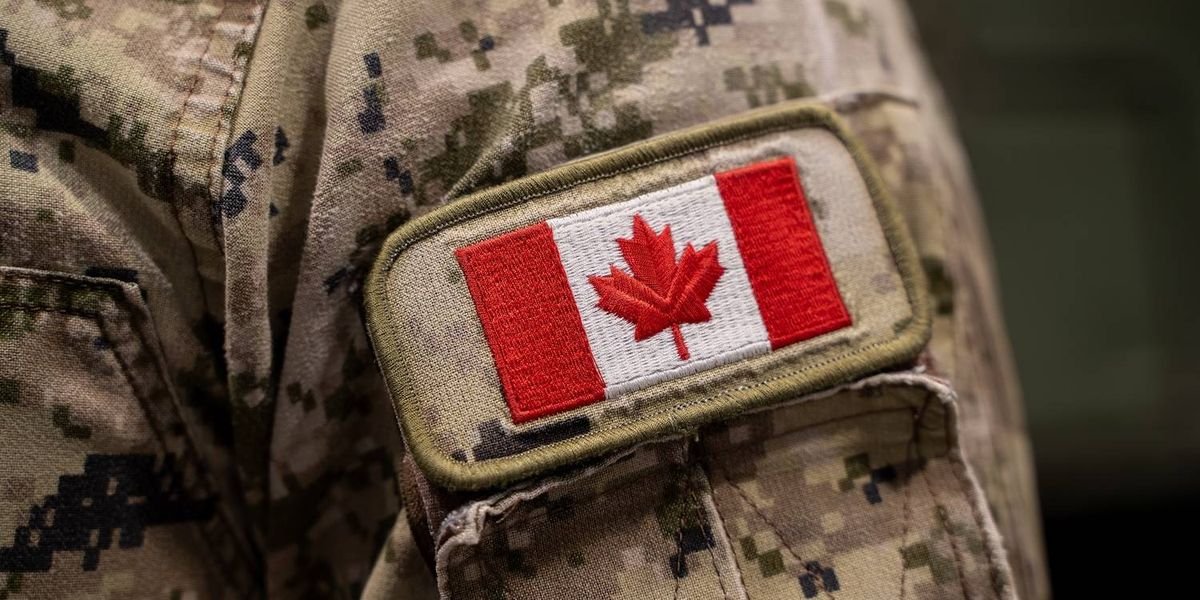
The company’s defense work is aimed at reducing detectability across visual and infrared bands. Its camouflage platform, Crypsis Class, is a nanoparticle-based thermal signature management platform developed with support from the Canadian Armed Forces and designed for multispectral camouflage on fabric or rigid materials to reduce detectability in sensor-rich battlefields. It can be integrated into uniforms, face paint, netting, vehicle paints and other surfaces to mask heat signatures by altering how infrared energy is absorbed, reflected or emitted.
Federal support and IPO execution
Alchemy has received federal support, working with the Canadian Department of National Defence since about 2020.
By 2025, Alchemy was actively pitching a broader defense business after raising C$6 million to scale the business. The funding was earmarked for defense and automotive commercialization, expanded Canadian manufacturing and international partnerships. The company also received C$1.8 million in federal funding in 2025 to advance its thermal camouflage textiles for military use.
In 2026, the defense story has transitioned to capital markets execution. Alchemy Labs announced its intention to go public on March 31 and completed its initial public offering on July 9, with trading on the TSX Venture Exchange commencing on July 13.
The company raised C$13.73 million with the sale of 13,738,447 units. Its share price opened at C$1.14, slightly above its C$1.00 issue price and traded in a range between C$1.05 and C$1.20 before closing at C$1.06 on volume of 722,854 shares.
According to the company, proceeds will be used for upgrading facilities, scaling research and development and expanding sales and marketing.
Federal support and IPO execution
Alchemy’s debut arrives at a supportive moment for the defense sector and for Canadian defense industrial policy.
Canada has made defense spending a higher federal priority in recent years. At the June 2025 NATO summit, Prime Minister Mark Carney pledged a two-stage spending surge to immediately reach the alliance’s two percent GDP directive, representing a cash increase of over C$9 billion.
Ultimately, the party has a goal to raise total defense-related spending to five percent of GDP by 2035, representing an annual expenditure of up to C$150 billion. This commitment will be split, with three and a half percent allocated to core military capabilities as a hard target and one and a half percent allocated to broader defense-related infrastructure and security spending.
Further, Ottawa has linked its defense ramp-up to strengthening domestic suppliers, diversifying defense partnerships and investing in innovative industrial capacity.
In practical terms, this policy alignment is exactly what dual-use innovators like Alchemy have been preparing for. As CEO Khanjan Desai noted, the company’s expansion is designed to scale “as Canada and allied countries increase their defence spending”, ensuring domestic innovations transition directly from local labs to active military procurement.
If allied security requirements continue to rise, small advanced-materials companies with validated technology and federal relationships may gain a durable commercial lane.
Still, the investment case is not without risk. Defense procurement cycles are slow, and even promising technologies often need extensive field validation before they scale into recurring revenue.
Alchemy’s IPO story will likely depend on whether it can translate its federal ties and technical credibility into repeat contracts, manufacturing scale and a clearer line of sight to profitability.
Don’t forget to follow us @INN_Technology for real-time news updates!
Securities Disclosure: I, Meagen Seatter, hold no direct investment interest in any company mentioned in this article.