Serbia signs the Artemis Accords
WASHINGTON — Serbia is the latest nation to sign the Artemis Accords, joining the U.S.-led effort more than two years after signing on to China’s lunar base project.
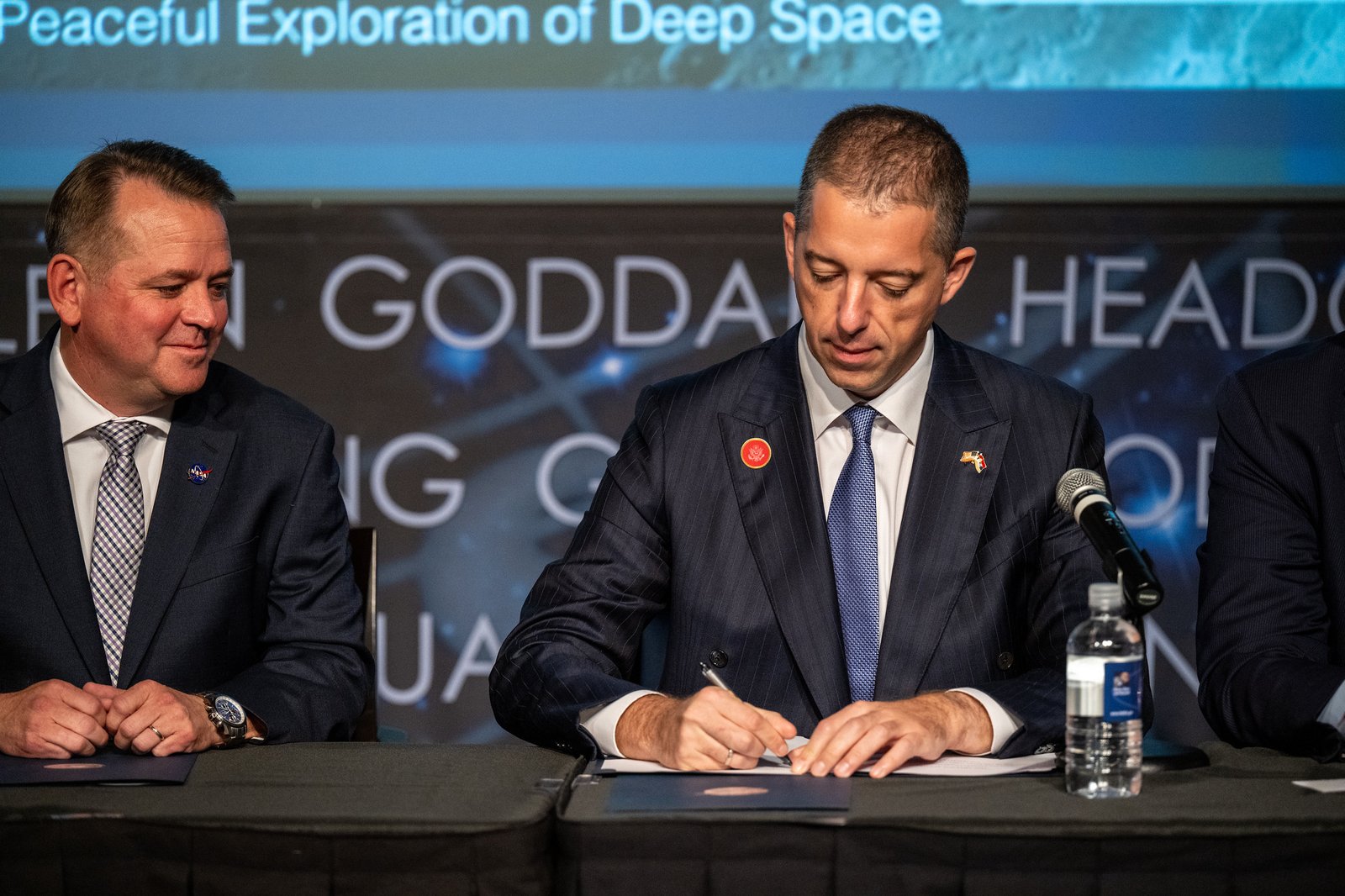
In a July 16 ceremony at NASA Headquarters, Marko Đurić, Serbia’s minister of foreign affairs, signed the Accords. Serbia is the 69th country to sign the document, which outlines best practices for space exploration, and the 10th to do so in 2026.
In a statement about the signing, both Đurić and NASA Deputy Administrator Matt Anderson emphasized the role of Serbian Americans in the Apollo program, including a group known as the “Serbian Seven.”
“Serbia’s connection to NASA reaches back to the Apollo program, when the work of Serbian engineers helped make some of humanity’s greatest achievements in space possible,” Anderson said.
“In that spirit, we owe it to both our brave ancestors and our children to keep pushing toward new frontiers: to explore, to inspire one another and to dare even greater things,” Đurić said.
The United States established the Artemis Accords in 2020 with seven other nations as initial signatories to outline best practices on topics related to exploration, from deconfliction of space activities to sharing of scientific data. Earlier this year, NASA officials signaled they would also use the Accords to coordinate international participation in Artemis, such as establishing a lunar base.
Serbia’s decision to sign the Accords is noteworthy in that respect because, in May 2024, the country joined China’s International Lunar Research Station, or ILRS, effort. At the time, neither Chinese nor Serbian officials discussed what role Serbia might play in the ILRS.
Serbia is not the first ILRS signatory to also sign the Artemis Accords. Thailand signed the Accords in December 2024 and Senegal in July 2025. U.S. officials have previously noted that countries that have joined the ILRS are also welcome to sign the Accords.