Martin Picard’s Mitochondrial Theory of Mind
Not everyone is on board. José Antonio Enríquez, a molecular biologist at the Spanish National Center for Cardiovascular Research, cautioned that Picard’s ideas about mitochondria and consciousness are interesting but “by no means” demonstrated. “Martin is a good thinker, sometimes a little wild,” Enríquez said. “His claims really have to be evaluated thoughtfully and scientifically.”
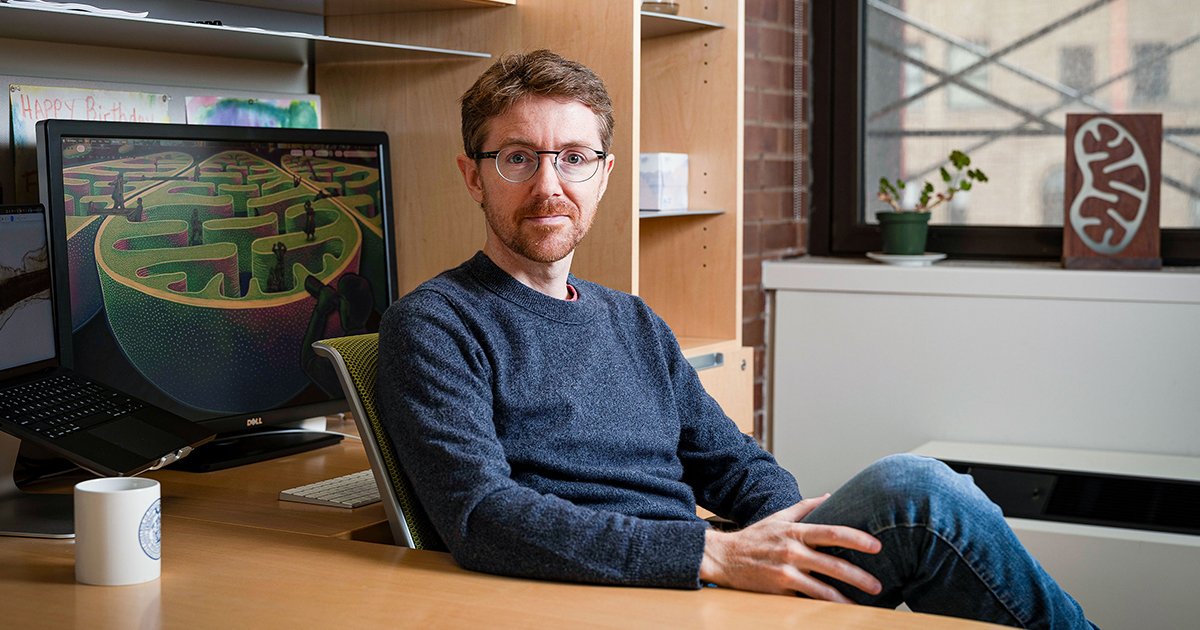
Picard knows that his ideas can be a challenging for some of his biomedical colleagues to accept. “I’m a little heretical for wanting to bridge the bioenergetic processes inside mitochondria to the human experience,” he said. “But my sense is, if we don’t do that, we’re failing at the biggest opportunity around.”
The metabolic-chamber study, the results of which are now under review, takes a step in that direction by exploring how mitochondria affect subjective experience. In the afternoon at the 2025 conference, Evan Shaulson, a graduate student in Picard’s lab, presented some initial results.
Participants who had one of two types of rare mitochondrial disease burned 180 more calories per day and expended 15% more energy, even when they were sleeping. “They have to pay a 180-calorie tax every day of life,” Shaulson said, about the equivalent of a slice of pizza. Those subjects reported feeling more fatigued and stressed compared to healthy controls. Biomarkers from their blood showed elevated levels of metabolic molecules such as lactate, which indicate faulty mitochondrial performance and correlate with anxiety.
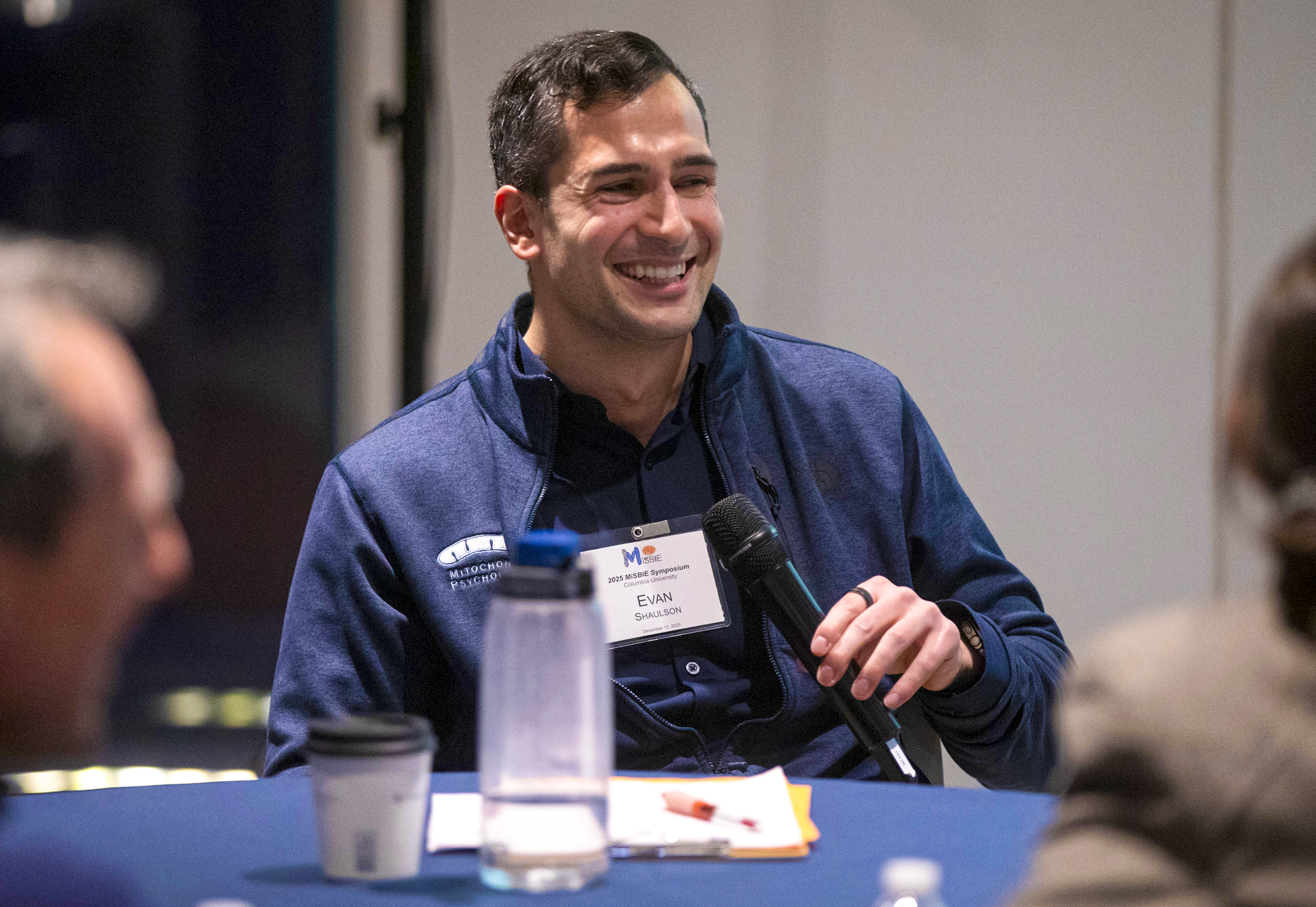
Evan Shaulson, a graduate student in Picard’s lab, is leading a new study to track connections between mitochondrial metabolism and lived experience.
In a second part of the study, the researchers tracked participants’ energy expenditure during nine days of “free living” in their normal lives. In lieu of an IV line, they drank special water labeled with isotopes, and Picard’s lab members measured how quickly those isotopes were eliminated in urine samples (a well-established proxy for metabolic rate).
Unexpectedly, in the real world the caloric gap between the two groups nearly closed. This was because healthy subjects expended 16% more energy than they had in the chamber, compared to just 5% for the subjects with mitochondrial disease. In other words, Shaulson said, the chamber’s restrictions represented “a more typical day” for people with a mitochondrial disease, who move less because they feel low in energy.
The findings are preliminary and based on a small number of subjects; only 20 people (excluding Picard) have provided data so far. Yet they suggest how mitochondrial processes can “ripple out and affect the organism,” Shaulson said. Studying how those changes originate at the level of molecules and cells and manifest as mood and behavior can potentially lead to a new understanding of and treatments for mitochondrial diseases, he said, while also revealing more about how mitochondria keep the body healthy and functioning.
Herman Pontzer, an evolutionary anthropologist at Duke University who specializes in human bioenergetics and was not involved in the research but is familiar with it, said that the chamber study shines a light on the “control systems in our bodies regulating the calories we burn each day — systems we have yet to fully understand.”
“Picard and his team have helped open the door on these systems and set the stage for future work in metabolism and health,” he added.
The next step, Picard said, will be a bigger study, with around 100 people, led by Shaulson. In addition to spending a few hours in a chamber, participants in the new study will be monitored for six months with wearable devices, an app, saliva samples, and reports of their lived experiences. The findings could “offer a lens and a bridge between behavior, biology, and the mind,” Shaulson said.
Picard will continue exploring these questions and more at a new nonprofit he is founding to translate laboratory discoveries into real-world applications. He envisions the institute, which he plans to launch in 2027 with philanthropic support, as integrating insights about mitochondria, metabolism, and energy with the human experience, establishing a new field of healing science “that will aim to support human flourishing,” he said.
Shaulson acknowledged that it is unusual for a tenured professor like Picard, who publishes in top research journals, to talk about energy flow and holistic healing — topics that tend to fall to yogis, traditional-medicine practitioners, and self-declared spiritual healers. But skepticism among fellow scientists is usually overcome, he said, once they see the data, which justifies the unconventional approach.
Picard agreed that some of the lab’s hypotheses at first strike some academic researchers as sounding a little “woo.” But science has always been driven by bold, challenging ideas that are then rigorously tested and refined. As Picard put it, “There’s a lot of things that used to be considered ‘woo’ until we understood them.”