Institutional failure ruins historic Asian Games ticket for Nepali esports
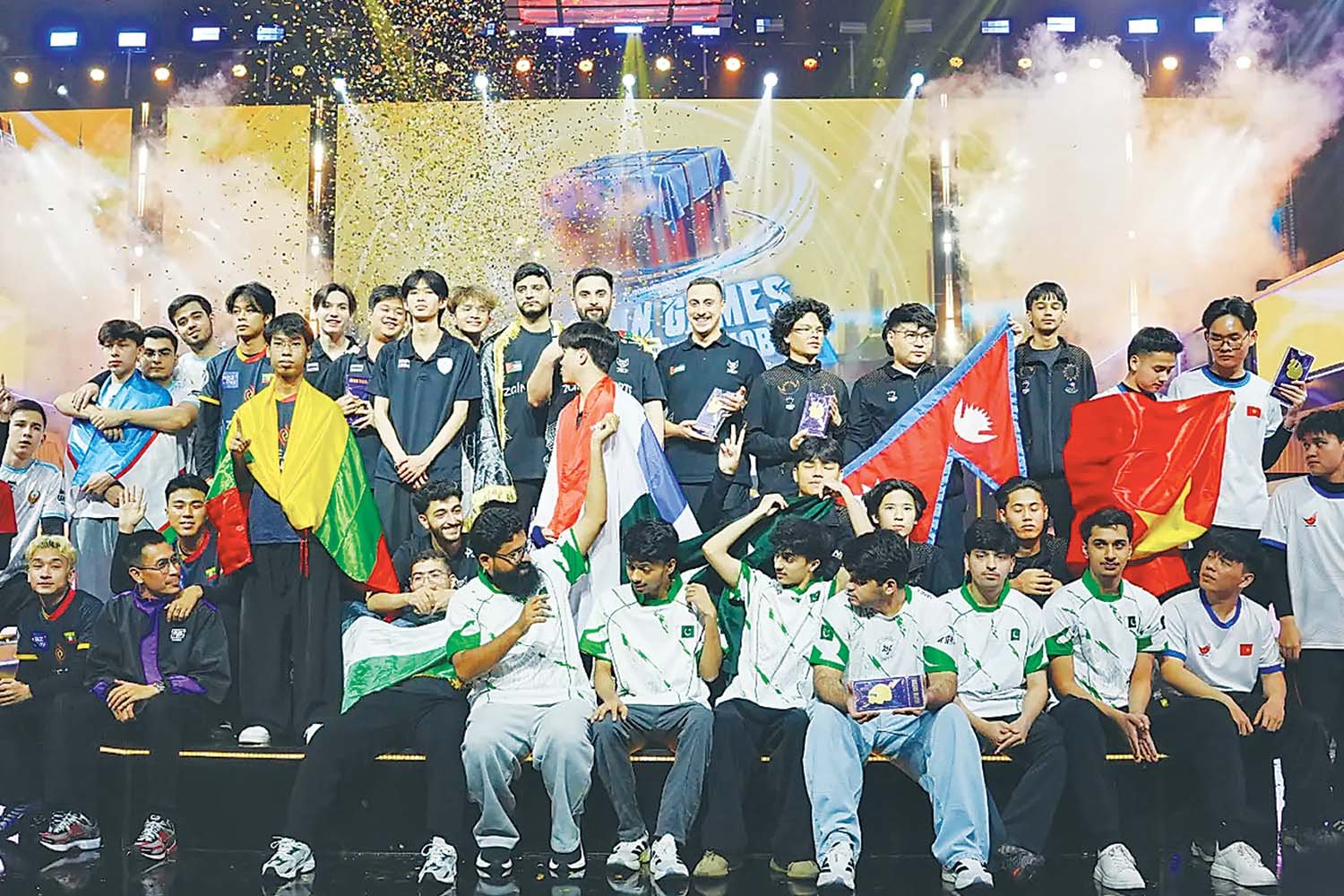
It was supposed to be a landmark moment for Nepali esports as three teams qualified for the 20th Asian Games through regional tournaments in PUBG Mobile, Honor of Kings and Mobile Legends: Bang Bang in June. But despite securing places, they are set to miss the Asian Games due to a dispute between two rival esports associations.
“There shall be only one sports association for each sport,” Section 22[2(A)] of the National Sports Development Act, 2077, states. However, there are two national associations for esports in the country—Esports Association of Nepal (ESAN) and Nepal Esports Association (NESA).
ESAN is recognised by the NSC while NESA is recognised by esports’ international bodies—International Esports Federation (IESF) and the Asian Electronic Sports Federation (AESF).
The existence of two parallel governing bodies has repeatedly led to confusion over the administration of esports in the country. Now, it has cost Nepal’s qualified players a chance to compete at the Asian Games, with disputes over recognition and registration overshadowing their on-field achievements.
They qualified
There were teams representing 23 countries at the Asian Games’ qualifier for PUBG Mobile in Vietnam from June 19 to 21. Of them, eight were qualifying for the Asian Games, where the top three teams from the previous edition and the hosts were waiting.
Sameer “Zyo” Costello, Rohit “Zordy” Tamang, Deepesh “DeltaX” Gurung, Saurav “TMG8” Tamang and “Biabia” had represented Nepal’s PUBG Mobile team in Vietnam. They finished seventh and qualified for the Asian Games.
Similarly, the team comprising players PluckyLeon, Swami, Kito, Sushil.T and Doofy finished sixth among 20 teams in the qualifier of Honor of Kings in Malaysia and ensured a seat in the Asian Games. Nine teams progressed from the qualifier.
Likewise, Nepal’s Mobile Legends: Bang Bang team—which included Kishor, Mitoya, Lilim, Binay and Anki—did their best and finished as one of the top three teams in the qualifying event in Singapore and booked their seat for Japan.
The qualified teams, after their return to the country, had been training rigorously with the aim of a podium finish at the 20th Asian Games. But they were left shattered when they found out that Nepal is not sending the esports team to participate in Japan.
What went wrong?
Less than a year ago, Nepal’s overall participation in the Asian Games was thrown into jeopardy when state interference led to an ad-hoc committee taking control of the Nepal Olympic Committee (NOC) building. The conflict arose after Jeevan Ram Shrestha amended the statute to allow himself a third term as President. Shrestha was reinstated following the political shifts of September 8 and 9, and the NSC and NOC have since tried to present a unified front.
Initially, Nepal was expected to participate in over 30 sports at the upcoming Games. That number was recently trimmed to 23, and has now dropped to 22 after the NSC declined to forward esports entries to the NOC.
“We are well aware of how devastating this is for the players who gave their all to qualify,” said Saroj Kumar Pokhrel, head of the Sports Development Department at the NSC. “Unfortunately, we could not forward their names due to legal hurdles.”
According to Pokhrel, the NSC had requested a long list from national associations months ago, followed by a final squad list by mid-June.
“The core problem was that the players who actually qualified in the regional tournaments were not on the list we received from ESAN,” Pokhrel told the Post. He explained that the NSC is legally bound to recommend only the athletes officially submitted in those initial administrative lists.
“Knowing there are two associations, we urged ESAN to coordinate with NESA to compile a unified, high-quality player list. It seems their internal dispute got in the way.”
However, stakeholders argue the NSC’s timeline was mathematically impossible.
A letter sent by the NSC to ESAN on June 6 demanded a final list of 15 individuals (12 players, two coaches, and a manager) by June 15.
“How could we send a final list of qualified players by June 15 when the actual qualifiers in Vietnam didn’t even start until June 19?” questioned Him Bikram KC, senior vice president of ESAN. “The deadline felt designed to trigger a dispute. In the end, rather than resolving the issue, the NSC chose the easiest way out: removing esports entirely.”
A window of hope closing fast
The NOC confirmed that it could not register the esports contingent with the Olympic Council of Asia (OCA) because the NSC never recommended them. However, a tiny, rapidly closing window of opportunity still exists.
“When we omitted esports, the OCA was surprised because Nepal had successfully qualified in three separate games,” Sujan Lal Shrestha, executive secretary of the NOC, told the Post. “Even though the official deadline has passed, the OCA has indicated they are willing to wait a couple of days to ensure Nepal’s athletes can compete. But if the delay continues, our slots will be redistributed to other nations.”
Devastated players seek justice
Nepal is currently a big name in the world of esports. For instance, Nepal is represented by DRS Gaming in Free Fire and Horaa Esports Nepal in PUBG Mobile in the Esports World Cup happening in Paris.
Especially in PUBG, Nepali teams have made podium finishes and dominated several world and continental tournaments. But Nepal will be missing a big event this time: the 20th Asian Games.
“We don’t understand the internal politics. We just know we are the ones suffering,” said Hom Bahadur, a representative of the qualified PUBG Mobile squad. “We are confused and don’t know whom to blame—the NSC, NOC, NESA, or ESAN. The players have been training relentlessly. We weren’t going to Japan just to participate; we were going to win a medal.”
Arun Mishra, manager of the Honor of Kings team and a former player at the 19th Asian Games, voiced similar frustrations.
“From what I gather, ESAN submitted a list of players who competed in a domestic event over a year ago. Because those administrative legacy players didn’t play in the actual qualifiers, the real qualified athletes are being denied their rights,” Mishra told The Post. “I know first-hand how monumental this stage is. It breaks my heart to see this generation lose it.”
Desperate, players and managers petitioned sports authorities and even sent appeals to the prime minister, to no avail. With no political solution in sight, 13 players and representatives filed a lawsuit at the Patan High Court on July 15, naming the NSC, NOC, NESA, and the Ministry of Education and Sports as defendants.
“At this point, representing Nepal in esports at these Games seems almost impossible,” Bahadur lamented. “All we want now is for the people behind this disaster to be held accountable and punished.”
NESA president speaks out
The crux of the administrative deadlock lies in international legitimacy. Because NESA holds the official international affiliations, regional and global qualifiers are routed strictly through them, leaving the NSC-recognised ESAN out of the loop.
“Since we are an internationally recognised body, the qualifier invitations come directly to us,” NESA President Suraj Dangol told the Post. “We informed the National Sports Council about this. We tried to register the qualifying players formally, but the NSC did not allow us. Our fight has never been about organisational ego; it has always been about the players.”
Dangol pointed out that a precedent for cooperation had already been set. “At the last Asian Games, the players went through us. We don’t understand what changed this time. We still haven’t received any official, formal explanation regarding why this fell through.”
According to Dangol, the players even met with sports officials personally to plead their case. NESA had explicitly warned authorities that athletes could not simply be handpicked and sent; they had to earn their spots through the OCA-mandated qualification system.
“We told them repeatedly that you cannot just send arbitrary names; players have to qualify on the field,” Dangol said. “The OCA even sent a letter confirming that participation was strictly contingent on playing the qualifiers. We bypass the NSC and work with the NOC because that is the Olympic pathway. The OCA was willing to accept our qualified players, but somewhere along the line, personal interests took over.”
Dangol also expressed disappointment with high-level sports bureaucrats. “We had briefed Sasmit Pokhrel [minister and member-secretary of the NSC] well in advance and kept him fully informed about the situation. But it seems he, too, failed to give the matter the serious attention it deserved.”