5 Pushrod Engines That Still Outpace Modern Turbocharger Tech
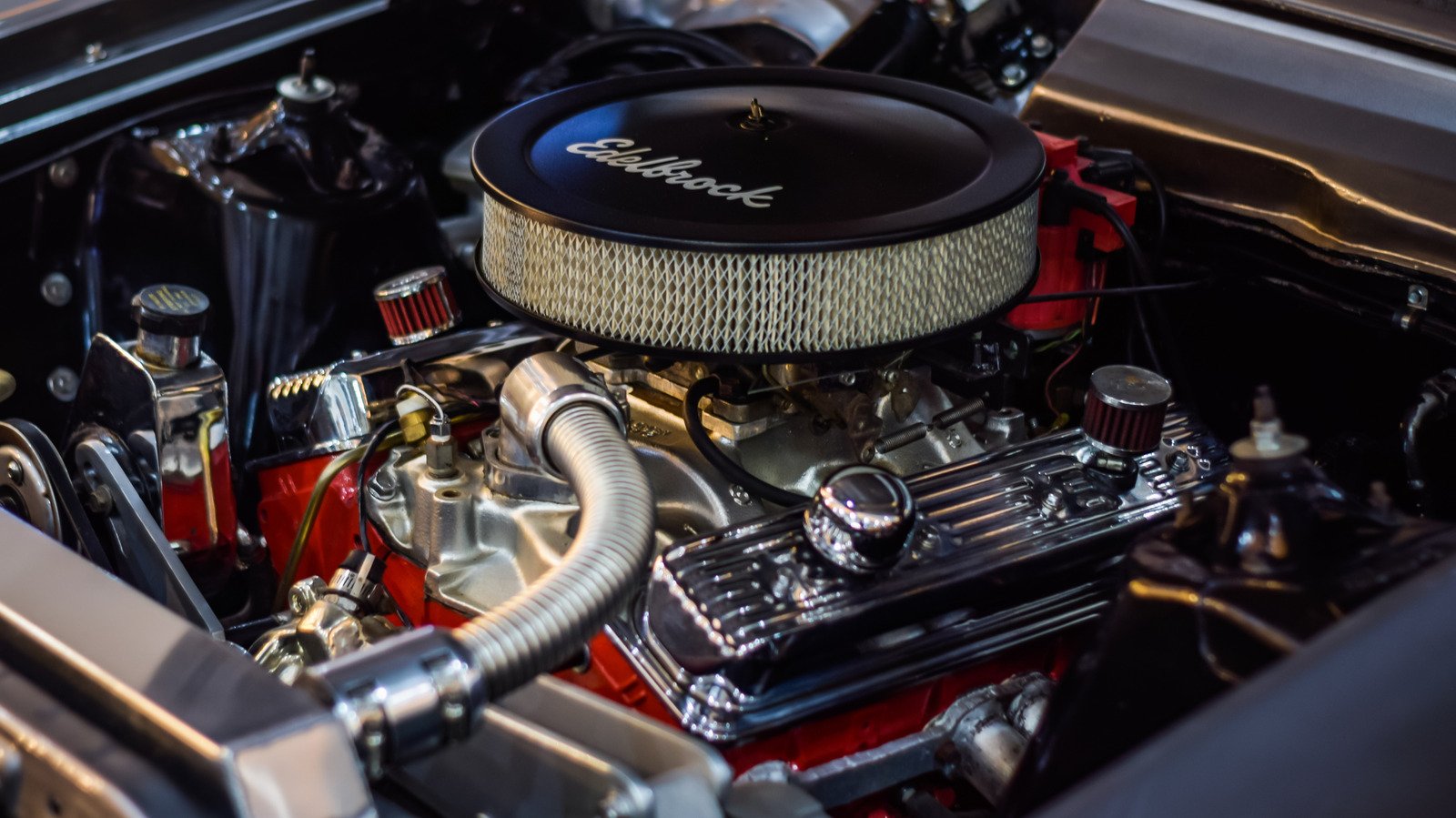
The pushrod engine has been around for well over a century, powering everything from muscle cars and trucks to marine engines and small-block V8s that built entire legacies. A pushrod engine places its camshaft inside the engine block rather than up in the head, using a system of lifters, pushrods, and rocker arms to open and close the valves.
That design keeps the engine shorter, lighter, and simpler than an overhead-cam layout, since there’s no need for cam chains, belts, or extra hardware. Fewer moving parts also means fewer things to service and fewer failure points, which is a big reason Chevy still builds pushrod V8s for the Chevrolet Corvette, Camaro, and its full-size trucks.
Be that as it may, the automotive landscape has shifted. Between emissions regulations and a global push toward smaller displacement, engineers have leaned hard into forced induction. Small turbocharged units have replaced many naturally aspirated pushrod setups, promising more power from less size, better efficiency, and improved fuel economy.
Turbochargers let a smaller engine punch above its weight by forcing more air into the cylinders. Despite the marketing push toward turbocharged downsizing, a handful of pushrod engines still put out numbers that make modern turbo mills look over-engineered by comparison. Here are five pushrod engines that still outpace modern turbocharger tech.
The Demon 170’s supercharged 6.2L HEMI
A pushrod V8, in many people’s eyes, is associated directly with muscle car power, and when it comes to final bosses of the modern muscle car game, few of them can come close to the Dodge Challenger SRT Demon 170. Feed the Demon 170’s supercharged 6.2-liter HEMI pushrod V8 a tank of E85 and the output climbs to 1,025 hp and 945 lb-ft of torque.
Drop back to E10 pump gas and those numbers settle to 900 hp and 810 lb-ft. Dodge’s turbocharged replacement for that HEMI, the 3.0-liter twin-turbo Hurricane inline-six sold as SIXPACK, peaks at 550 hp and 531 lb-ft in its highest state of tune — nearly 500 hp short of the outgoing pushrod V8. Dodge puts the Demon 170’s launch force above 2 g.
This figure the brand says no other production car has matched, and opens each run with a 1.66-second sprint to 60 mph. On a prepped strip, that translates to an NHRA-verified quarter-mile pass of 8.91 seconds at 151.17 mph, making the Demon 170 the first muscle car sold from a factory showroom to break into eight-second territory.
Top speed is a different story: the Demon 170 is electronically limited to 149 mph to protect its drag radials, since Dodge built this engine to win off the line, not at the top end. Even so, that quarter-mile number holds up: Yangwang’s claimed figure for its 3,000-hp electric U9 Xtreme hypercar is 9.78 seconds — nearly a full second behind the archaic pushrod Dodge.
Chevrolet Performance ZZ632/1000 crate engine
Some engines get their power from engineering wizardry — exotic alloys, tight tolerances, sky-high rpm. Others get there through sheer displacement, and making that many cubic inches survive four-figure horsepower is its own kind of engineering. The Chevy 632 Big Block crate engine is the latter. Displacing 632 cubic inches (10.4 liters) and relying on nothing but the atmosphere to fill its cylinders.
This big-block pushrod V8 dynos at 1,004 hp at 6,600 rpm and 876 lb-ft of torque at 5,600 rpm, and Chevrolet’s own spec sheet calls for premium pump gas rated 93 octane or higher. Every intake and exhaust port on the CNC-machined aluminum heads is cut to the same size and shape — a departure from the port-to-port variation typical of big-block Chevys.
Chevrolet credits the design, dubbed RS-X Symmetrical Port, to Ron Sperry, capping a GM powertrain career that spanned more than five decades. Chevrolet says it validated the design by putting a single example through the equivalent of more than 200 dyno-simulated drag-strip runs before the engine went into production.
Since the ZZ632 ships without a car attached, there’s no factory quarter-mile or 0-60 figure on record. The trade site OnAllCylinders modeled the engine in drag-strip simulation software rather than a real track pass, plugging it into a theoretical 1966 Chevelle. Their quickest projected combination — a 3,425-lb build on 13-inch slicks — came out to an estimated 8.98 seconds at 151.3 mph.
The Corvette ZR1’s supercharged LT5
GM stopped selling the C7-generation Corvette ZR1, but its supercharged LT5 pushrod V8 still holds up as one of the strongest engines Chevrolet has ever put in a Corvette. The 6.2-liter LT5 carries an SAE certification of 755 hp and 715 lb-ft of torque — numbers GM stood behind well enough to put the badge on paperwork, not just a press release.
That supercharger displaces 2.6 liters, up from the 1.7-liter Eaton unit on the Z06’s LT4 — a 52 percent difference by volume. Spinning its rotors to nearly 15,900 rpm to build 13.96 psi of boost costs the engine up to 110 hp on its own, at a steady 80-mph cruise the supercharger draws only about 1 hp with virtually no boost applied.
Feeding those cylinders is a combined direct- and port-injection fuel system. Chevrolet’s factory numbers for the ZR1 were a 2.9-second 0-60 and a 10.6-second quarter mile at 134 mph. When MotorTrend put the car on its own scales, they came up a touch short of that — 3.0 seconds and a 10.8-second pass at 133.1 mph — a gap the magazine chalked up to filling the tank with 91-octane instead of the 93 Chevy recommends.
At 212 mph, Chevrolet says the combination of the car’s aero upgrades give it 950 pounds of downforce, or in other words, around 60% better over the ZO6/ZO7 The LT6 and the LT7 that succeeded adopted a flat-plane crank V8, meaning that the LT5 ZO6 is the most powerful pushrod V8 the front-engined Corvette ever had.
The supercharged 6.2L Hellcat HEMI V8
The Demon 170’s supercharged HEMI and the Ram 1500 TRX’s supercharged HEMI both trace back to the same 6.2-liter Hellcat block. However, Dodge’s Demon 170 engine barely resembles earlier Hellcat builds — Motor1 reports that “the camshaft is the only significant engine part that carries over from earlier versions.”
The TRX runs a standard-tune Hellcat instead, without the Demon’s bespoke supercharger or reinforced internals. Output for the TRX Final Edition comes in at 702 hp and 650 lb-ft of torque. The quarter mile went by in 12.9 seconds at a 108-mph trap speed, a run preceded by a roughly four-second dash to 60 mph.
Because its off-road tires aren’t built for sustained high speed, Ram caps the TRX electronically at 118 mph. Strip the same Hellcat architecture out of a four-wheel-drive pickup and into a lighter, rear-drive coupe, and the numbers shift substantially. A closer look at the Dodge Hellcat Redeye 6.2-liter engine unveils 797 horsepower.
The automaker’s own figures show it crossing 60 mph at 3.6 seconds. The range-topping Super Stock trim goes further still: Dodge’s own number for that version is 3.25 seconds to 60 mph. On the strip, Dodge’s claimed quarter-mile times were 10.8 seconds for the widebody Redeye and 11.1 for the standard car, with both versions carrying a claimed top speed of 203 mph.
The Escalade-V’s supercharged LT4
As mentioned with the LT5, that engine is essentially the LT4 with a much larger Eaton supercharger bolted on, pushing output up to 755 hp. But the LT4 on its own, without that upgrade, still hits plenty hard — including under the hood of a three-row SUV built to seat seven. Cadillac hadn’t put a supercharged V8 under anything since the CTS-V left production, until the Escalade-V revived the format.
Its supercharged 6.2-liter LT4 makes 682 hp at 6,000 rpm and 653 lb-ft of torque at 4,400 rpm — the same cam-in-block pushrod architecture that also powered the CTS-V and the previous-generation Corvette Z06. Cadillac’s own figures put the Escalade-V at 4.4 seconds to 60 mph and a 12.74-second quarter mile. Car and Driver‘s independent testing came back a touch quicker — 4.3 seconds to 60 and a 12.7-second pass at 111 mph.
Although it may not sound as impressive as some other engines on this list, on a vehicle that weighs over 6,200 lbs fully loaded, these numbers are impressive. Cadillac electronically caps the Escalade-V’s top speed at 125 mph. For a spot of context, BMW’s rival in the full-size performance-SUV segment, the X5 M Competition, pairs a twin-turbo 4.4-liter V8 with 553 lb-ft of torque and a 617-hp ceiling — 65 hp and 100 lb-ft short of the supercharged Cadillac.
How we made the list
This list isn’t exhaustive, and it isn’t meant to be. Nearly every engine here has a hotter sibling hiding somewhere; tuners like Hennessey and Lingenfelter have pushed the same LT4 and Hellcat blocks well past four-figure horsepower, aftermarket 632-cubic-inch big blocks can be built to outrun the ZZ632’s rated output once nitrous or boost gets added, and even the Demon 170 has owners running superchargers a size larger than what left the factory.
None of that changes the point of this list. In their factory, as-sold form, these five sit at or near the top of what a production pushrod engine has ever done, and in plenty of head-to-head matchups, they still out-muscle many modern and sophisticated turbocharged rivals. Every figure here traces back to where it actually came from.
Horsepower and torque ratings are pulled from manufacturer newsrooms and press materials directly — Chevrolet’s, Dodge’s, Cadillac’s, and BMW’s own releases and product pages, plus Stellantis Media for the Demon 170’s launch specs. Acceleration and quarter-mile numbers lean on independent, instrumented testing from MotorTrend, Car and Driver, and Motor Authority wherever a real test existed, rather than taking a brand’s claim at face value.
Technical and engineering detail came from trade outlets that specialize in it — Motor1, AutoEvolution, Forbes, MotorAuthority, GM Authority, CAR Magazine, and OnAllCylinders among them. Where no real-world test existed, as with the ZZ632, that gap is stated outright instead of dressed up as fact.