AI: Robots should adapt to humans, not the other way round — Promise Ekpo, US-based Computer Science PhD researcher
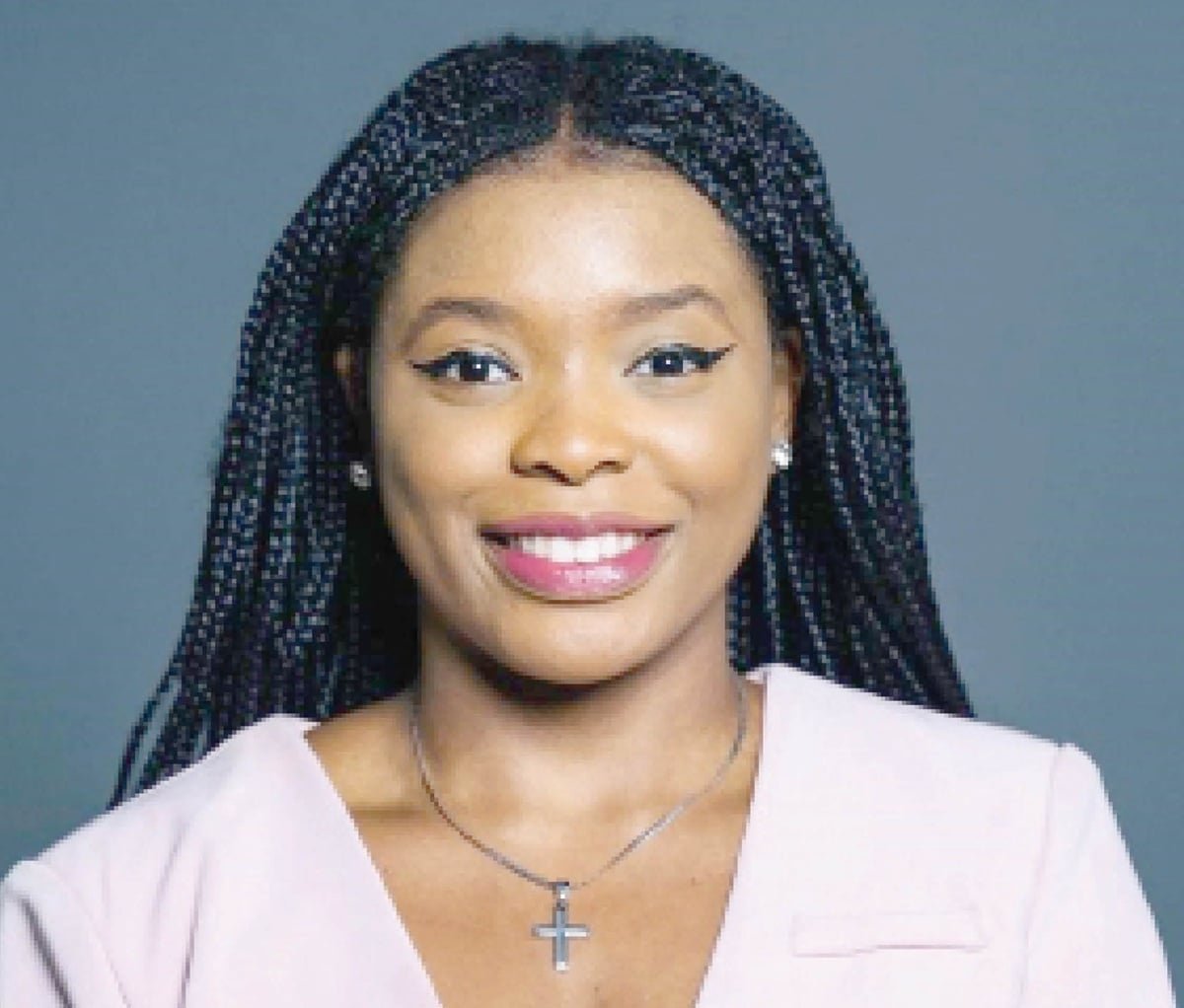
Promise Osaine Ekpo is a University of Benin First Class Computer Engineering graduate with a master’s degree from Princeton University in the United States. She is currently doing her PhD at Cornell University, also in the US, where her work focuses on artificial intelligence and robotics in health fields. In this interview by KINGSLEY ALUMONA, she speaks about her work, mentorship endeavours, among others.
How would you describe your academic and career journey from Nigeria to the United States?
I graduated from the University of Benin in 2020 with a First Class degree in Computer Engineering, finishing as the top student in my department with a GPA of 4.77/5.00. Encouraged by my Shell mentors, I shared my graduate school aspirations on LinkedIn, which connected me to mentors, scholarship opportunities, and valuable communities.
After sharing my First Class graduation on LinkedIn, I connected with communities such as the First Class Leaders Network, the Michael Taiwo Scholarship, EducationUSA, Zeed Worldwide, and Dekemp. Through them, I found mentors, scholarship opportunities, accountability partners, and practical advice from people who had successfully navigated the same journey. I approached the application process strategically by focusing on fully funded graduate programmes that matched my background in Computer Engineering.
The process was financially challenging. While earning ₦50,000 per month during my National Youth Service Corps, I actively pursued scholarships and application fee waivers. Winning the Michael Taiwo Scholarship and receiving support from EducationUSA made studying in the United States possible.
With God’s grace, I received a fully funded scholarship to pursue an M.S.E. in Computer Science at Princeton University and moved to the United States in 2021 after completing the National Youth Service Corps. My master’s research explored emergent persuasiveness in large language models for safety-critical systems. I also completed an AI Safety internship at Siemens Technology, where I developed explainable AI solutions for healthcare and warehouse safety.
After Princeton, I received another fully funded scholarship to pursue a PhD in Computer Science at Cornell University. My current research focuses on designing robust planning algorithms for human-robot collaboration, with applications in emergency healthcare. I have developed a simulator for emergency room teamwork and co-authored research papers on assistive robots for real-world emergency teams at Weill Cornell Medicine.
Looking back, I am grateful for this journey. It has taught me not only how to conduct impactful AI research but also how to build communities, mentor others, and use technology to improve society.
Looking back now, what does this feat mean to you and your career?
Attending Princeton and Cornell has shown me that with preparation, resilience, and the right support, ambitious goals are achievable. It also inspired me to help others by sharing scholarship opportunities and graduate application advice through my YouTube channel, LinkedIn, and Instagram.
What area of computer science/engineering do you specialise in?
I specialise in artificial intelligence, with a focus on human-robot collaboration. My research develops robust planning algorithms that help robots communicate and work effectively with people. I chose this area because I believe robots should adapt to humans, not the other way round. People differ in their experience, language, and familiarity with robotic systems. So, a one-size-fits-all approach is ineffective.
My goal is to build AI systems that adapt to diverse users, making them more intuitive, trustworthy, and useful. I am particularly interested in healthcare, where effective human-robot collaboration can improve patient outcomes, enhance efficiency, and support healthcare professionals in safety-critical environments.
What is the title of your PhD work?
My PhD research focuses on enabling robots to collaborate effectively with humans in high-stakes environments such as hospitals. I study how differences between a robot’s behaviour and a person’s understanding of that behaviour can lead to communication failures, and I design algorithms to reduce these failures.
ALSO READ: Airfare ticket: Court affirms FCCPC powers to investigate pricing complaints
My research has progressed through three phases. In the first phase, I developed MARLHospital, a multi-agent simulator for emergency room teams, and designed fair scheduling algorithms that account for healthcare workers’ expertise to improve teamwork and reduce burnout. The simulator is now being explored as a training tool for emergency care teams.
In the second phase, I deployed robots in real emergency room simulations at Weill Cornell Medicine to study how healthcare professionals prefer robots to communicate and recover from failures. This led to the development of the Robots Failures in Medical HRI (RFM-HRI) dataset.
My current research develops robust planning algorithms that enable robots to adapt to people with different levels of experience, familiarity, and mental models. Ultimately, my goal is to build trustworthy AI systems that collaborate naturally with humans and improve safety in critical environments.
AI and machine learning (ML) have come to stay. How do you think Africa can leverage AI and ML to solve its unique problems?
My work in AI research has reinforced my belief that Africa needs AI solutions designed to address real local challenges, not technology developed without practical purpose. AI has enormous potential to improve healthcare, agriculture, education, and infrastructure. Although my work is in human-robot collaboration, the same principles are relevant in Africa, where AI must operate with limited data and resource constraints.
I believe Africa should be a creator, not just a consumer, of AI technologies. By investing in local researchers, entrepreneurs, and universities, we can develop solutions that reflect our unique needs and create lasting impact across the continent.
Cybersecurity is an innovation that almost every industry and organisation are leveraging for cyber and digital safety. How do you think the Nigerian government can leverage cybersecurity technology to strengthen safety and fairness in its healthcare sector?
The Nigerian government can strengthen healthcare by protecting patients’ records through secure digital systems, encryption, and strict access controls. It should also provide cybersecurity training for healthcare workers and establish national security standards for hospitals. Strong cybersecurity is not only about preventing data breaches. It is also about building public trust and ensuring safe, reliable, and fair access to digital healthcare for all Nigerians.
If you were to address three national problems facing Nigeria using your computer science and engineering expertise, what would they be?
The first area I would focus on is healthcare. I want to develop reliable AI systems that help doctors and nurses make faster, better decisions, especially in underserved communities with limited medical resources.
Second is agriculture and food security. I believe AI and robotics can help farmers monitor crop health, improve productivity, and reduce losses through data-driven decision-making.
Third is public safety and infrastructure. Beyond improving transportation, logistics, and emergency response, I believe AI can support efforts to address insecurity in Nigeria. Although my research is not in defence, the planning algorithms I develop for trustworthy AI can help security and emergency response agencies analyse information, prioritise incidents, and allocate resources more effectively while keeping humans in control of critical decisions.
Overall, I believe Nigeria should invest in dependable, affordable AI solutions tailored to local challenges while developing the local talent needed to build and sustain these technologies.
The computer and technology industries are mainly male-dominated, especially in developing countries. What are women experts and researchers in these fields doing to increase women’s participation and representation?
Women experts and researchers are increasing women’s participation in technology through mentorship, scholarships, research funding, and inclusive professional networks.
I have been fortunate to benefit from initiatives such as Women in Machine Learning, Rewriting the Code, Women Who Code, and the National Center for Women & Information Technology. These experiences inspired me to create similar opportunities for others.
After receiving a Rewriting the Code (RTC) and Netflix grant to attend NeurIPS 2025, I established a partnership between RTC and Cornell Tech and co-organised a Women in Tech panel that connected over 20 graduate students with industry recruiters. RTC also sponsored approximately $1,400 in refreshments for the event.
I have also mentored four undergraduate women on research projects and five female students in my lab. Going forward, I hope to continue mentoring and expanding research opportunities for women, particularly across Africa.
Do you occupy any leadership role or run any initiative that has to do with computer and tech endeavours?
When I started at Cornell, I created a WhatsApp group for my Computer Science PhD cohort to share resources, coordinate activities, and support one another. It quickly became our primary communication hub and remains active today. I have also mentored students through NSBE, helped revive the African community at Cornell Tech, and served as Visit Day Czar for Cornell Bowers CIS for three years, organising panels for prospective graduate students.
I also believe opportunities only matter if people know they exist. To increase awareness, I regularly share fully funded scholarships, PhD, postdoctoral, and faculty opportunities on LinkedIn and through a WhatsApp community.
To me, leadership drives innovation by bringing people together, creating opportunities, and fostering collaboration so that diverse ideas can become meaningful technological solutions.
You have studied in Nigeria and are now studying in the US. What kind of computer education would you like Nigerian universities to emulate from their US counterparts to make the course more innovative and impactful?
Having studied in both Nigeria and the United States, I believe Nigerian universities can make computer science education more innovative in three ways. First, make curricula more flexible so courses can be updated regularly to reflect emerging technologies and industry needs. Second, encourage critical thinking by challenging students to question assumptions, explore different solutions, and solve real problems instead of relying mainly on memorisation. Finally, invest more in research laboratories, modern computing resources, and hands-on learning opportunities.
Combining these approaches with Nigeria’s strong academic foundation will produce graduates who are not only technically skilled but also innovative researchers and problem solvers.
How are you managing the stress associated with your academic and work in the US? And where do you see yourself and your career in five years?
Pursuing a PhD is demanding. So, I make a conscious effort to maintain balance. Going to the gym keeps me physically and mentally refreshed, and I enjoy spending time with my husband, friends, and the supportive community I have built. I also enjoy travelling whenever I can, as it helps me recharge.
In five years, I hope to be advancing AI research with real-world impact, whether as a professor, an industry researcher, or leading my own research organisation. Whatever path I take, my goal is to develop technologies that solve meaningful problems while mentoring the next generation of researchers.
What advice do you have for young girls aspiring to go into STEM education, especially computer-related fields?
The best advice I can give is the same advice my parents gave me: “You are already smart. Now, study.” Believe in yourself, but remember that confidence comes from consistent effort. Learn by building, experimenting, and solving problems, not just by reading. Become the person you aspire to be today. Ask yourself how your future self would respond to rejection, failure, or disappointment, and make choices she will thank you for.
Finally, do not expect a smooth journey. There will be setbacks and closed doors, but do not give up. Some of the best opportunities in my life came after rejection. Keep showing up, keep learning, and keep believing in yourself.
WATCH TOP VIDEOS FROM NIGERIAN TRIBUNE TV