Bones From Underwater Caves May Hold New Clues to Ancient Megafauna
Underwater caves preserve some of the world’s most valuable fossils, but they’ve also been difficult to interpret. The tools to understand how these underwater graveyards impact the remains of extinct megafauna and other animals have been limited. There are many factors that change organic remains over long periods of time, such as temperature, oxygen concentration, the presence of decomposing bacteria, and more.
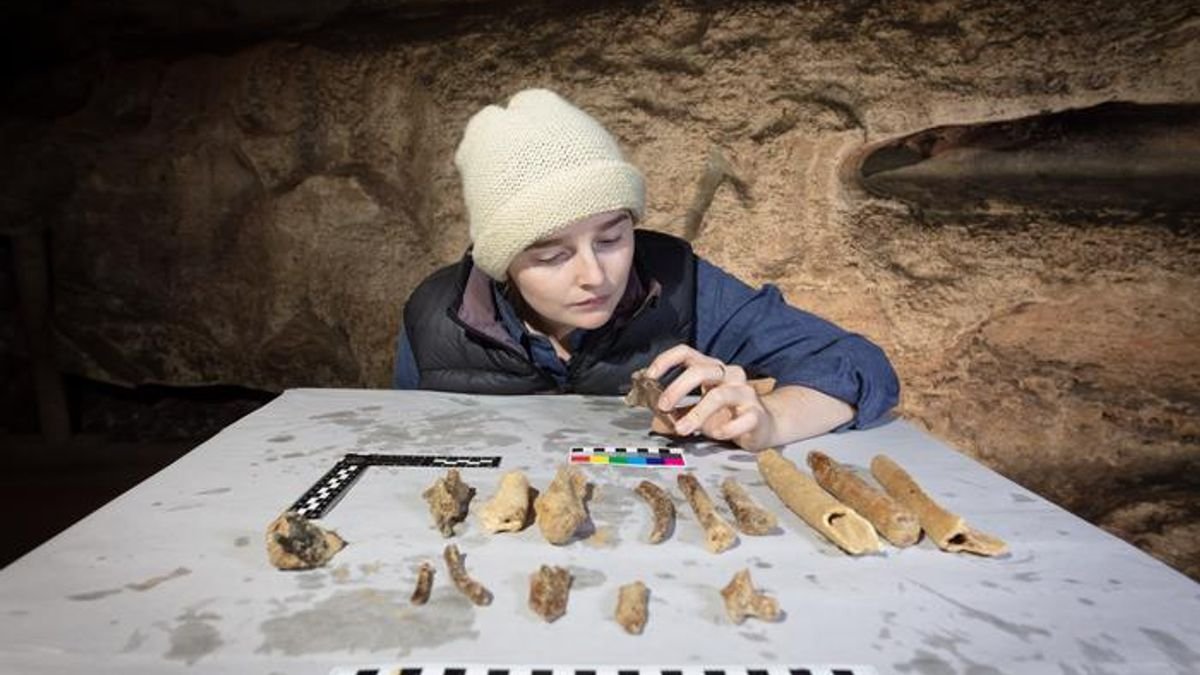
Now, a study led by Griffith University in Australia, published in PLOS One, describes distinctive “fingerprints” left by different cave environments that can reveal what happened to bones after an animal died. The researchers compared bones from native and non-native animals found in either dry or underwater caves in Australia and created a “forensic guide” that could come in handy when studying the skeletal remains of megafauna that died thousands of years ago.
“This study has delivered the first framework for interpreting how megafauna fossils formed, survived, and changed in underwater caves,” said study first author Meg Walker from the Australian Research Center for Human Evolution in a press release.
Read More: 75,000-Year-Old Treasure Trove of Ice Age Animal Remains Provides Snapshot of a Lost World
Comparing Animal Bones from Underwater and Dry Caves
With the help of specialist cave divers, the researchers collected animal bones from two underwater caves in southern Australia. The skeletal remains belonged to a wide array of animals, including cows, kangaroos, emus, sheep, pigs, dingoes, rabbits, possums, swamp rats, and a small carnivorous marsupial called the quoll.
The team said some of the animals found in the underwater caves date back to around 1840, when the first European settlers arrived and established communities in the area. The researchers then used several analytical methods to identify specific features on the bones associated with wet or dry cave environments.
“Backed by radiocarbon-dated bones, we tracked how skeletons accumulated and were modified over decades and centuries in underwater caves, then compared them to those buried in dry caves,” said Walker.
Water and Light Conditions Heavily Impact Bones Over Time
The researchers incorporated all of the bones’ characteristics into their forensic map, from how and where the remains were arranged to the “elemental compositions and proteins trapped in ancient cells,” as Walker described them.
The team concluded that dark underwater zones preserve bones exceptionally well, while light-exposed waters and dry caves leave different biological and chemical traces. In underwater caves, it also mattered whether the bones were exposed to light or remained in the “midnight regions,” where no light reaches.
In the presence of light, the aquatic environment differs substantially from that in the dark regions of underwater caves, where algae and other plants can grow. These organisms alter the chemical composition of the water and leave distinct marks on the bones over time.
Darkness, however, acts as a protective cover and slows decomposition. Using the fingerprint map developed in this study, researchers may be able to better understand what fossilized bones experienced over time, helping reconstruct ancient ecosystems and changes in climate.
A Tool to Study Ancient Megafauna
Although the researchers used historical bones from mostly domesticated animals dating to the 19th century, they say these remains serve as analogs for much older fossils.
The goal of mapping exactly how different cave ecosystems affect animal bones is to improve scientists’ understanding of the environmental conditions in which extinct megafauna lived.
“[The findings] will provide archaeologists and paleontologists worldwide with a powerful new tool for reconstructing past environments and histories in these challenging conditions,” said Walker.
Read More: Underwater Caves in Sicily Show Signs of Early Humans From 17,000 Years Ago
Article Sources
Our writers at Discovermagazine.com use peer-reviewed studies and high-quality sources for our articles, and our editors review for scientific accuracy and editorial standards. Review the sources used below for this article: