Xpeng loses AI infrastructure chief to OpenAI’s robotics push, report says

- Lu Siyuan is set to leave Xpeng and join OpenAI to work on embodied AI robotics research and development.
- Xpeng has yet to find a suitable replacement, and Lu’s team is expected to be split into more than 3 independent groups led by different managers.
Xpeng (NYSE: XPEV) is set to lose another key AI (artificial intelligence) executive, with the head of its AI infrastructure department reportedly preparing to leave for OpenAI.
Lu Siyuan is currently handing over his responsibilities and will join OpenAI to work on the research and development of embodied AI robots, according to a Monday report by Leiphone.
Lu directly manages a team of about 200 people at Xpeng and reports to Liu Xianming, head of the company’s General Intelligence Center. He is primarily responsible for building Xpeng’s AI infrastructure system.
His responsibilities span the entire development chain, including model-training frameworks, GPU cluster management, compilers for Xpeng’s in-house developed chips, data processing, model quantization and optimization, as well as in-vehicle inference deployment and mass-production implementation.
Unlike most rivals that rely on third-party chip platforms from companies including Nvidia (NASDAQ: NVDA), Xpeng has chosen to develop its own chips.
That means the company must independently develop its entire toolchain, from training frameworks and chip compilers to in-vehicle inference engines, the report noted.
The compilers and inference runtime systems supporting Xpeng’s in-house developed chips must be built by the AI infrastructure team, a prerequisite for bringing end-to-end models into mass-produced vehicles, the report cited people familiar with the matter as saying.
Xpeng has yet to find a suitable replacement for Lu. After his departure, his team is expected to be divided into more than 3 independent groups led by different managers to minimize the impact of his exit, according to the report.
The report also said Xpeng’s assisted-driving team could see further personnel changes in the near term, without providing additional details.
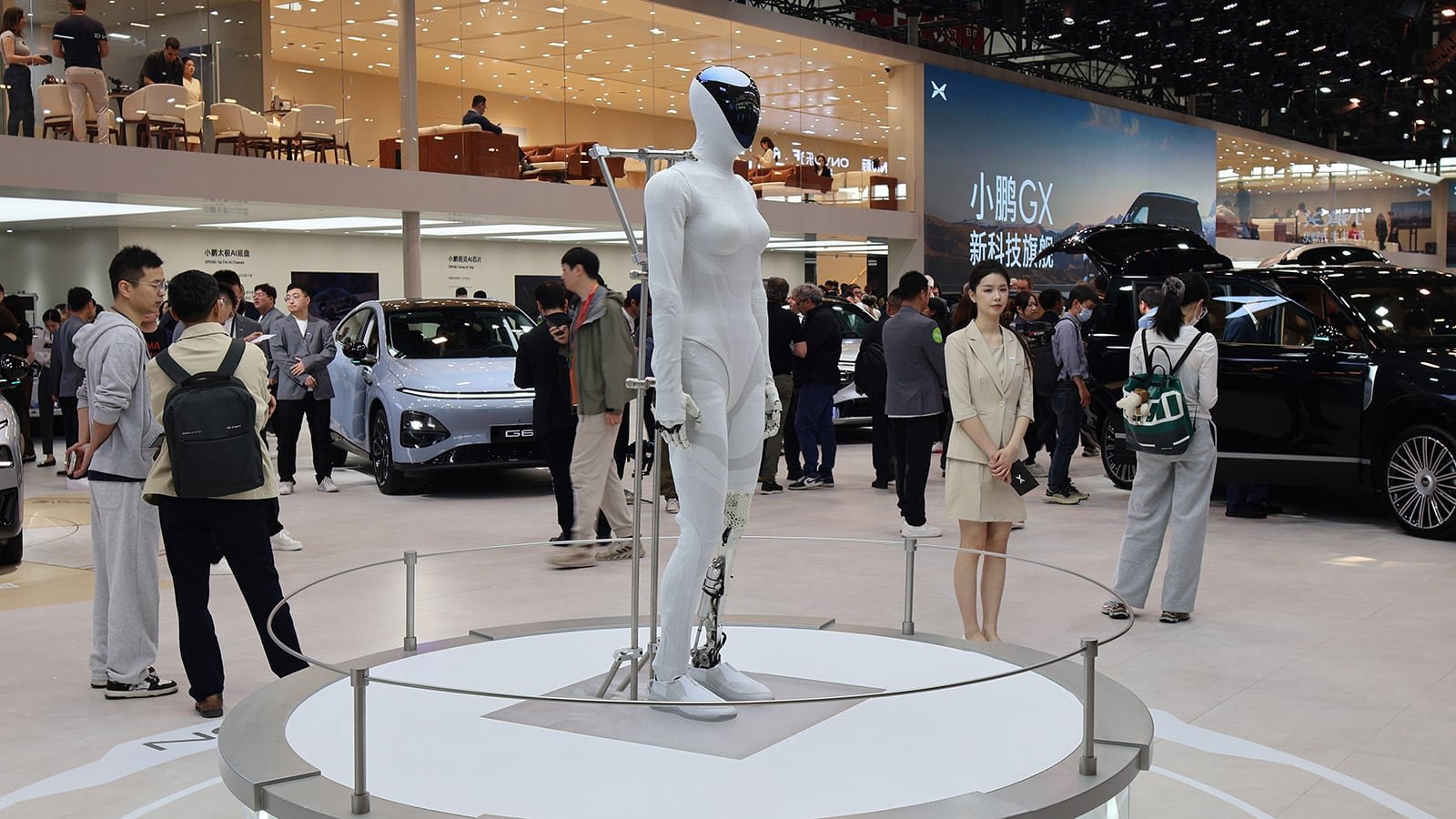
Lu’s departure comes as Xpeng is at a critical stage in its transformation from a smart-vehicle company into a “physical AI company.” The Chinese EV maker plans to begin large-scale production and initial deliveries of advanced humanoid robots in the fourth quarter of 2026.
AI infrastructure also serves as the technological foundation for Xpeng’s global expansion of its assisted-driving systems.
The company completed localized European testing of its second-generation Vision-Language-Action model in Germany earlier this month and plans to bring its assisted-driving capabilities from China to global markets in 2027.
Lu is the latest executive to leave Xpeng. Mi Liangchuan, who headed the company’s robotics business, departed last month, prompting chairman and CEO He Xiaopeng to personally take charge of the robotics center.
Li Liyun, Xpeng’s former head of autonomous driving, left the company last October, with Liu taking over his responsibilities.
Li has since joined Chinese robotics startup EngineAI Robotics as chief technology officer.

Xpeng plans to lift monthly capacity for its Iron humanoid robot to more than 1,000 units by the end of this year, paving the way for a global roll-out in 2027.



![[United States] – Do I actually need part 107 for this?](https://jobssz.com/wp-content/uploads/2026/07/jjpd9nfwsheh1.jpeg)