Underappreciated Serpens
If you’re looking for sweet celestial treats you haven’t seen a million times, aim your scope at the Serpent.
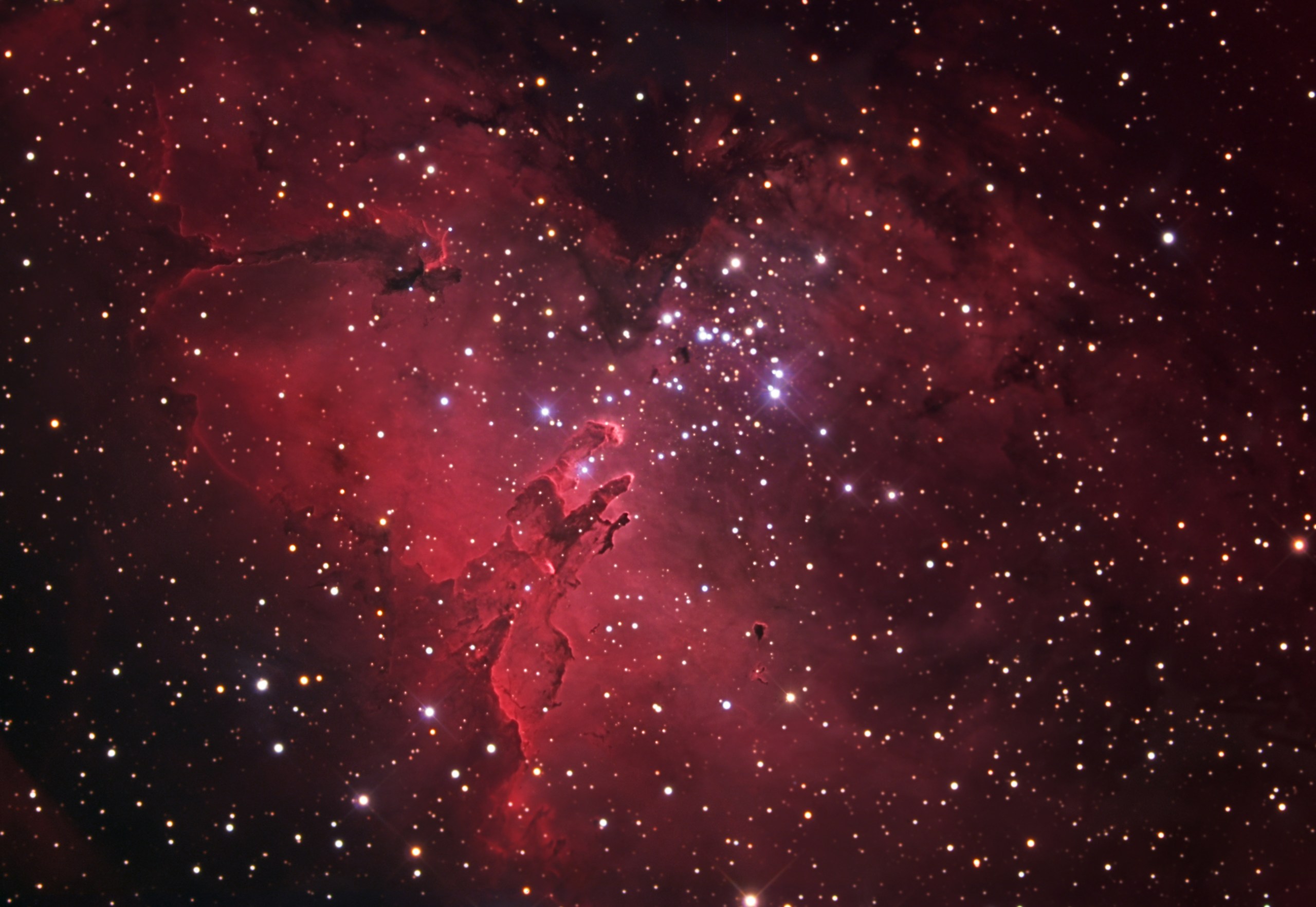
The Eagle Nebula (M16) is visible through any size telescope, but only large ones will let you see the Pillars of Creation. Credit: R. Jay Gabany
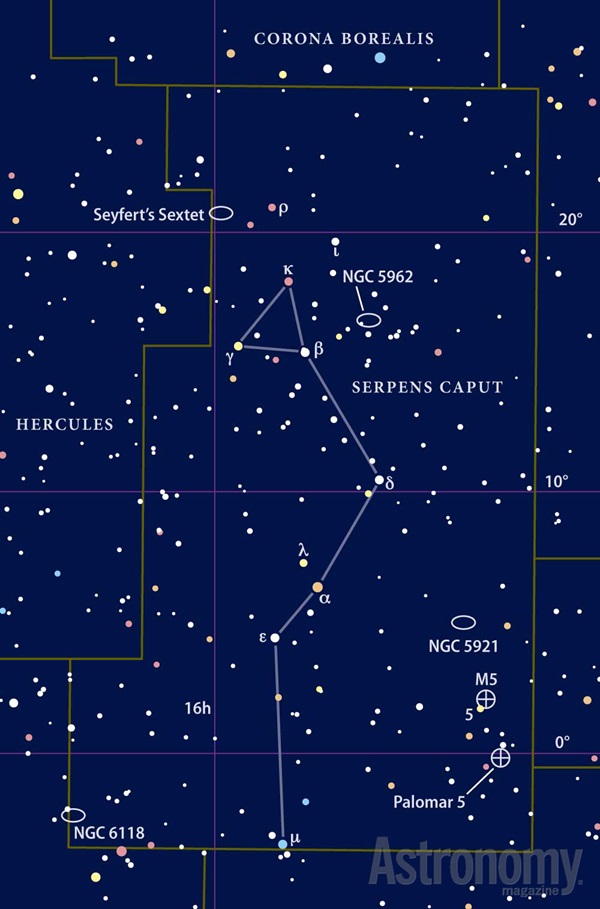
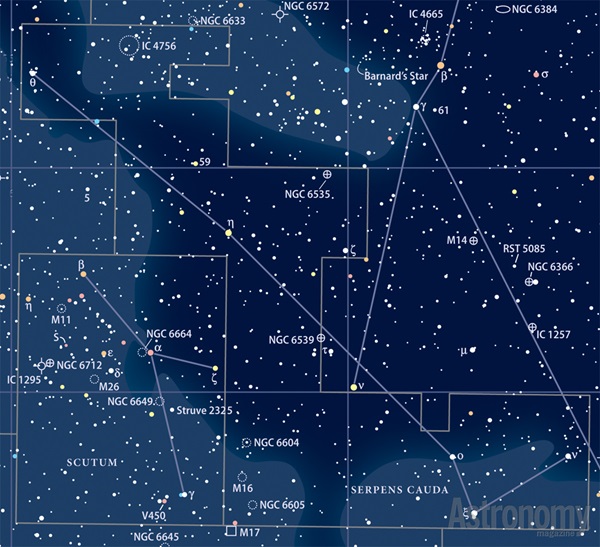
Serpens the Serpent is unique among the constellations because it’s separated into two parts, with Ophiuchus the Serpent-bearer between them. Serpens Caput (the head of the serpent) lies to the west of Ophiuchus, and Serpens Cauda (the tail of the serpent) lies to the east.
Serpens Caput is the larger of the two, taking up roughly 67 percent of the area. Together, they comprise the 23rd-largest constellation, which takes up about 1½ percent of the sky. But size doesn’t equal brightness; of the 88 constellations, Serpens ranks 67th in that category. It lies opposite the Sun on June 6, so the two months before and after that date are the best times to view it.
Both parts contain deep-sky objects worthy of your attention. I started with the ones farthest west (in Serpens Caput) and moved eastward. So, if you start at the beginning, each subsequent object will come into view as the evening progresses.
Explore Serpens
Tap to discover deep-sky objects
Serpens Caput
Serpens Cauda
Explore more of the night sky with our other interactive deep-sky tours:
Wander the Queen’s starry court
Discover deep-sky gems in Ophiuchus
Michael Bakich has spent his life immersed in astronomy, earning two degrees in the field, authoring seven books, and joining Astronomy magazine in 2003. When not writing or leading tours to eclipses and historical astronomy sites worldwide, he enjoys woodworking, science-fiction movies, and collecting rare 19th-century astronomy books from his home in Tucson.