Esports World Cup 2026 Leaves Riyadh for Paris: $75M
The world’s biggest esports event is no longer happening in Saudi Arabia. On May 20, 2026, the Esports Foundation confirmed that the 2026 Esports World Cup would move to Paris instead of returning to Riyadh, ending a three-year run as the centerpiece of Saudi Arabia’s esports ambitions. The tournament kept its record $70 million prize pool, its 25-tournament lineup, and its July 7 to August 24 dates in Riyadh. It just changed continents.
The relocation, announced less than seven weeks before the Esports World Cup 2026 opened, marks the first time the event has left Saudi Arabia since its 2024 debut. Organizers pointed to regional instability tied to what the BBC described as “safety worries stemming from the ongoing tensions” between Saudi Arabia’s neighborhood and Iran, after reports of drone and missile activity disrupted air travel near Riyadh earlier this year. For an event built specifically to brand Saudi Arabia as gaming’s newest capital, moving to Paris Expo Porte de Versailles is more than a scheduling footnote. It is a live test of how far a state-backed gaming platform strategy can stretch before regional politics catch up with it.
Don’t miss new tech stories on Google
Add Tech Insider once in the Google app and our stories appear in your news suggestions.
What Changed: Esports World Cup Moves From Riyadh to Paris
The Esports Foundation, the nonprofit that owns the Esports World Cup, had spent months selling the 2026 edition as a bigger, richer version of the Riyadh tournaments that ran in 2024 and 2025. A January 20, 2026 announcement confirmed a record $70 million prize pool, a 25-tournament lineup across 24 titles, and a return to Riyadh’s Boulevard City for a July 7 to August 24 run. Four months later, the venue changed. The prize pool, schedule, and game list did not.
That consistency is the point organizers wanted to project: this is a relocation, not a retreat. Roughly 2,000 competitors from more than 200 clubs and 100 countries are still descending on the same dates for the same money. Only the host city changed, from a Saudi entertainment district to a convention center in southwest Paris. According to Wikipedia’s tracking of the event, this is the third edition of the Esports World Cup overall and the first held outside Saudi Arabia.
Why the Esports World Cup Left Saudi Arabia
The Esports Foundation’s official explanation was carefully neutral. The organization said the decision followed “an extended evaluation process” and was made “in light of the current regional situation,” language that avoided naming a specific threat. Outside reporting filled in the gap. Bloomberg reported the switch came “after the wider region has been disrupted by the war with Iran,” and the BBC tied the move to “safety worries stemming from the ongoing tensions” in the Gulf. Multiple outlets noted that Riyadh’s King Khalid International Airport had faced repeated drone and missile activity earlier in 2026, prompting several airlines to cut or suspend regional flights.
None of that is a small operational detail for an event of this scale. The Esports World Cup 2026 needed to move thousands of players, staff, broadcast crews, and equipment into one city for seven weeks. An airspace and security picture that could change week to week is close to the worst-case planning environment for live event logistics, regardless of how much money is behind the tournament. Paris offered established aviation access, hotel capacity, and production infrastructure on short notice, which is likely why it beat other candidate cities once Riyadh was ruled out.
Inside Paris: New Venue, Same Ambition
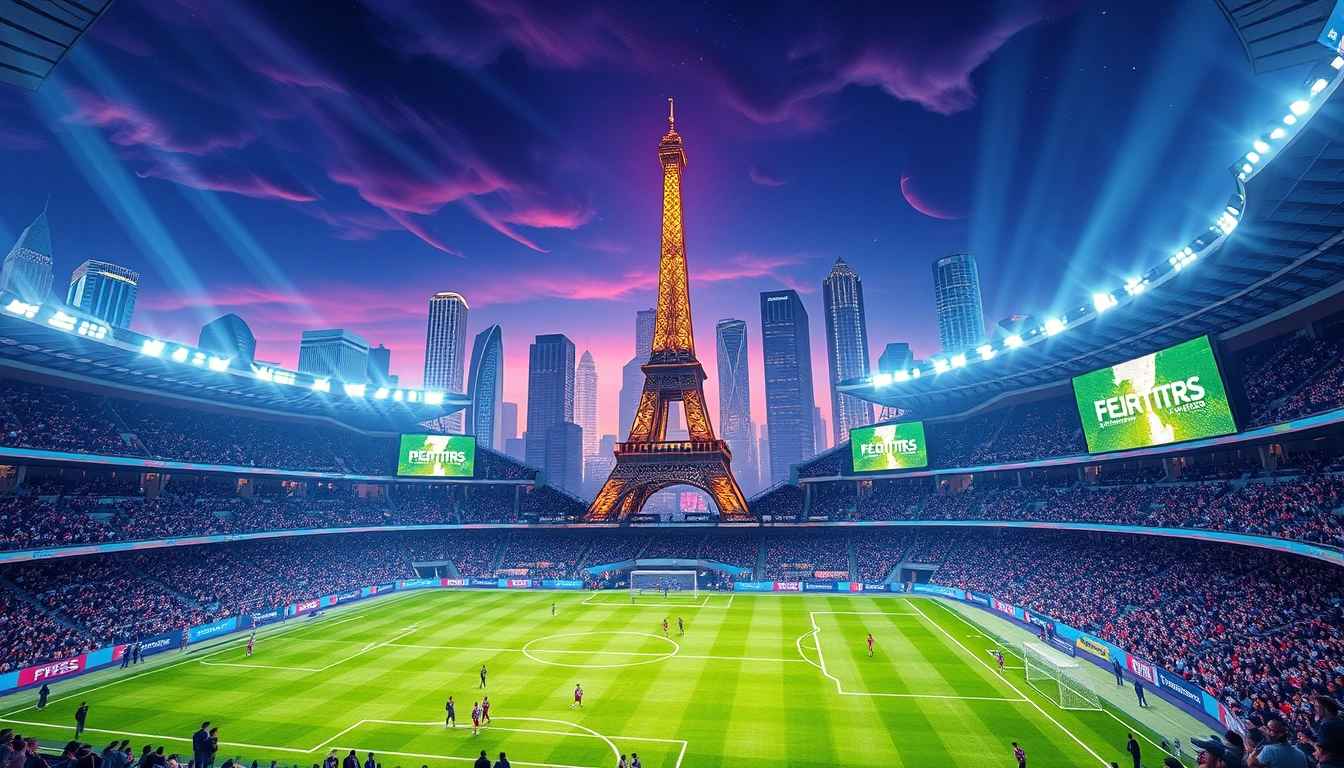
The relocated tournament is based at Paris Expo Porte de Versailles, one of the largest convention complexes in Europe, with an opening ceremony held at La Seine Musicale on July 8. That venue swap put the Esports World Cup in direct competition for attention with Paris’s existing calendar of gaming and entertainment events, rather than owning a purpose-built entertainment district the way it did in Riyadh’s Boulevard City.
Esports Foundation CEO Ralf Reichert framed the switch as continuity rather than retreat in comments reported by The National, saying Riyadh had “helped turn the Esports World Cup into a global phenomenon” and that Paris was chosen for its reputation as an “international sporting and entertainment destination” with strong local support. Organizers have been explicit that Riyadh remains the tournament’s intended permanent home and that the Paris edition is a one-year rotation rather than a strategic pivot away from Saudi Arabia. Whether that framing survives contact with 2027 planning is an open question.
The $75 Million Prize Pool, Explained
Money is still the headline. The Esports World Cup 2026 prize pool stands at About $70 million, the largest in the event’s three-year history and roughly $7.5 million more than the 2024 total. That figure has climbed every year since the tournament’s 2024 debut, when the prize pool was just over $62 million. The growth trajectory matters as much as the raw number: it shows Saudi backers increasing their financial commitment to the event even as the geopolitical picture around Riyadh grew more complicated.
Of the About $70 million total, $27 million is reserved for the cross-game Club Championship, with the rest split across individual per-game tournament prizing and awards such as MVP honors. That is a meaningfully different structure from a traditional single-game major, where all the money flows to whoever wins one tournament in one title.
| Edition | Host City | Total Prize Pool | Club Championship Pool | Games / Tournaments |
|---|---|---|---|---|
| 2024 (debut) | Riyadh, Saudi Arabia | ~$62.5 million | Not separately tracked | 21 games |
| 2025 | Riyadh, Saudi Arabia | ~$71 million | $27 million | 23 titles |
| 2026 | Paris, France | $75 million | $30 million | 24 games / 25 tournaments |
Figures for 2024 and 2025 are drawn from event-tracking coverage by The National and Esports Charts; minor variance exists between outlets on the exact 2024 and 2025 totals depending on whether bonus and award pools are included.
The Club Championship: Esports’ Answer to Franchise Money
The Club Championship is the Esports World Cup’s most structurally interesting feature, and the part most likely to reshape how esports organizations run their businesses. Rather than paying out purely on a per-tournament basis, the Esports World Cup 2026 allocates $27 million across the 16 clubs that perform best cumulatively across every title they enter, with the top-placing club taking home $7 million. An organization that fields competitive rosters across Valorant, Counter-Strike 2, Rocket League, and half a dozen other titles can out-earn a team that wins a single marquee event outright.
That is not quite a traditional sports franchise system, since there is no fixed annual fee guaranteed to every partner club regardless of results. It functions more like a performance-linked overlay bonus, layered on top of whatever prize money a club’s individual rosters earn in each game. But the effect on team strategy is franchise-like: multi-title breadth is now directly monetized in a way no single-game tournament circuit has matched, which is part of why so many organizations continue to show up in Riyadh’s, and now Paris’s, participant lists year over year.
24 Games, 25 Tournaments: What’s Actually Being Played
Scale is the other thing that separates the Esports World Cup from a normal esports major. The 2026 lineup spans 24 titles across 25 tournaments (Mobile Legends: Bang Bang runs two separate events), pulling in nearly every major publisher in competitive gaming at once: Valve’s Counter-Strike 2 and Dota 2, Riot Games’ League of Legends, VALORANT, and Teamfight Tactics, Epic’s Fortnite, Activision’s Call of Duty: Black Ops 7 and Warzone, EA Sports FC 26, Capcom’s Street Fighter 6, Bandai Namco’s TEKKEN 8, Ubisoft’s Rainbow Six Siege X, Rocket League, and mobile-first titles including PUBG Mobile, Free Fire, and Honor of Kings.
Trackmania makes its Esports World Cup debut in the 2026 lineup alongside long-running fixtures like Chess and Crossfire. No other event on the competitive gaming calendar tries to aggregate this many publishers and genres under a single prize umbrella in a single summer. That breadth is exactly why the venue change carries weight: moving a single-game major is a logistics problem, but moving an event that has to coordinate travel, broadcast, and competition schedules for two dozen separate esports ecosystems at once is a materially bigger undertaking.
Who Runs the Esports World Cup — and Who Really Owns It
The Esports World Cup is owned by the Esports Foundation, a nonprofit whose funding traces back to Saudi Arabia’s Public Investment Fund. Day-to-day production runs through a partnership with ESL FACEIT Group, the operator formed by the 2022 merger of ESL Gaming and FACEIT. That partnership detail is easy to skim past, but it is one of the most revealing facts in the entire relocation story.
ESL FACEIT Group is itself owned by Savvy Games Group, which is wholly owned by the same Public Investment Fund that backs the Esports Foundation. Savvy acquired ESL and FACEIT in a deal announced January 24, 2022, paying a combined $1.5 billion — $1.05 billion for ESL and $500 million for FACEIT. In other words, moving the Esports World Cup out of Saudi Arabia did not move it out of Saudi ownership. The Foundation that owns the event and the company that runs it on the ground in Paris both ultimately answer to the same Riyadh-based sovereign wealth fund. The relocation is a change of address, not a change of control.
How the Esports World Cup Stacks Up Against Rival Tournament Organizers
No other organizer in competitive gaming operates at the Esports World Cup’s scale, but the comparison to existing tournament models still explains why the event has been disruptive since its 2024 launch. Riot Games runs closed franchise leagues for League of Legends and VALORANT, where a fixed set of partner teams hold permanent slots regardless of season results. BLAST and ESL’s own standalone events, run separately from the Esports World Cup itself, operate single-game majors funded by sponsors and publisher partnerships, with prize pools a fraction of the Esports World Cup’s cross-title total. The Esports World Cup instead behaves like an aggregator platform: one owner, one prize umbrella, two dozen games borrowed from two dozen different publisher ecosystems for seven weeks a year.
| Organizer | Model | Games Covered | 2026 Prize Scale | Ownership |
|---|---|---|---|---|
| Esports World Cup | Cross-game aggregator festival with club overlay bonus | 24 titles / 25 tournaments | $75 million total | Esports Foundation (PIF-funded); operated by ESL FACEIT Group (Savvy Games Group / PIF) |
| Riot Games leagues (LCS/LEC-style) | Closed franchise league, fixed partner slots | League of Legends, VALORANT (separate circuits) | Not publicly unified; league-specific | Riot Games (Tencent-affiliated) |
| ESL / BLAST standalone majors | Single-game sponsored tournaments | Primarily Counter-Strike 2, individual titles | Typically low single-digit millions per event | ESL: Savvy Games Group; BLAST: independent |
That aggregator model is exactly what makes a mid-cycle venue change so consequential. A single-game organizer can move a tournament to a new arena with a few months’ notice and barely disrupt its ecosystem. Uprooting a 24-game, 200-club event mid-planning is a test of whether the aggregator model can survive a genuine external shock, not just a scheduling change.
The Viewership Numbers Behind Gaming’s Richest Event
The most recent full viewership data available comes from the 2025 Riyadh edition, which drew a reported 750 million global viewers and 350 million hours watched, distributed across 28 platforms and 97 broadcast partners airing more than 800 channels in 35 languages, according to figures reported by The National. Those numbers are what justify a $75 million prize pool in the first place: the Esports World Cup is not just a competition, it is a broadcast property, and broadcast properties are valued on reach as much as prize money.
Comparable audience figures for the Paris edition were not yet available at publication time, which is itself worth noting. A venue change this close to launch makes it harder for broadcasters and platforms to lock in the same distribution footprint they built for Riyadh, and any drop-off in reach would be a much more concrete measure of the relocation’s cost than the unchanged prize pool number suggests.
How the Esports World Cup Grew Into Gaming’s Richest Prize Pool
The Esports World Cup launched in Riyadh in 2024 with a prize pool just over $70 million, already the largest in esports history at the time. It grew to roughly About $70.45 million in 2025, then to $70 million for the Riyadh edition. That trajectory did not happen in isolation. It sits inside a much larger pattern of Saudi gaming investment: the Public Investment Fund bought a reported $3.3 billion in Activision Blizzard, Electronic Arts, and Take-Two Interactive stock in the fourth quarter of 2020, and Savvy Games Group has been reported to hold a capital commitment as large as $38 billion earmarked for gaming and esports over time, though that figure represents a funding envelope rather than money already spent.
Savvy’s studio-buying has continued even as the flagship event left Saudi soil. Tech Insider previously reported on Savvy Games Group’s $6 billion acquisition of Mobile Legends developer Moonton from ByteDance, part of the same investment push that funds the Esports World Cup. That is the clearest evidence that Riyadh’s gaming ambitions are not contracting just because one event relocated for a year. Acquisitions and platform ownership are proving easier to keep in Saudi hands than a live, multi-week broadcast event is to keep on Saudi soil.
What the Relocation Means for Esports Teams and Players
For the roughly 2,000 competitors and 200-plus clubs involved, the practical disruption is real even if the prize money is not shrinking. Teams that had planned training camps, housing, and travel around Riyadh had to rebuild those plans around Paris on a few months’ notice. That is a meaningfully smaller logistics gap for European organizations than it is for teams based in Latin America, Southeast Asia, or the Middle East, who now face different flight paths, visa requirements, and time zone shifts than originally planned.
The bigger story for team ownership groups is financial dependency. Because the Club Championship rewards cross-title consistency so heavily, a growing number of organizations have built meaningful chunks of their annual revenue around a strong multi-game showing at this one event. A relocation is survivable. A cancellation, or a second consecutive move to a different host city in 2027, would put that dependency under real strain, and team executives know it.
Is Riyadh Really Coming Back in 2027?
Organizers have been consistent in public messaging: Riyadh is the Esports World Cup’s permanent home, and Paris is a one-year detour. That framing is plausible. It is also exactly what any organizer with a long-term stake in Saudi Arabia’s gaming strategy would say regardless of how likely a full return actually is, since publicly hedging on Riyadh would undercut the broader Vision 2030 sports and entertainment push the Kingdom has attached to LIV Golf, Newcastle United, and a Formula 1 Saudi Arabian Grand Prix.
What actually happens in 2027 depends on facts outside any esports organizer’s control: whether the regional security picture around Iran stabilizes, whether airlines resume normal routing through Saudi airspace, and whether sponsors and broadcasters who adapted once are willing to plan around Riyadh’s return rather than treating Paris, or another neutral host, as the new default. None of that will be decided by the gaming industry.
5 Predictions for the Esports World Cup’s Next Chapter
- Riyadh bids for a 2027 return, but hedges publicly. Expect organizers to keep describing Saudi Arabia as the permanent home while quietly building contingency plans for a second neutral-host year if regional tensions have not clearly eased.
- Club Championship payouts keep climbing. The jump from $27 million to $30 million in one year suggests organizers see the cross-game bonus structure as the event’s signature differentiator, and it is the easiest lever to increase without expanding the game lineup further.
- Rival organizers lean into stability as a sales pitch. BLAST and independent tournament operators are likely to court sponsors uneasy about single-region concentration risk by emphasizing predictable, Europe- or North America-based hosting.
- Savvy Games Group keeps acquiring studios regardless of where the event is held. Ownership of gaming IP and platforms has proven far easier to keep centralized in Saudi hands than a live seven-week broadcast event, and that pattern should continue.
- Other Saudi-linked live entertainment properties face the same scrutiny. Any Gulf-region event with a similar security exposure, from gaming to golf to motorsport, is now a more obvious target for sponsor and broadcaster contingency planning than it was before this relocation.
Frequently Asked Questions
Why did the Esports World Cup 2026 move from Riyadh to Paris?
Organizers cited an “extended evaluation process” tied to “the current regional situation.” Bloomberg and the BBC reported the underlying cause was regional instability connected to the war involving Iran, including drone and missile activity that disrupted air travel near Riyadh earlier in 2026.
When was the relocation announced, and when does the tournament run?
The move to Paris was announced May 20, 2026. The tournament itself runs July 6 through August 23, 2026, the same dates originally set for the Riyadh edition, with an opening ceremony held July 8 at La Seine Musicale.
Did the prize pool change when the event moved?
No. The Esports World Cup 2026 kept its record $75 million total prize pool, including $30 million for the Club Championship, unchanged from the figures announced back in January 2026 for the original Riyadh edition.
Who owns the Esports World Cup?
The event is owned by the Esports Foundation, a nonprofit funded by Saudi Arabia’s Public Investment Fund. It is operated on the ground by ESL FACEIT Group, which is itself owned by Savvy Games Group, a Public Investment Fund subsidiary that bought ESL and FACEIT for a combined $1.5 billion in a deal announced in January 2022.
Which games are part of the Esports World Cup 2026 lineup?
The 2026 edition features 24 games across 25 tournaments, including Counter-Strike 2, Dota 2, League of Legends, VALORANT, Fortnite, Call of Duty: Black Ops 7, Call of Duty: Warzone, EA Sports FC 26, Street Fighter 6, TEKKEN 8, Rainbow Six Siege X, Rocket League, PUBG: Battlegrounds, PUBG Mobile, Overwatch 2, Apex Legends, Honor of Kings, Free Fire, Mobile Legends: Bang Bang, Trackmania, Chess, Crossfire, Teamfight Tactics, and Fatal Fury: City of the Wolves.
Is Saudi Arabia still involved in the Esports World Cup?
Yes. Even though the 2026 tournament is being held in Paris, both the Esports Foundation that owns the event and ESL FACEIT Group that operates it are funded by or owned through Saudi Arabia’s Public Investment Fund. The relocation changed the host city, not the ownership structure.
Will the Esports World Cup return to Riyadh in 2027?
Organizers say Riyadh remains the tournament’s permanent home and describe the Paris edition as a one-year rotation. Whether that holds depends on factors outside the esports industry’s control, including the trajectory of regional tensions involving Iran and whether airlines and broadcasters are willing to fully commit to Saudi Arabia again.
Related Coverage