Samsung Launches Humanoid Robot Division With Robot-Brain AI Already Tested in Factories
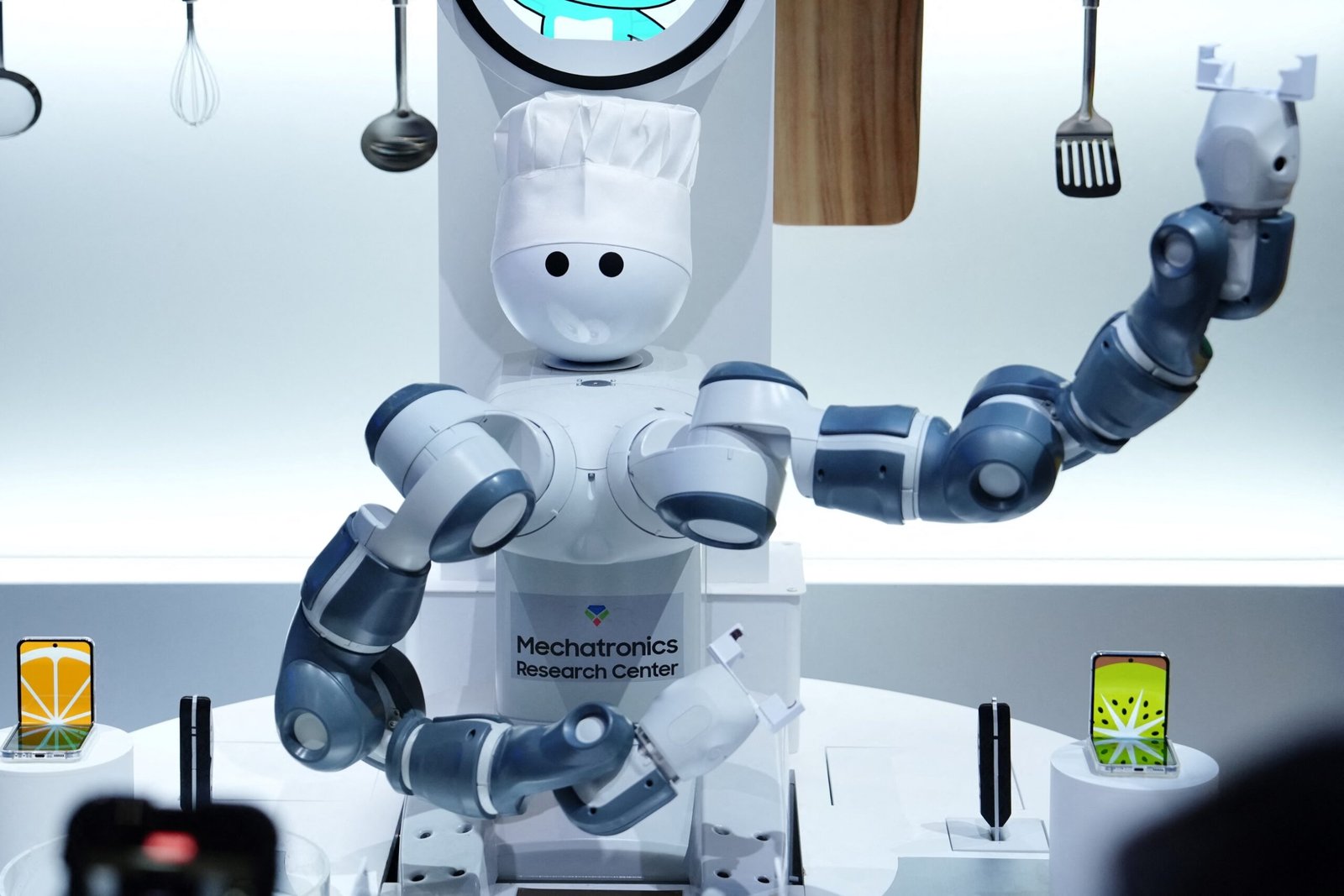
Samsung Electronics officially launched its Robotics eXperience (RX) Business Promotion Office on July 21, 2026, consolidating years of scattered robotics work into a single CEO-controlled unit and declaring, in the clearest organizational language available to a corporation, that humanoid robots are its next major business. This was not a research announcement. Samsung came to the launch with something most rivals lack: a robot AI system already proven in a factory.
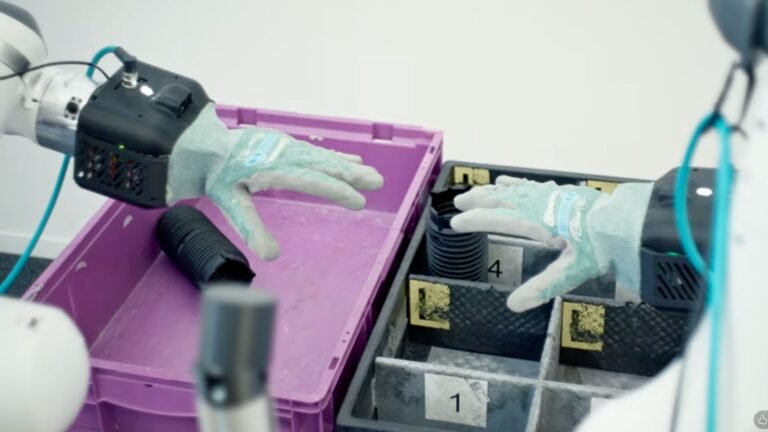
Before the division’s ink was dry, Samsung Research had already published “Shallow-π,” a Vision-Language-Action (VLA) model that compresses AI control steps to one-third of previous system requirements and makes 17 decisions per second. In rigorous field testing, it achieved a 95% success rate on ultra-precision water hose insertion tasks requiring sub-millimeter accuracy, and coordinated 22 degrees of freedom across dual robot arms and hands in just 40 milliseconds — a level of real-time dexterous control that competing programs have not publicly demonstrated at equivalent precision. The robot brain, in other words, already works. What Samsung is now building is the organizational scaffolding and production infrastructure to put it to work at scale.
RX Reports to the Top: Why the Organization Chart Is the Strategy
The most consequential feature of the RX division is its reporting line. Rather than being routed through a product management layer or delegated to a subsidiary, the new unit operates directly under Samsung Device eXperience (DX) CEO TM Roh, underscoring a commitment to rapid decision-making. In corporate terms, that is the difference between a program that can be deprioritized when quarterly earnings pressure increases and one that has the full weight of the company’s most powerful executive behind it.
The RX unit’s formal mandate covers mid-to-long-term robotics strategy, core technology development, business execution, and the expansion of research capabilities both in South Korea and internationally. Samsung also announced plans to establish dedicated robotics research hubs in the United States, China, and Japan, to leverage local robotics ecosystems in each market.
Boston Dynamics Alumni and Korea’s Top Robot-Hand Researcher
Samsung did not promote from within to lead the division’s strategy. It hired Executive Vice President Lee Dongkun, who previously directed robotics strategy at Hyundai Motor Group — the umbrella organization that owns Boston Dynamics — and who joined Samsung in May 2026. Lee’s background includes overseeing development of the electric Atlas humanoid and the Spot quadruped robot during Hyundai’s push to transform Boston Dynamics from a research showcase into a commercial business. His appointment signals that Samsung is not merely curious about humanoid robots but is serious enough to acquire the people who built and deployed them at scale.
Samsung paired Lee with academic expertise targeted at one specific and expensive problem. Seoul National University professor Hyun-Jin Kim, a specialist in autonomous robot guidance and control, and Ajou University professor Eui-Kyum Kim, whose research centers on robot hands and manipulation technology, are both joining the RX division. The second hire in particular is pointed: dexterous robotic manipulation — the ability of a robot to pick up, position, and assemble arbitrary objects with the precision of a human hand — accounts for up to 31% of humanoid component costs and is widely cited by independent robotics researchers as the single greatest barrier to commercial deployment. Samsung already created a separate Hand Lab unit earlier this year to attack this problem directly, and Prof. Kim’s recruitment adds the foremost academic expert in Korea on robot hand design, according to reporting confirmed by GSMArena.
How the Robot Data Factory Creates Samsung’s AI Moat
The most strategically significant element of Samsung’s plan is not the organizational chart or the capital commitment — it is the data architecture. Samsung will establish its primary research and development hub at its Umyeon-dong campus in Seoul and build a “Robot Data Factory” at its Gumi facility in North Gyeongsang Province.
To understand why this matters, it helps to understand how modern robot AI gets trained. The dominant architecture in humanoid robotics is the Vision-Language-Action (VLA) model — a system that fuses perception, language understanding, and physical motor control into a single end-to-end model. VLA models learn by processing vast quantities of demonstration data: videos of humans performing tasks, simulated robot trajectories, and most valuably, real-robot execution data from actual physical environments. The last category is both the scarcest and the highest-quality, because simulation-trained robots consistently struggle when deployed in the noise, variation, and physical unpredictability of actual factories and homes — a gap researchers call the “sim-to-real problem.”
Samsung’s Gumi facility is being designed to generate this highest-quality training data as a byproduct of its own manufacturing operations. Robots will perform material transport, assembly, and production tasks on actual production lines, and the data from those executions will feed back into VLA model training, improving robot precision and versatility in a continuous loop. Samsung will introduce digital twin-based simulations across all processes — from material intake to shipping — and deploy humanoid manufacturing robots in stages, with the Gumi facility serving as the primary accumulator of real-world robot experience.
This makes Samsung’s manufacturing footprint not merely an asset for mass production, but a proprietary AI training pipeline. Most competitors are training VLA models on simulation data, on human-recorded video, or on small-scale robot teleoperation datasets. Samsung is structuring its production lines to generate industrial-scale, real-robot-execution training data in the process of normal manufacturing. The robot data moat and the robot hardware are one and the same.
Gumi carries symbolic weight beyond its technical role. The city was once the cradle of Samsung’s “Anycall” mobile phone era. Samsung is now betting it becomes the cradle of its robotics future, and Gumi’s city government has responded in kind, establishing a Robot Task Force and noting that over 50 robotics firms are already clustered in the area.
Factories First: The Sequenced Deployment Playbook
Samsung’s deployment plan follows a precise sequence that distinguishes it from competitors pursuing humanoids as a consumer product first. The company will focus initially on industrial robots, deploying advanced humanoids to automate its own global manufacturing facilities as a proving ground before offering them to other manufacturers. Once that B2B industrial market is established, the plan calls for expanding to general-purpose consumer robots — but consumer deployment is explicitly described as the later stage, not the current objective.
Samsung has named a clear target for Phase 1: transform all manufacturing sites worldwide into “AI autonomous factories” by 2030. That declaration names one of the most ambitious manufacturing automation targets made public by a major electronics company and invokes a parallel with the automation waves that restructured automotive manufacturing in the 1980s — except applied to the full range of consumer electronics, semiconductor, and display production.
The economics of the approach are deliberate. By deploying humanoids across hundreds of Samsung production lines globally, the company will accumulate production volume at a rate no single-product startup can match. Under Wright’s Law — the industrial engineering principle that each doubling of cumulative production reduces per-unit cost by 15 to 20% — Samsung’s factory footprint is a structural cost-reduction mechanism. Samsung has also explicitly signaled it will pursue investment and acquisitions to accelerate the timeline, language that industry sources interpreted as a signal of further dealmaking beyond the Rainbow Robotics stake.
Rainbow Robotics: Not Starting from Zero
The RX division inherits a working hardware foundation. Samsung raised its stake in Rainbow Robotics — a Korean company that developed Hubo, Korea’s first bipedal robot — to approximately 35% by the end of 2024, becoming its largest shareholder and folding it in as a consolidated subsidiary. Rainbow Robotics’ RB-Y1 humanoid platform provides RX with a functional hardware base from which to iterate, rather than designing from scratch, as Samsung’s official announcement described. Samsung’s strategy, as it has explicitly stated, is to combine its own AI and software technology with Rainbow Robotics’ mechanical robotics expertise to accelerate intelligent humanoid development.
Samsung is also deepening its infrastructure investment independently of the RX announcement. It deployed more than 50,000 NVIDIA GPUs across its manufacturing network for AI integration, in a collaboration with NVIDIA that includes digital twin environments built on NVIDIA’s Omniverse simulation platform. Those GPUs are not only manufacturing tools — they are the compute infrastructure that will train and run Samsung’s robot AI models.
The Competitive Field Samsung Is Entering
Samsung’s decision to formalize its robotics business arrived on the same day its shares surged 6.76% on the Seoul exchange, outpacing the benchmark Kospi index’s roughly 4% gain. Investors read the organizational move as a signal that a company with Samsung’s capital, supply chain, and manufacturing scale was finally committed, not merely interested.
The field it is entering is simultaneously early and intensely competitive. More than 300 humanoid robot companies operate globally, with Chinese manufacturers representing a particularly fast-moving competitive threat. Unitree, one of the most aggressive Chinese competitors, is already shipping humanoid robots at approximately $16,000 per unit. Hyundai’s Boston Dynamics — the company whose strategy head Samsung just hired — is developing the electric Atlas humanoid and has committed its entire 2026 production run to Hyundai and Google DeepMind. Tesla’s Optimus program is pursuing vertical integration through the same logic Samsung is applying, with Elon Musk confirming that AI5 chips destined for humanoid robots are being fabricated at Samsung’s own Taylor, Texas foundry. Figure AI’s Figure 03 platform is deployed in manufacturing environments and crossed a production rate of one robot per hour at its BotQ facility in mid-2026.
Independent analysts and researchers have consistently placed dexterous manipulation, long-duration battery life (commercially deployed systems average 2 to 4 hours), and the sim-to-real gap as the three most significant near-term barriers to humanoid commercialization at scale. Samsung’s recruitment of the leading Korean robot-hand researcher and its Gumi data factory are both direct responses to the first and third of those challenges. Battery life remains an open engineering problem across the industry.
The global humanoid robot market currently sits in the range of $2 billion to $5 billion, with analyst forecasts ranging from approximately $15 billion by 2030 to more than $40 billion by 2033 — numbers large enough to represent a meaningful new revenue pillar for a company of Samsung’s scale. Whether Samsung can convert organizational commitment into commercial products is the central question the RX division now exists to answer. Samsung has said it expects to show concrete humanoid progress before the end of 2026.
The robots have yet to ship at scale. But the organization built to build them now exists — and the AI that will run them has already passed its first factory tests.
Is a Robot Factory Safe? What Samsung’s Autonomous Factory Plan Means for Workers
One dimension of Samsung’s “AI autonomous factories by 2030” announcement that the company’s press release does not address is labor displacement. Converting global manufacturing facilities to AI-autonomous operations implies a structural reduction in the number of human production workers those facilities require. Samsung has not published estimates of workforce impact, and independent analysts have not yet produced facility-specific projections.
What the field does project broadly: humanoid robots in 2026 augment human workers rather than wholesale replacing them, and are best suited for repetitive, physically demanding, or hazardous tasks — not the full range of assembly complexity. The 2030 timeline is ambitious enough that most robotics analysts consider “fully autonomous” to be an aspirational framing. A more realistic near-term picture involves co-working arrangements where humanoid robots handle specific tasks alongside human workers, with human oversight remaining significant.
(Exchange rate as of July 24, 2026; conversions are approximate.)
Frequently Asked Questions
What is Samsung’s RX division, and what makes it different from Samsung’s previous robotics efforts?
RX stands for Robotics eXperience. It is a newly formed Business Promotion Office that consolidates all of Samsung’s previously fragmented robotics research and development into a single unit reporting directly to DX CEO TM Roh. The structural difference from prior efforts — including a Future Robotics Office established in 2025 — is the directness of the CEO reporting line and the co-location of strategy, core technology development, and commercialization planning under one organizational roof. Previous robotics work sat inside multiple departments without a unified command structure or a clear commercialization roadmap.
What is a “Robot Data Factory,” and why does Samsung think it gives the company an advantage?
A Robot Data Factory is a manufacturing facility configured to generate robot training data as a byproduct of normal production operations. Modern humanoid robots are controlled by Vision-Language-Action (VLA) AI models that learn from experience data — specifically, data from real robots performing real tasks in real physical environments. That type of data is the scarcest and highest-quality input for training precision manipulation AI, because it eliminates the “sim-to-real gap” that affects robots trained only in simulated environments. Samsung’s Gumi facility will collect real-world execution data from robots performing assembly and material transport tasks on actual production lines, then use that data to continuously improve the robot AI’s precision and versatility. No purely software-focused competitor has access to this kind of industrial-scale proprietary training data.
How does Samsung’s humanoid robot approach compare to Tesla Optimus or Boston Dynamics Atlas?
All three approaches share the industrial-first deployment logic and the VLA AI architecture. The key differences are in hardware stack and data sourcing. Tesla pursues end-to-end vertical integration from chip to chassis, training on video data from its vehicle fleet. Boston Dynamics Atlas (now under Hyundai) begins commercial deployments with its entire 2026 allocation committed to Hyundai and Google DeepMind — a focused, high-value partner strategy. Samsung’s distinctive angle is its hardware supply chain: it already manufactures the high-bandwidth memory chips, image sensors, and display components that are inside every humanoid robot, giving it potential cost and supply advantages that pure-robotics companies cannot replicate. Samsung also hired the person who ran Boston Dynamics strategy at Hyundai, suggesting it views the two efforts as parallel rather than competing.
Will Samsung humanoid robots be available for home use, and if so, when?
Not soon. Samsung’s announced deployment sequencing is explicit: industrial robots first, deployed in Samsung’s own factories as a proving ground; commercial B2B robots to other manufacturers second; general-purpose consumer robots third. The 2030 AI-autonomous-factory target represents Phase 1 of that roadmap. Consumer-facing humanoid robots are a stated long-term ambition with no announced timeline. The humanoid robotics field broadly projects meaningful consumer deployment not before the early 2030s, and achieving it requires solving dexterous manipulation and battery-life challenges that no company has fully resolved.

![All major robotics and VLA papers, ranked and benchmarked in a single place [P]](https://jobssz.com/wp-content/uploads/2026/07/wvhcgu1q1fdh1.png)