NVIDIA Readies Jetson Robotics Platforms For A Moon Mission

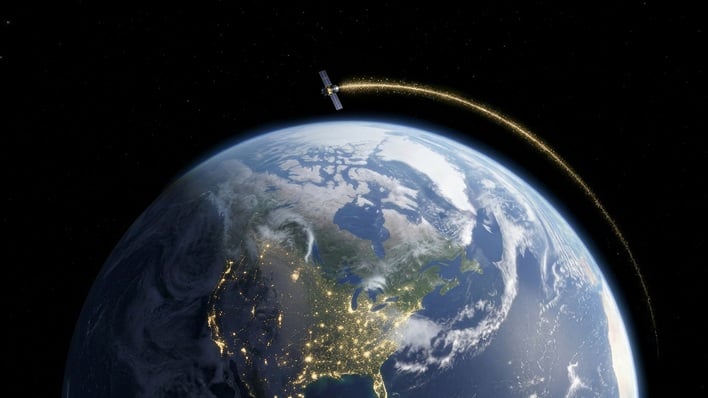
Firefly Aerospace plans to run artificial intelligence workloads in lunar orbit later this year, and the silicon doing the heavy lifting comes from NVIDIA. The Jetson edge AI platform will fly aboard Firefly’s Elytra spacecraft on Blue Ghost Mission 2, targeted for launch in late 2026, marking the first time Jetson hardware has operated around the moon. Rather than firing every raw image back toward Earth and waiting for someone to sort through it, the spacecraft will process what it sees while actively in orbit and transmit only the most relevant findings in near real time.
That approach targets one of the more stubborn constraints in space science. Modern sensors gather far more data than a spacecraft’s radio link can send home, and once those files reach Earth, researchers can spend weeks or months combing through them before anything useful emerges. Firefly ran into this issue firsthand on Blue Ghost Mission 1, which launched January 15, 2025 and touched down near the volcanic feature Mons Latreille inside Mare Crisium on March 2. That lander completed more than 14 days of surface operations while running 10 NASA payloads, among them a radiation tolerant computer from Montana State University and an electrodynamic dust shield built at NASA’s Kennedy Space Center. It also downlinked nearly 120GB of imagery and video, which scientists are still working through today.
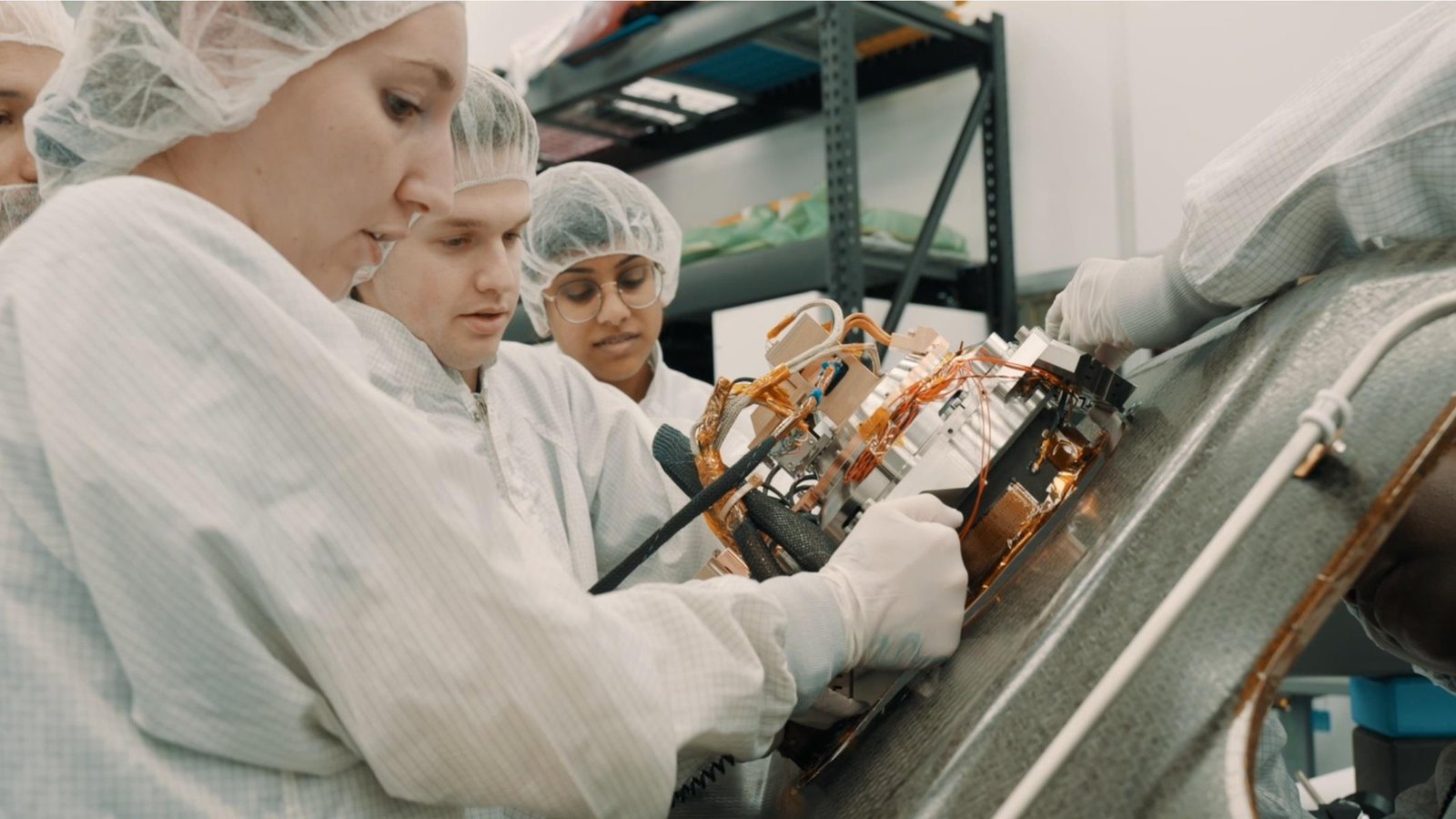
Mission 2 attacks the bottleneck at its source. High resolution telescopes built by Lawrence Livermore National Laboratory arrived at Firefly’s spacecraft facility with an NVIDIA Jetson module embedded, then went through a fit check on Elytra in April. Those telescopes will capture imagery across ultraviolet and visible spectrum bands for Ocula, Firefly’s moon imaging service, and AI software from the company’s SciTec subsidiary will run on the solar powered Jetson to pull out whatever each customer asked for. Only those results make the roughly 238,000 mile trip home, which should speed the process and reduce downlink costs. Elytra will keep circling the moon for a planned five-year mission.
“We believe in a future where all AI processing and sensing will happen in space,” remarked Jason Kim, CEO of Firefly Aerospace. “It’s like the transatlantic cables that connect the continents on Earth to enable the internet, we want to do that same kind of thing in space: connect all these different orbital constellations to enable something greater than any individual constellation.”
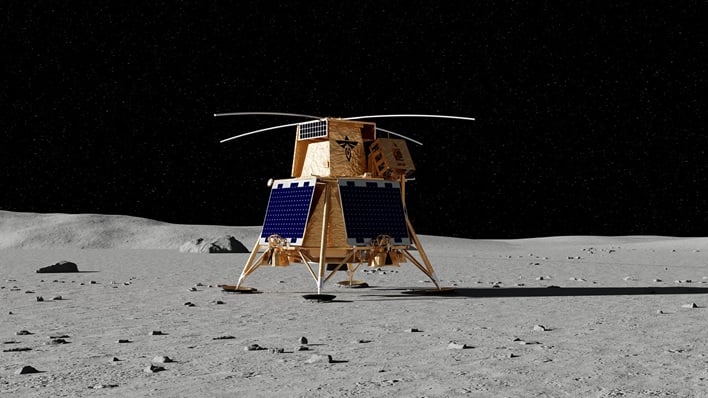
Mission 2 has surface ambitions as well. A Blue Ghost lander will separate and descend to the far side of the moon carrying science and technology instruments, including a radio telescope supporting NASA-funded research led by the University of California, Berkeley. Scientists hope to catch faint signals from the cosmic Dark Ages, a stretch of time shortly after the Big Bang. Ocula, meanwhile, watches from above. Firefly says the service can map landing sites for future robotic and human missions, identify mineral compositions such as ilmenite that could matter for energy production off Earth, keep tabs on vehicles and infrastructure as more nations and companies stake out lunar territory, and track objects moving through cislunar space between Earth and the moon.
Customers range from NASA and the U.S. Space Force to mining and energy companies, and Firefly CEO Jason Kim sounds unbothered by the degree of difficulty, saying his team will “be able to do that for the first time in history.” He added, “The way to predict the future is to manifest it. That’s what we’re doing right now. We’re saying, hey, this is the future. And we’re making it happen.”
Firefly plans to fly Ocula sensors on later Blue Ghost missions and swap in newer NVIDIA hardware as it arrives, with the Space-1 Vera Rubin Module named as a likely candidate. That module belongs to NVIDIA’s wider Space-1 initiative, an effort to push AI silicon into orbit. NVIDIA CEO Jensen Huang makes the case that computing should sit wherever data originates, letting orbital data centers double as research tools and letting spacecraft handle their own navigation. NVIDIA, in his words, is “boldly taking intelligence where it’s never gone before.”
Parking compute that far from the nearest IT department may still sound faintly absurd, yet the potential payoff seems enough. A spacecraft that operates the NVIDIA Jetson platform in orbit and interprets what it observes without waiting on a round trip to Earth can react to discoveries sooner, waste less bandwidth, and hand researchers something more usable while the data still feels fresh.