Dutch startup Destinus leads consortium to develop anti-missile defence system for Europe
Dutch DefenceTech startup Destinus has been appointed consortium lead and prime contractor for Bliksem EXO, a new multinational project intended to establish Europe’s first sovereign exo-atmospheric upper-layer missile defence programme.
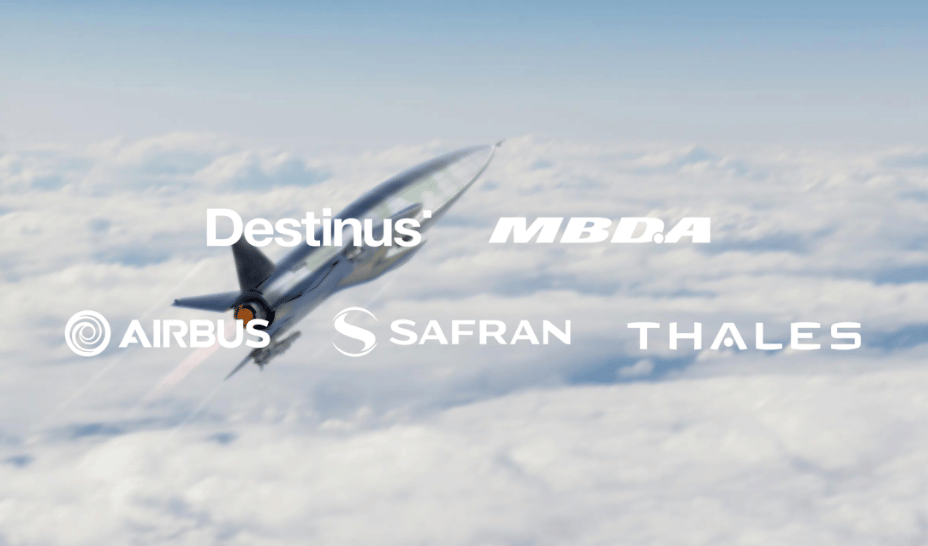
The Katwijk-based company is the only startup among the five founding industrial partners, which also include Airbus Defence and Space, MBDA Deutschland, Safran Electronics & Defense, and Thales.
Together, the companies signed a Letter of Intent to establish the Bliksem EXO Consortium and develop an interceptor capable of countering medium- and intermediate-range ballistic missiles above Europe.
This follows Destinus’ €50 million bank financing in late-2025 – as covered by EU-Startups.
Mikhail Kokorich, CEO of Destinus, said, “Europe has strong lower-layer missile defences, but it still lacks a sovereign European upper layer against medium- and intermediate-range ballistic missiles. Bliksem EXO is designed to close that gap through direct hit-to-kill interception above the atmosphere. Joint engineering begins in August 2026, and we intend to test the exo-atmospheric kill vehicle in space in 2027.”
The agreement was signed in Paris during the inaugural meeting of the anti-ballistic coalition at the French Ministry for Europe and Foreign Affairs, in the presence of Rob Jetten, Prime Minister of the Netherlands.
For Destinus, the appointment represents a significant step from producing autonomous aircraft, missile systems and air defence technologies to coordinating a complex multinational programme involving some of Europe’s largest aerospace and defence groups.
Founded in 2021 by aerospace entrepreneur Mikhail Kokorich, Destinus develops and manufactures scalable strike and air-defence systems for European and allied armed forces. The company is headquartered in the Netherlands and operates across several European markets, including Germany, Switzerland, France, Spain and the UK, as well as Ukraine.
Under the proposed division of responsibilities, Destinus will oversee the overall integration of Bliksem EXO and lead the development of its Exo-atmospheric Kill Vehicle, or EKV. MBDA Deutschland will be responsible for the interceptor booster, launcher and canister, while Safran Electronics & Defense will provide the seeker and guidance, navigation and control technologies.
Airbus Defence and Space will contribute the programme’s command-and-control and battle-management infrastructure, known as BMC4I. Thales will develop the radar and sensor chain, covering the process from early warning and target tracking to fire control.
Bliksem EXO is being designed to intercept medium- and intermediate-range ballistic missiles during the midcourse phase of their flight, when they are travelling above the atmosphere. Rather than using an explosive warhead, the proposed system would destroy its target through a direct kinetic hit-to-kill impact.
The companies said the system would be capable of addressing threats including Oreshnik-class missiles equipped with separating and manoeuvring re-entry vehicles. Its intended role is to provide an upper defensive layer above Europe’s existing and planned terminal and theatre missile defence systems.
This means the programme is positioned as a complement to lower-layer capabilities rather than a replacement for them. It is also intended to be fully interoperable with NATO Integrated Air and Missile Defence and to support the European Sky Shield Initiative by addressing what the consortium describes as Europe’s currently missing upper layer.
Michael Schoellhorn, CEO, Airbus Defence and Space, said: “This system will add a crucial complement to Europe’s existing Air and Missile Defence. By contributing our Command-and-Control and Battle Management System, we ensure proven interoperability and scalability with NATO’s Integrated Air and Missile Defence, the ESSI initiative, and other current air/missile defence programmes.”
The consortium plans to incorporate lessons from Ukraine’s experience in countering large-scale air and missile attacks into the design, testing and evaluation of the system.
Joint engineering work is scheduled to begin in August 2026, followed by a planned test of the Exo-atmospheric Kill Vehicle in space during 2027. Before those activities progress, the five companies intend to negotiate a binding Consortium Agreement within three months of signing the Letter of Intent.
Rob Jetten, Prime Minister of the Netherlands, added, “Today, Ukraine and nine European countries, and multiple European defence companies, launched the anti-ballistic coalition. Bliksem EXO is one of the industrial pillars of this initiative that is led from the Netherlands by Destinus. It brings together leading European defence companies and draws on Ukraine’s unique operational experience. This is how European cooperation becomes real protection against ballistic threats.”
Destinus’ appointment comes during a period of growing investment in European DefenceTech, unmanned systems and sovereign intelligence infrastructure.
Ten relevant funding rounds covered by EU-Startups in 2026 totalled approximately €1.50 billion, including Quantum Systems’ €1 billion Series D and ICEYE’s €450 million Series F.
Airbus, which will be responsible for command-and-control and battle-management systems within Bliksem EXO, also co-led the Quantum Systems investment. In the Netherlands, Groningen-based AirHub raised €4.4 million to expand its mission-critical drone operations software for defence, security and public-safety organisations.
EU-Startups also previously covered Destinus in December 2025, when the company secured a €50 million financing facility from Commerzbank.
Although the Bliksem EXO agreement is not a financing announcement, it places Destinus at the centre of a major European industrial initiative. Its role as lead integrator also reflects a wider shift in Europe’s defence market, where startups are increasingly working alongside established contractors to develop sovereign, interoperable systems that can be produced and deployed at scale.