Barriers to accessible ophthalmic imaging device uptake: an exploratory study of ophthalmology care provider perspectives
Ophthalmology care providers report that they serve a significant population of patients with disabilities and most reported the use of devices that at least marginally meet the needs of patients with disability. There was a range of reported device-related and clinic-related barriers to providing appropriate devices, including unfamiliarity with device options, difficulty of patient use, training requirements and cost. The current study revealed mainly positive attitudes about the technical capabilities of accessible imaging technologies, but identified the need for adjustable physical elements of equipment and further organisational and systemic level supports to adopt these devices.
The findings of the current study align with current research indicating that cost is a major hurdle to improving accessibility of imaging equipment [21]. This may result from the high price of specialised imaging equipment, the fact that patients with disabilities comprise potentially a smaller subset of the total patient population and that any machines acquired specifically to image patients with mobility impairments will receive less use and are therefore more expensive relative to their level of productivity. Current research on imaging in patients with mobility impairments continues to be limited, it is unknown how other findings compare to pre-existing evidence. The results of this study begin to fill a gap in research literature on experiences of ophthalmology care providers with accessible imaging devices.
Practically, the findings of this study suggest that including accessibility modifications during the design process to improve ease of use may encourage greater uptake by clinics. In addition, device technology representatives have a key role in promoting the use of accessible, flexible and portable device options through demonstrations and staff training. Further, policymakers could consider providing financial incentives or subsidies for clinics that adopt such technologies or subsidizing the cost of re-training on new devices.
While current literature on accessible imaging technologies is limited, there are several anticipated benefits of adopting accessible imaging technologies. Overall, improving accessibility in ophthalmic imaging could lead to more inclusive care and greater clinical outcomes for patients with mobility impairments, potentially allowing for earlier diagnosis of conditions such as glaucoma or age-related macular degeneration, whose detection heavily relies on imaging data [23, 24]. While evidence is limited, adoption of accessible imaging devices may be one way to provide timely and accurate data in patients with mobility impairment, contributing to appropriate and timely treatment and reduced risk of misdiagnosis. Devices with accessible features are also more likely to accommodate a wider range of needs, regardless of the level of mobility impairment. This includes elderly or paediatric patients, patients of short stature, with temporary injuries or anxiety surrounding medical imaging devices. Appropriate imaging technologies may increase patient satisfaction and contribute to feelings of dignity, trust and belonging, especially for those who are chronically marginalised. From a healthcare system’s point of view, more tailored imaging devices may decrease the staff time cost involved in assisting with imaging and boost financial and time efficiency on a clinic level.
In Australia, facilities providing diagnostic imaging were previously required to adhere to the Diagnostic Imaging Accreditation Scheme [25] to provide Medicare-funded services. These standards are now in the process of being superseded by the National Safety and Quality Medical Imaging Standards [26]. This new quality framework requires that medical imaging providers provide access to ‘an environment, facilities, equipment and devices that are fit for purpose, well-maintained and meet the needs of patients, including those with a disability…’ and that this care environment should be culturally safe and inclusive for individuals with a disability [26]. Managing physical accessibility concerns would fall under this requirement. Thus, the importance of accommodating patients with mobility impairments is not only a healthcare equity issue, but also a healthcare quality and regulatory issue.
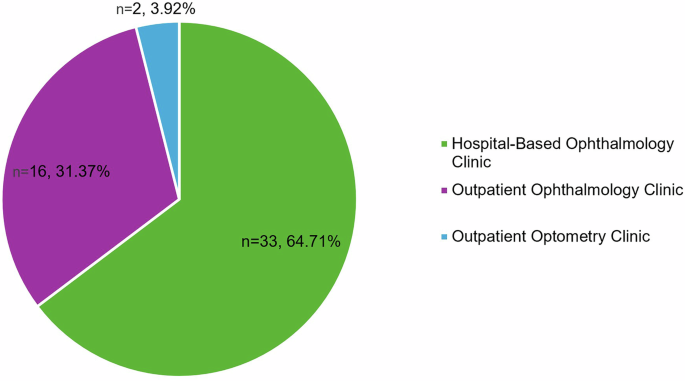
The most salient limitation of this study is the low sample size, which increases the risk of sampling bias and random variability in the results, ultimately affecting the reliability of the findings. Moreover, the use of convenience sampling introduced significant sampling bias. Many participants were recruited from the same workplace settings and the sample was non-representative of ophthalmology care providers in the sampled regions. This may amplify findings relevant to certain clinical settings or workplaces over others. Some degree of response bias is also expected. For example, respondents from well-staffed clinics with little to no time pressures are potentially more likely to return the survey and less likely to endorse time constraints as a barrier to integrating accessible imaging devices. Further to this, systematically missing data in the returned surveys suggests that there may be underrepresentation of perspectives from participants who completed paper surveys, potentially due to a printing issue. Another key limitation of this study is its geographic focus on metropolitan regions of both Queensland, Australia and New South Wales, Australia. These regions have distinct demographic and service environments from other states. New South Wales has the highest rate of ophthalmologist coverage in Australia, compared to Western Australia and the Australian Capital Territory, which have the lowest coverage of ophthalmologists. Western Australia in particular relies heavily on telehealth ophthalmology services at a disproportionate rate to other states; this is largely due to a large rural area, with low specialist eyecare service coverage [27]. Both of these states and their health service environments were unrepresented in survey responses. As a result, the findings of this study may not be generalisable to the Australian population broadly. Furthermore, the sample was predominantly metropolitan, which is a very distinct healthcare service landscape compared to the rural or remote locations where the prevalence of disability is greater, but the ophthalmology workforce is sparser [28, 29]. Thus, specific rural and remote accessibility challenges were most likely unrepresented in this study, despite their relative importance and conclusions about rural ophthalmology settings are limited for this reason. More balanced coverage of Australian geographical regions and rural statuses could strengthen the relevance of future findings. Australian ophthalmology care is primarily delivered by optometrists, orthoptists, nurses, ophthalmologists and ophthalmology trainees, healthcare students and junior doctors. However, only 7.8% of the sample were ophthalmologists, which suggests underrepresentation of these individuals, who are often responsible for imaging equipment purchases. Furthermore, the largest occupational group within the current sample was comprised of nurses, followed by ophthalmology trainees. This may limit the generalisability of the findings to other healthcare systems with a different model of care, such as outpatient optometry clinics or non-teaching hospitals or those primarily staffed by optometrists or orthoptists. Further to this, the current study is limited by its focus on healthcare provider perspectives, which does not adequately represent the range of patient experiences or the limitations of device developers.
The findings of this study may inform key stakeholders involved in the design, development, purchase and funding of accessible ophthalmic imaging devices. Relevant stakeholders include medical technology engineers and manufacturers, government health departments, ophthalmology healthcare workers, clinic managers and patients themselves.
Future research could investigate the perspectives of patients with mobility impairments on their experiences receiving ophthalmic medical imaging, using surveys or focus groups. Another topic deserving investigation is the outcomes associated with accessible imaging device use in patients with mobility impairments. Future studies may compare scan quality, patient satisfaction and clinical outcomes for patients with mobility impairments between clinics that do and do not integrate accessible imaging technologies into their daily practice. There are several ways to increase clinic accessibility and patient satisfaction alongside changes in device design. Further investigations may focus on the utility of staff training programs organisational changes, such as extended appointment times and additional staffing for complex imaging or quiet, separate imaging areas for complex or difficult imaging.