US Toyota spinout’s factory robots learn from experience on the job
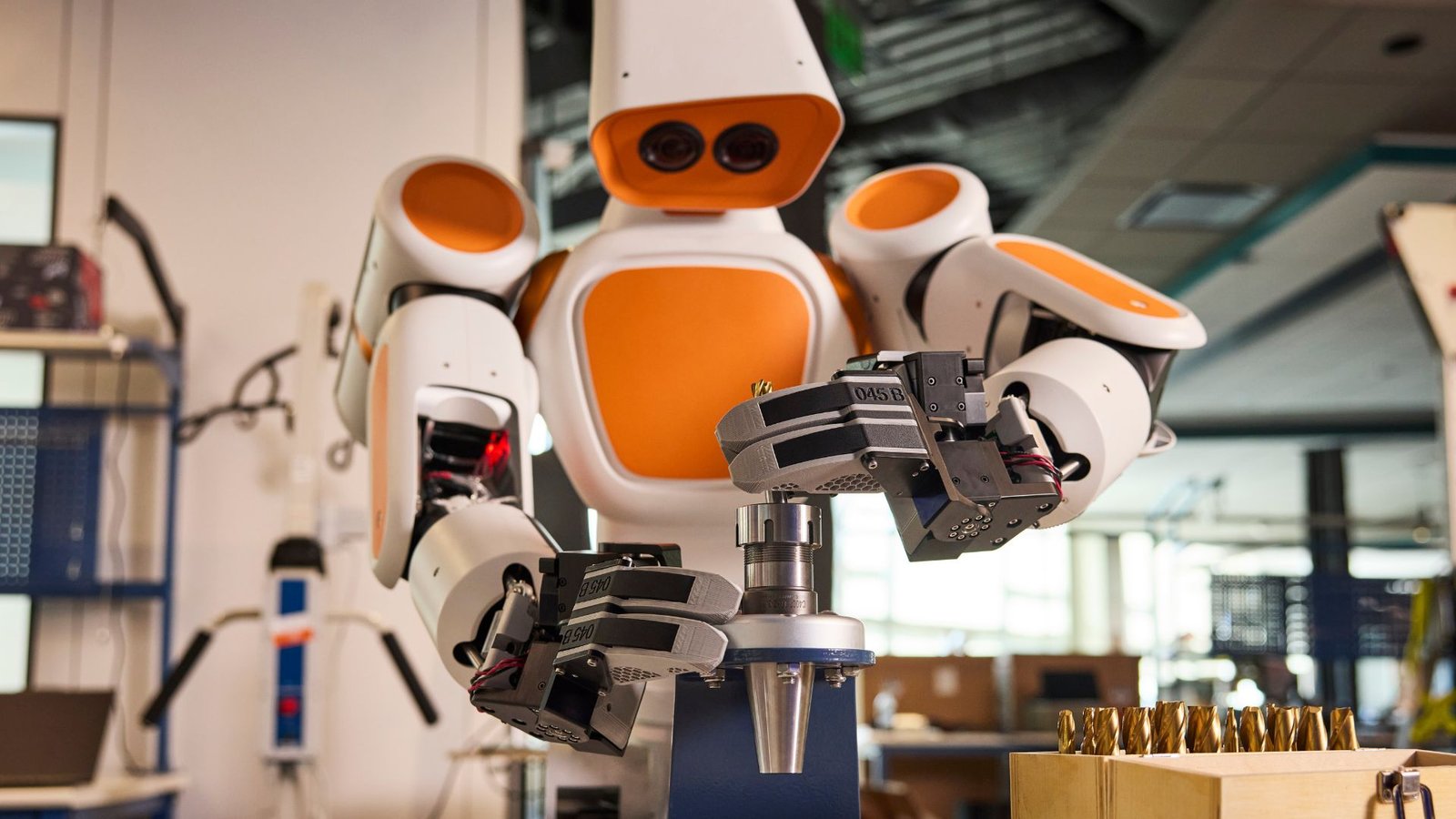
A US robotics startup has emerged from stealth with a general-purpose robotics platform designed to deploy Physical AI robots that learn and improve while performing real work.
Rather than relying on pre-programmed workflows, Walden Robotics’ offerings continuously adapt through real-world operations, enabling them to handle difficult-to-automate tasks alongside human workers from day one.
Walden says its full-stack approach combines hardware, AI, and deployment software to create robots that become more capable over time, targeting industries including automotive, aerospace, semiconductors, electronics, logistics, and life sciences.
The company also announced $300 million in funding at a $1.1 billion valuation.
Robots learn by working
The Cambridge, Massachusetts-based startup is targeting manufacturing and logistics, where labor shortages, increasing product complexity, and pressure for higher productivity are driving demand for more flexible automation.
Although the company has not released detailed specification of its offering, Walden says its robots can be deployed into production environments from day one, handling difficult-to-automate tasks while continuously improving their performance through ongoing operation.
Rather than relying on fixed automation or task-specific programming, the company’s robots use AI models that enable them to acquire new skills through real-world experience, allowing them to adapt to changing production needs while working safely alongside human employees.
At the heart of the system are Large Behavior Models (LBMs) and Diffusion Policy, AI techniques that allow robots to learn complex manipulation and decision-making skills instead of following rigid, pre-programmed workflows.
According to the team, by combining these foundation models with proprietary hardware, perception systems, deployment software, and real-world operational data, Walden aims to create robots that become more capable over time rather than requiring extensive reprogramming for every new task.
General robots emerge
Walden was spun out of the Toyota Research Institute in January 2026 and has already begun deploying its robots with industrial customers.
Since February, its general-purpose robots have been performing production work at a Toyota manufacturing plant in North America, progressing from an initial pilot to active factory operations in less than two months. The company says it is also working with strategic partners across the automotive, aerospace, semiconductor, electronics, logistics, and life sciences sectors.
According to co-founder and CEO Dr. Russ Tedrake, who previously served as Senior Vice President of Large Behavior Models at Toyota Research Institute and is a professor at MIT, the company is focused on delivering practical value through close collaboration with manufacturers rather than pursuing robotics demonstrations in controlled environments.
Alongside its public debut, Walden announced $300 million in seed funding, valuing the company at $1.1 billion. The round was co-led by Toyota and Deviation Capital, with participation from NVIDIA, Boeing, Samsung Ventures, AE Ventures, Prologis Ventures, CoreWeave Ventures, Menlo Ventures, and several other investors.
Recently, another US-based firm Robot.com, has launched R-Noid, a humanoid robot designed to automate repetitive, labor-intensive tasks across industries including logistics, manufacturing, healthcare, hospitality, and food service. Offered through a Robot-as-a-Service (RaaS) model, the company says the robot can be deployed from site assessment to autonomous operation within eight to twelve weeks.
R-Noid is available in five application-specific configurations—Restaurant Assistant, Packer, Picker, Folder, and Host—addressing persistent labor shortages while improving productivity. The humanoid combines autonomous mobility, AI-powered manipulation, and human-interaction capabilities on a unified platform. It features dual 7-degree-of-freedom robotic arms capable of lifting to 4 kilograms each and a 4-DoF articulated torso, enabling it to reach from floor level to 1.9 meters for warehouse, retail, and production tasks.