MIT researchers study avian mechanics to build robot that can dive, swim and fly

The researchers aim for a future in which winged robots could used for research in aquatic regions often deemed too dangerous for traditional ocean vessels.
Researchers from MIT have developed a robot with the ability to plunge underwater then emerge and continue flying through the air, much like how a bird dives and flies.
Inspired by aquatic aviators, engineers at MIT and EPFL in Lausanne, Switzerland, worked on the flapping wing aerial aquatic vehicle (Faav), which weighs about half a pound and is designed to aid scientists in the study of the mechanics that enable real birds to navigate the air and water.
Researchers also hope that the design could result in the development of a new class of aerial-aquatic drones and vehicles, noting that winged robots could be deployed in oceanography to fly to and carry out research in aquatic regions considered too dangerous for traditional ocean vessels to travel to.
The robot has a central body or fuselage, two flexible wings capable of flapping and a tail designed for steering.
Both the wings and the tail can be replaced with ones of a different sizes as it was noted during the experimentation phase that a combination of wing size, flapping frequency and tail angle enabled the robot to smoothly transition from swimming through the water, breaking through the surface and flying through the air.
To help wick away any water, the wings are made using thin membranes coated with hydrophobic nanoparticles.
“Our dream is for oceanographers, marine biologists and members of coastal communities to launch this robot from a boat, or from shore and it would fly close to the area of interest, such as an iceberg or a port facility, or over a pod of whales,” said Raphael Zufferey, the lead author of the study.
“It would dive into the water to take a measurement or collect a sample and fly back to deliver the data at a fraction of the cost of traditional methods. Then it could go back out to dive for more.”
He explained that to make the transition from air and water, back to air significant adaptations have to be made.
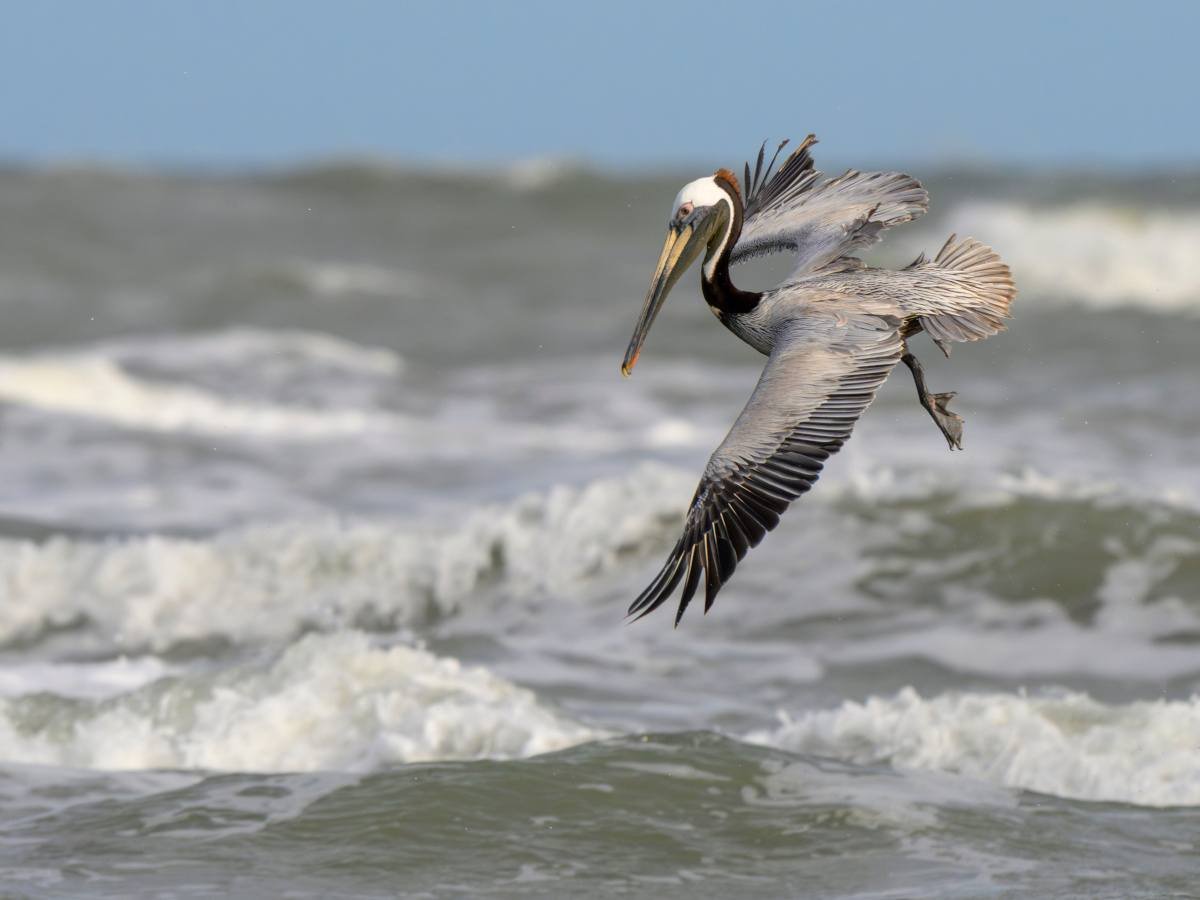
He said, “Birds like puffins can fly very fast through the air and can dive and swim through water at speeds of 3 meters per second. They’re able to do pretty amazing things. So we knew it was possible. Just no one had tried this in a mobile robotic system.”
Future alterations include redesigning the wings to allow for turn. The team will also test the robot’s ability to perform in turbulent conditions, such as choppy water or high winds.
Zufferey said, “One of the major challenges in ocean science is collecting data both frequently and across many locations, which is something this robot could do in the future. You could send this out not just every week, but every hour. It could fly out at high speeds, dive in, fly back, deliver its data and go back out, multiple times.”
Earlier this week Irish drone delivery service provider Manna announced it is planning a US expansion following a recent decision to pause deliveries in Ireland over a lack of regulatory and planning considerations.
Reuters reported that the south-west of the US would be the company’s focus, partnering with companies such as DoorDash, McDonald’s and Uber Eats for food deliveries within the next two months.
Don’t miss out on the knowledge you need to succeed. Sign up for the Daily Brief, Silicon Republic’s digest of need-to-know sci-tech news.